Get more in-depth analysis, expert picks, handicapper reports, AI picks, handicapping tools, in-article data tooltips, NO ADVERTISEMENTS, and other membership perks with a Pick Pony subscription!
Don’t forget Pick Pony’s Expert Picks, AI Picks, and Past Performance Sheets/Racing Forms!
The Pick Pony Handicapper's Report is published daily and provides analysis of all races on the card. A Pick Pony analyst prepares the report, so selections may differ from the Pick Pony Expert Picks, which are based on the consensus of all Pick Pony analysts.
Mahoning Valley Race Course presents a ten-race card featuring competitive claiming and allowance events on Monday, January 5, 2026. The Youngstown, Ohio venue continues its winter meet with first post at 12:15 PM Eastern Time. The card showcases a mix of Ohio-bred competitions and open claiming races, providing handicappers with opportunities across multiple class levels. The competitive nature of the claiming circuit at Mahoning Valley creates value opportunities for bettors willing to analyze form cycles and trainer intentions, while the allowance races offer cleaner form analysis for those seeking more predictable outcomes.
Trainer Jeffrey Radosevich enters the card hot with 10 wins from 38 starters over the past 21 days, representing a 26% strike rate that demands attention across his multiple entries. Richard Zielinski and Robert Cline also send out multiple runners across the card, with both trainers demonstrating solid recent form at the meet. The jockey colony features Brandon Tapara, Jose Bracho, and Luis Raul Rivera as the most active riders, each bringing established track knowledge to their mounts.
The day's wagering menu includes standard exotic wagers with Pick 3, Pick 4, and Pick 5 sequences offering substantial carryover potential. The track's pronounced biases create strategic wagering angles that favor specific running styles and post positions, particularly in sprint races where inside speed remains paramount.
Weather and Track Conditions
Morning temperatures at Mahoning Valley Race Course hover near 23 degrees Fahrenheit, with afternoon highs reaching approximately 40-43 degrees under overcast skies. No precipitation appears in the forecast, suggesting the dirt surface will maintain Good conditions throughout the afternoon card. The absence of wind advisories or winter weather alerts indicates stable racing conditions for the ten-race program.
The sealed winter racing strip features a sand-based composition specifically engineered for cold-weather performance. This construction includes six inches of drainage stone covered with stone dust mixed with agricultural lime, creating a stable base that performs consistently in freezing temperatures. Track management maintains approximately 18% moisture content using sophisticated monitoring equipment, targeting optimal safety and racing surface quality.
The one-mile oval measures 80 feet in width with banking at three percent in the stretches and six percent through the turns. The 1,000-foot homestretch provides adequate room for stretch runs, though the track configuration generally favors forward positioning throughout races. Under current weather conditions, the sealed surface amplifies existing speed biases, making early tactical decisions particularly crucial for success.
Track Bias and Post Position Analysis
Mahoning Valley exhibits one of North American racing's most pronounced inside post biases, particularly in sprint contests where posts one through four demonstrate significantly higher win percentages compared to outside gates. The one-mile oval configuration features relatively tight turns that limit closing opportunities and make early positional advantages crucial for success. Historical data consistently shows horses drawn in the first four post positions enjoy substantial benefits, especially at sprint distances of six furlongs.
In six-furlong sprints, inside posts allow horses to save ground through the turn while maintaining forward positioning for stretch drives. The track's configuration requires horses breaking from outside posts to cover additional ground securing favorable positions before the first turn, often demanding excessive early energy expenditure. Posts one through three historically produce the strongest winning percentages at sprint distances, with the bias diminishing gradually as distances increase.
For route races at one mile and beyond, the inside bias remains relevant though somewhat reduced compared to sprint races. The longer run to the first turn in route contests allows horses more time for positional adjustments, lessening but not eliminating the advantage of inside posts. However, tactical speed remains valuable even in routes, as horses that can secure forward positions without excessive early pressure hold distinct advantages on this configuration.
The sealed winter surface amplifies the existing speed bias at Mahoning Valley. The combination of cold temperatures and the track's banking creates conditions that particularly favor early speed and tactical versatility. Horses with tactical speed who can secure forward positions and rate kindly hold significant advantages throughout today's afternoon program. The 1,000-foot stretch limits the effectiveness of deep closers, making it essential for horses to be within striking distance by the quarter pole.
Handicappers should construct exotic wagers emphasizing horses combining inside posts with tactical speed, as this combination provides maximum advantage given the track's configuration. Conversely, outside posts in sprint races face significant disadvantages unless horses demonstrate superior class or tactical speed allowing them to overcome post position deficits. The track configuration and winter surface conditions create an environment where position and pace navigation become paramount factors in determining race outcomes.
Race 1 – Claiming $6,500, 1 Mile
Post Time: 12:15 PM ET
The opening race features a one-mile claiming event for registered Ohio-bred three-year-olds and upward that have not won two races since July 5. The $6,500 claiming level attracts a seven-horse field with purse money of $17,500.

Pace Analysis
The route distance creates opportunities for tactical development, though the Gary Johnson-trained duo of Gottomakeithappen and Rumble Strip Ron from posts one and two could establish an early advantage. The one-mile journey provides sufficient time for pace dynamics to unfold, with the extended run to the first turn allowing horses to secure positions without excessive early speed. The route configuration diminishes the inside post bias compared to sprints, though horses that can establish forward positions within the first quarter-mile maintain advantages throughout.
Key Contenders
Watchoutforweaver emerges as the consensus selection from handicappers, drawing support from multiple sources. Trainer Lorenzo Juarez sends out the six-year-old gelding from post three with Luis Raul Rivera aboard. The combination of proven jockey and mid-pack post position creates appeal, particularly if Watchoutforweaver demonstrates tactical speed to track the early pace.
Oaks Honey represents a secondary option from the Joseph Poole barn, carrying 124 pounds with Jose Bracho in the irons. The ten-year-old gelding's extensive experience and connection with leading rider Bracho merit consideration, particularly in the exacta and trifecta wagering. Recent form suggests Oaks Honey maintains competitive ability at this claiming level despite advanced age.
Orville B from the Saul Morales stable enters from post six with Luis Alberto Batista riding. The six-year-old gelding carries top weight of 126 pounds, indicating recent competitive performances that triggered the weight assignment. The outside post creates challenges in securing favorable early position, though the route distance provides more time for position adjustments compared to sprints.
Secondary Choices
Carson N Spence completes the field from post seven for trainer Robert Cline. Brandon Tapara takes the mount on the five-year-old gelding, bringing solid recent form at the track. The rail-to-rail trip from the outside post presents tactical challenges, particularly if Carson N Spence lacks sufficient early speed to clear horses entering the first turn.
The Gary Johnson duo of Gottomakeithappen and Rumble Strip Ron from posts one and two create interesting pace dynamics. Both horses share the same trainer, suggesting potential tactical cooperation early to establish comfortable fractions. Elijah Greenidge rides Gottomakeithappen while Mauro Cedillo takes the mount on Rumble Strip Ron, creating questions about which horse receives aggressive handling.
Betting Strategy and Wagering Angles
The competitive nature of the claiming opener suggests spreading in exotic wagers rather than concentrating resources on win betting. Keying Watchoutforweaver on top in exacta wheels while using Oaks Honey and Orville B underneath creates reasonable coverage at manageable cost. The route distance and claiming level create unpredictability that favors boxed exactas including the top three or four choices.
Daily Double opportunities connecting Race 1 to Race 2 allow players to key Watchoutforweaver and Oaks Honey with multiple maiden fillies in the subsequent race. The $1 minimum wager on Daily Doubles makes this an affordable vertical play to launch the card. Pick 3 sequences beginning with the opener allow players to spread across what appears a competitive start to the afternoon program.
Selections
Win: Watchoutforweaver
Place: Oaks Honey
Show: Orville B
Race 2 – Claiming $7,500, 1 Mile, Fillies and Mares
Post Time: 12:43 PM ET
The second race presents a one-mile claiming event for registered Ohio-bred fillies and mares three years old and upward which have never won four races. The $7,500 claiming price and $18,800 purse attract a six-horse field.

Pace Analysis
The small field creates honest pace dynamics without excessive early pressure. Angel I'm Not from post two appears positioned as the likely pacesetter or prominent early runner, with State of Grace potentially tracking from the rail. The six-horse field reduces tactical complications, allowing horses to secure preferred positions without the jockeying for position common in larger fields. The one-mile distance provides sufficient time for the race to develop naturally, rewarding horses that can rate behind moderate fractions while maintaining striking position entering the stretch.
Key Contenders
Mobil Memory emerges as the consensus handicapping selection from the Jeffrey Radosevich barn. The six-year-old mare has demonstrated consistency in recent outings, suggesting competitive form at this claiming level. Radosevich's 10 wins from 38 starters over the past 21 days (26% strike rate) indicates a hot hand that warrants attention. Jose Bracho takes the mount from post three, providing the mare with tactical positioning advantages and a leading rider's race tactics.
Angel I'm Not represents a formidable challenge from the Robert Cline stable. The four-year-old filly by Dynamic Racer has shown consistent form that Irish Racing analysis notes makes her well-placed to bounce back from recent efforts. Victor Fernandez rides from post two, creating inside position advantages particularly valuable on this speed-favoring surface. The Cline training deserves respect with two wins from 33 runners over recent weeks, indicating active involvement despite modest percentage.
Shes a Storm from the Jeffrey Radosevich barn creates an interesting exacta and trifecta scenario with stablemate Mobil Memory. The five-year-old filly carries apprentice Joshua Radosevich (likely related to trainer Jeffrey Radosevich), providing a weight concession with the apprentice allowance. The inside post four position creates tactical advantages, though having two Radosevich entries raises questions about which filly receives aggressive handling.
Secondary Choices
State of Grace from post one brings experience to the event with Alejandro Gomez aboard. The seven-year-old mare from the Donaciano Gonzalez barn draws the rail, creating ground-saving opportunities though also limiting room for maneuvering if the pace becomes contentious. Recent form suggests State of Grace maintains basic competitiveness at this level without demonstrating the improvement needed to challenge top selections.
Rosetta enters from post five for trainer Michelle Winters. The four-year-old filly shows blinkers indicated in the program notes, suggesting equipment changes designed to sharpen focus and improve concentration. Alexander Chavez takes the mount, bringing solid track knowledge to the assignment. The mid-pack post creates neutral positioning, requiring tactical speed to track the early leaders.
Betting Strategy and Wagering Angles
The small field and strong favorites suggest exacta and trifecta wagering rather than seeking longshot value in the win pool. Boxing Mobil Memory and Angel I'm Not in exactas provides coverage on the two form standouts while accepting fair value on either combination. The presence of both mares at the top of most handicapping sheets suggests modest exacta payouts, making trifecta wagering more attractive for value seekers.
In trifecta structures, keying Mobil Memory and Angel I'm Not in the top two positions while including Shes a Storm and Rosetta for third creates reasonable coverage at manageable cost. The Radosevich barn's hot streak makes the trainer's two entries particularly dangerous in the exacta, creating scenarios where the barn could dominate the top two finishing positions.
Daily Double opportunities connecting Race 2 to the allowance event in Race 3 create attractive vertical plays. Keying Mobil Memory and Angel I'm Not while using multiple horses in Race 3 provides solid coverage of likely scenarios. Pick 3 sequences beginning in Race 1 and extending through Race 3 allow players to capitalize on potential value in the allowance race after narrowing earlier legs.
Selections
Win: Mobil Memory
Place: Angel I'm Not
Show: Shes a Storm
Race 3 – Allowance, 1 Mile
Post Time: 1:11 PM ET
The third race features an allowance event for registered Ohio-bred three-year-olds and upward which have never won four races. The $36,200 purse creates the day's first significant stakes, attracting a competitive six-horse field.
Pace Analysis
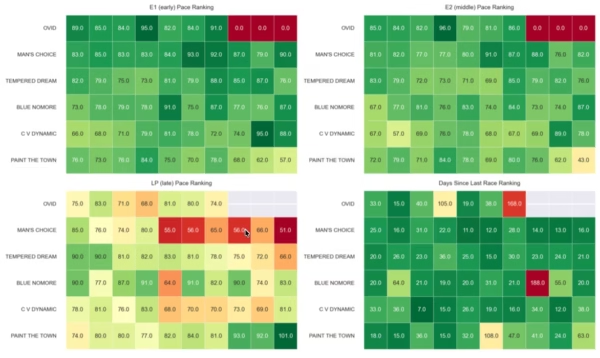
The allowance class level brings higher-quality horses capable of sophisticated pace tactics. Man's Choice from post two appears positioned to press or track the early leader, while Tempered Dream from post three brings tactical versatility from Richard Zielinski's barn. The route distance allows the pace to develop naturally without excessive early pressure, rewarding horses that can secure favorable positions while rating kindly through moderate middle fractions.
The small field creates clean racing conditions without the traffic issues common in larger allowance events. Horses can establish preferred positions within the opening quarter-mile, making jockey decisions about tactical placement particularly important. The final quarter-mile should prove decisive as legitimate allowance horses separate from overmatched rivals.
Key Contenders
Ovid stands as the overwhelming consensus choice after an impressive course and distance victory last time out. The four-year-old gelding from David Wolochuk's barn draws post one with Chelsey Keiser aboard. The rail post creates ground-saving opportunities throughout the one-mile journey, allowing Ovid to conserve energy while maintaining striking position. The gelding's breeding by Cambre out of a Pulpit mare suggests stamina for the distance, while recent form indicates peak current condition.
The combination of inside post, winning recent form, and competent rider makes Ovid the logical single in horizontal wagers and the foundation for vertical plays. Irish Racing analysis notes Ovid “looks the one to beat after an impressive C&D win last time out,” creating consensus among professional handicappers. The gelding's tactical speed allows adaptation to various pace scenarios, providing versatility if early fractions become contested.
Tempered Dream represents the primary challenge from Richard Zielinski's barn. The five-year-old gelding by Paynter finished second in a similar race recently, demonstrating competitive ability at this allowance level. Luis Raul Rivera takes the mount from post three, combining proven riding ability with favorable tactical positioning. Zielinski's stable has shown solid recent form with multiple runners succeeding at the meet, indicating horses arrive ready to perform.
Secondary Choices
Blue Nomore from the Jennifer Tooley stable enters from post four with Yan Aviles riding. Handicapping consensus from multiple sources identifies Blue Nomore as a legitimate alternative with appeal at potential odds. The gelding's recent form suggests capability to compete at this allowance level, though questions remain about whether Blue Nomore possesses sufficient tactical speed to track the likely honest pace.
Man's Choice attempts the class rise following a convincing victory in lower-level company. The six-year-old gelding from Richard Zielinski's barn drew post two with Brandon Tapara aboard, creating inside position advantages. The Zielinski stable's decision to enter two horses suggests confidence in both runners' abilities to compete effectively at this allowance level.
C V Dynamic from post five represents longshot value for adventurous trifecta and superfecta players. Jose Bracho takes the mount for trainer Agustin Gonzalez Jr., bringing leading rider credentials to the assignment. The outside post creates challenges in securing favorable early position, requiring C V Dynamic to demonstrate sufficient tactical speed to avoid falling too far behind the leaders.
Betting Strategy and Wagering Angles
Ovid's overwhelming consensus support makes the gelding the logical single in horizontal wagers throughout the card. Using Ovid as a single in Daily Doubles, Pick 3s, and Pick 4s while spreading in other races creates efficient ticket construction at reasonable cost. The strong favoritism limits win wagering value, making exacta and trifecta structures more attractive for value seekers.
In exacta wagering, keying Ovid on top while using Tempered Dream, Blue Nomore, and Man's Choice underneath provides coverage of upset scenarios without abandoning the form standout. Reverse exacta structures with Ovid underneath allow exposure to potential upsets at substantial prices, though such outcomes appear unlikely given Ovid's dominant recent form.
Trifecta players should construct tickets using Ovid on top with Tempered Dream and Blue Nomore in the second position, then spreading to include Man's Choice and C V Dynamic for third. This structure captures most realistic scenarios while maintaining manageable costs. Superfecta wheels using Ovid on top offer value potential if longshots fill out the lower positions.
Selections
Win: Ovid
Place: Tempered Dream
Show: Blue Nomore
Race 4 – Claiming $5,000, 6 Furlongs
Post Time: 1:39 PM ET
The fourth race presents a six-furlong claiming sprint for three-year-olds and upward at the $5,000 claiming level. The reduced purse of $15,400 attracts horses at the lower end of the claiming hierarchy, creating competitive unpredictability.
Pace Analysis
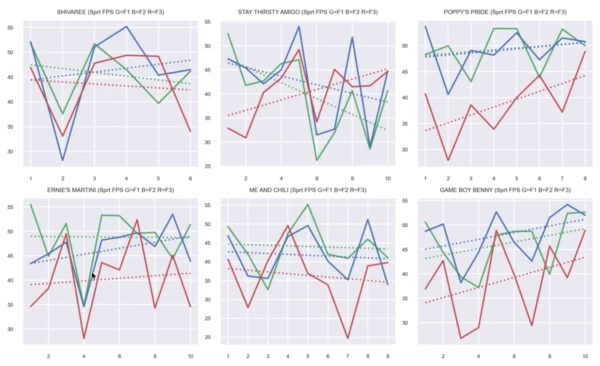
The sprint distance emphasizes early speed and inside position advantages that characterize Mahoning Valley's winter surface. Shivaree from post one and Stay Thirsty Amigo from post two both possess tactical speed to establish forward positions entering the first turn. The six-furlong distance leaves minimal room for error, rewarding horses that can secure favorable positions through the opening quarter-mile while maintaining enough stamina for the stretch drive.
The $5,000 claiming level brings horses with modest consistency, creating scenarios where early speed often holds throughout against limited closing threats. The track's pronounced speed bias amplifies this tendency, particularly in six-furlong sprints where the configuration limits effective late runs. Horses positioned within two lengths of the lead through the half-mile marker maintain realistic winning chances, while deep closers face significant obstacles in making up ground.
Key Contenders
Stay Thirsty Amigo emerges as the consensus selection from handicappers. The nine-year-old gelding from Jeffrey Radosevich's barn draws post two with Jose Bracho aboard, combining inside position with tactical speed advantages. Radosevich's hot streak (10 wins from 38 starters in recent weeks) makes any barn runner dangerous, particularly at lower claiming levels where trainer confidence matters significantly.
The veteran gelding's nine-year racing career suggests basic soundness and professional racing ability. Stay Thirsty Amigo's post two assignment creates optimal positioning to secure a forward spot without excessive early energy expenditure. Bracho's leading rider credentials provide tactical sophistication that proves valuable in competitive claiming sprints.
Ernie's Martini represents a secondary option from the Kevin Buttigieg barn. The six-year-old gelding draws post four with Chelsey Keiser riding, creating mid-pack positioning that requires tactical speed to secure striking position. Multiple scratch indicators in the past performances suggest previous issues that prevented Ernie's Martini from competing, raising minor condition questions despite current entry.
Secondary Choices
Poppy's Pride from post three brings Caryn Vecchio training to the event. The eight-year-old gelding by Kantharos carries Fernando Salazar Becerra in the irons, combining mid-career experience with proven claiming level consistency. The middle post creates neutral positioning requiring balanced tactical decisions early to avoid getting trapped along the rail or forced wide around horses.
Me and Chili rounds out the analysis from post five. Trainer Rey Juarez-Mendoza sends out the seven-year-old gelding with Deshawn Parker aboard. The outside post in a sprint creates immediate challenges, requiring Me and Chili to demonstrate sufficient early speed to clear horses entering the first turn or accept a ground-losing trip tracking from off the pace.
Game Boy Benny adds depth to trifecta structures from post six. The ten-year-old gelding's advanced racing age suggests veteran savvy but also raises questions about physical decline. Erik Barbaran takes the mount for trainer Jay Bernardini, bringing solid track knowledge to the assignment.
Betting Strategy and Wagering Angles
The low claiming level creates opportunities for value exotic payouts despite modest field size. Spreading resources across exacta and trifecta combinations rather than concentrating on win bets provides better value potential given the competitive and somewhat unpredictable nature of $5,000 claiming races. Stay Thirsty Amigo's consensus support makes the gelding the logical key in exacta structures, though the claiming level suggests including multiple horses underneath to capture upset scenarios.
Exacta boxes including Stay Thirsty Amigo, Ernie's Martini, and Poppy's Pride provide coverage of most realistic outcomes while maintaining reasonable costs. In trifecta wagering, keying Stay Thirsty Amigo on top with the next three choices in second position, then spreading all entries for third, creates comprehensive coverage that captures chaotic underneath finishes common in low-level claiming sprints.
Pick 3 and Pick 4 sequences including Race 4 benefit from spreading across multiple horses given the claiming level unpredictability. Using two or three horses in Race 4 while singling stronger races creates balanced ticket construction. Daily Double opportunities connecting Race 4 to Race 5 allow players to capitalize on potential value in the subsequent claiming event while managing costs through selective play in the low-level sprint.
Selections
Win: Stay Thirsty Amigo
Place: Ernie's Martini
Show: Poppy's Pride
Race 5 – Claiming $4,000, 1 Mile
Post Time: 2:07 PM ET
The fifth race features the card's lowest claiming level at $4,000 for three-year-olds and upward which have not won a race since January 5 of the previous year. The restrictive conditions and $10,900 purse create a ten-horse field of limited horses.
Pace Analysis
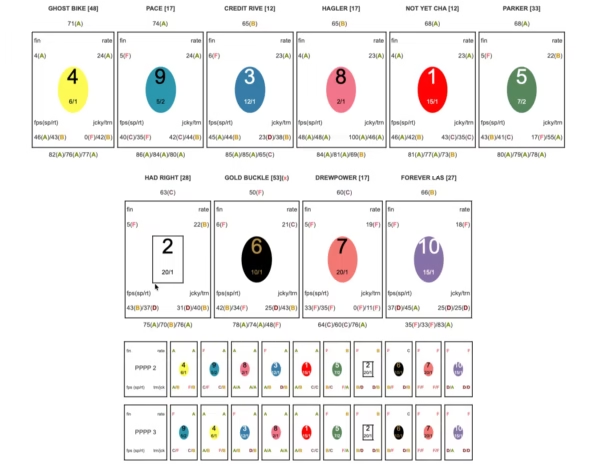
The large field and route distance create complex pace dynamics with multiple horses possessing sufficient speed to press early. Ghost Bike from post four and Parker from post five both demonstrate tactical speed to factor in the early pace scenario. The ten-horse field increases the likelihood of early contentiousness, potentially compromising pure front-runners while setting up horses that can rate kindly in mid-pack positions.
The one-mile distance provides sufficient time for the pace to sort itself naturally without excessive jockeying for position through the first turn. Horses that can secure positions within the first five lengths of the leader through the opening half-mile maintain realistic winning chances, particularly if early fractions become heated. The $4,000 claiming level brings horses with limited consistency, creating scenarios where trips and pace developments often determine outcomes more than pure ability.
Key Contenders
Pace emerges as the consensus selection from handicappers, entering from post nine with Alexander Chavez aboard. The six-year-old horse from Michelle Winters' barn faces the challenge of the outside post in a ten-horse field, requiring early speed to secure forward position or the willingness to rate behind horses from the wider draw. The gelding's breeding by Dialed In out of a Medaglia D'oro mare suggests stamina for the one-mile journey combined with tactical versatility.
Ghost Bike represents a compelling alternative based on recent form analysis. Irish Racing notes Ghost Bike “has shown promise with a recent third-place finish and could be the one to beat,” creating consensus support among professional handicappers. The six-year-old gelding from Gerald Crawford's barn draws post four with Elijah Greenidge riding, combining mid-pack positioning with proven jockey capability. The weight assignment of 121 pounds (five pounds below standard claiming weight) provides a tactical advantage in competitive circumstances.
Hagler from post eight brings intrigue from the Mikhail Carmichael barn. The seven-year-old gelding by Tapiture draws post eight with Rocco Bowen aboard, creating outside positioning challenges similar to those facing Pace. Irish Racing handicappers project Hagler as potential pace factor along with Pace in their analysis, suggesting the gelding possesses sufficient tactical speed to factor throughout the mile journey.
Secondary Choices
Parker completes the analysis from post five for trainer Agustin Gonzalez Jr.. Jose Bracho takes the mount on the eight-year-old gelding, bringing leading rider credentials and solid recent form at the meet. The middle post creates tactical flexibility, allowing Parker to secure preferred positions within the opening quarter-mile without excessive early energy expenditure.
Had Right from post two represents inside speed for trainer Candace Huffman. The seven-year-old gelding has demonstrated consistency in placing efforts lately according to handicapping analysis, suggesting basic competitiveness at this $4,000 claiming level. Angel Diaz rides from the inside post, creating ground-saving opportunities though also limiting tactical flexibility if early pace becomes contentious.
Credit River rounds out the key contenders from post three. The eight-year-old gelding from Raquel Castro's barn drew Alexander Crispin as rider, combining inside positioning with competent riding ability. Irish Racing notes Credit River as “capable of improvement after a disappointing last run,” suggesting recent performance doesn't reflect the gelding's true ability.
Betting Strategy and Wagering Angles
The large field and low claiming level create significant unpredictability that favors spreading across multiple horses in exotic wagers. Keying Pace and Ghost Bike in exacta structures while using Parker, Hagler, and Had Right underneath creates reasonable coverage at manageable cost. The outside posts assigned to both Pace and Hagler create tactical challenges that might prevent either from winning, making exacta boxes including four or five horses more prudent than relying heavily on consensus picks.
In trifecta wagering, spreading across six or seven horses provides comprehensive coverage of realistic scenarios in this competitive $4,000 claiming route. The class level and large field increase the likelihood of longshots hitting the board, making superfecta wheels using multiple horses on top potentially lucrative despite higher ticket costs.
Pick 3 and Pick 4 sequences including Race 5 benefit from using three or four horses given the field size and claiming level. The race's position in the middle of the card makes it a logical spreading race in multi-race wagers, allowing players to save resources for more predictable events while maintaining coverage of realistic scenarios. Daily Double opportunities connecting Race 5 to the maiden sprint in Race 6 create intriguing vertical plays, though both races present handicapping challenges requiring multiple horses for adequate coverage.
Selections
Win: Pace
Place: Ghost Bike
Show: Parker
Race 6 – Maiden Special Weight, 1 Mile, Fillies and Mares
Post Time: 2:35 PM ET
The sixth race presents a maiden special weight event for fillies and mares three, four, five, and six years old. The $24,300 purse attracts a seven-horse field of previously winless runners.
Pace Analysis
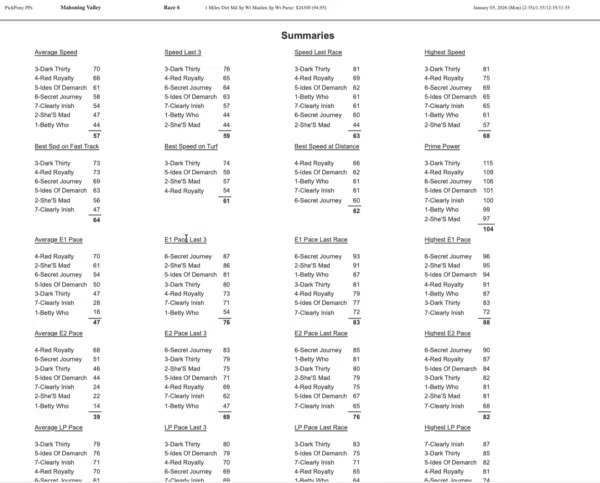
The maiden classification creates uncertain pace dynamics as several runners lack extensive experience understanding pace navigation. Dark Thirty from post three and Red Royalty from post four appear positioned as likely pace factors, with both fillies demonstrating sufficient tactical speed in past performances to establish forward positions. The one-mile distance provides adequate time for the pace to develop naturally, rewarding fillies that can secure favorable positions while rating kindly through moderate middle fractions.
The seven-horse field creates clean racing conditions without excessive traffic complications. Fillies can establish preferred positions within the opening quarter-mile, making jockey decisions about tactical placement particularly important. The final quarter-mile should prove decisive as legitimate maiden special weight competitors separate from overmatched rivals or inexperienced maidens making racing debuts.
Key Contenders
Clearly Inish emerges as a compelling selection based on recent form progression. The four-year-old filly from Jay Bernardini's barn finished a strong second over course and distance last time out, demonstrating improvement patterns that suggest continued advancement. Erik Barbaran takes the mount from post seven, creating outside positioning challenges that require tactical decisions about clearing horses entering the first turn or accepting a ground-losing trip tracking from behind.
Irish Racing analysis notes Clearly Inish “finished a strong second over C&D last time out and could improve further,” creating professional handicapping support. The filly's recent runner-up performance came over today's one-mile distance, providing proven ability to handle the route trip while suggesting another forward move could produce maiden graduation.
Red Royalty represents the alternative selection from Shane Meyers' barn. The four-year-old filly draws post four with Alexander Chavez aboard, combining mid-pack positioning with proven jockey capability. Handicapping consensus from multiple sources identifies Red Royalty as the top pick, creating split opinions at the top of the maiden event. The inside-of-midfield post creates tactical advantages on Mahoning Valley's speed-favoring surface, allowing Red Royalty to secure forward position while conserving energy for the stretch drive.
Dark Thirty adds intrigue dropping in class from Churchill Downs. The four-year-old filly from Kelli Martinez's barn draws post three with David Haldar riding, creating inside positioning advantages. The class drop from Churchill Downs to Mahoning Valley suggests competitive advantage over local maidens, though the venue change creates questions about surface preferences and ability to handle the tighter Mahoning Valley configuration. Irish Racing projects Dark Thirty as a potential favorite based on the class drop and Churchill pedigree.
Secondary Choices
Betty Who completes the analysis from post one for trainer Ramon Salcedo. Brandon Tapara takes the mount on the four-year-old filly, bringing leading rider credentials and solid recent form at the meet. The rail post creates ground-saving opportunities throughout the one-mile journey, though also limits tactical flexibility if the pace becomes contentious early. Irish Racing notes Betty Who “showed promise in third here recently,” suggesting competitive ability approaching maiden graduation.
Secret Journey enters from post six after a lengthy layoff. The five-year-old mare from Carl O'Callaghan's barn draws Rocco Bowen as rider, combining outside positioning with competent riding ability. The extended absence raises fitness questions despite morning workout preparations for today's return.
Ides of Demarch rounds out the contenders from post five. The four-year-old filly from Kelli Martinez's barn drew German Terraza as jockey, creating stablemate intrigue with Dark Thirty. The Martinez decision to enter two fillies suggests confidence in both runners' abilities to compete effectively, though also raises questions about which filly receives aggressive handling.
Betting Strategy and Wagering Angles
The maiden classification and split handicapping opinions create value opportunities in exotic wagers. Keying Clearly Inish and Red Royalty in exacta structures while using Dark Thirty and Betty Who underneath provides coverage of realistic scenarios while maintaining manageable costs. The recent form progression shown by Clearly Inish makes the filly particularly dangerous despite the outside post assignment.
In trifecta wagering, boxing the top four choices creates comprehensive coverage of likely outcomes while accepting modest payouts if favorites dominate. The maiden classification increases the likelihood of form reversals or unexpected improvements, making wider trifecta structures potentially more profitable than narrow constructions based solely on past performances.
Pick 3 and Pick 4 sequences including Race 6 benefit from using two or three fillies given the handicapping uncertainty. The race's position in the middle of the card makes it a logical spreading race in multi-race wagers. Daily Double opportunities connecting Race 6 to the starter allowance sprint in Race 7 create attractive vertical plays, particularly given the competitive nature of both events requiring multiple horses for adequate coverage.
Selections
Win: Clearly Inish
Place: Red Royalty
Show: Dark Thirty
Race 7 – Starter Allowance, 6 Furlongs
Post Time: 3:03 PM ET
The seventh race features a starter allowance sprint for three-year-olds and upward which have started for a claiming price of $5,000 or less in 2024-2025. The $17,600 purse and six-furlong distance attract a competitive nine-horse field.

Pace Analysis
The large field and sprint distance create aggressive early pace scenarios with multiple horses possessing front-running intentions. Don't Stop from post five and Reinvest from post nine both demonstrate tactical speed to contest the early lead, while Time the Avenger from post seven brings versatility to rate behind contested fractions. The six-furlong distance leaves minimal margin for error, rewarding horses that can establish favorable positions through the opening quarter-mile while maintaining stamina for the stretch drive.
The starter allowance conditions attract horses with proven ability at claiming levels, creating higher quality competition than straight claiming events. The restriction requiring previous starts for $5,000 or less creates a relatively homogeneous field in terms of class, making pace scenarios and post positions particularly influential in determining outcomes. The track's pronounced speed bias amplifies the advantage of forward positioning in six-furlong sprints.
Key Contenders
Don't Stop receives strong backing from BRISNET Staff as their featured pick for the card. The five-year-old gelding by Accelerate from Khadeem Galloway's barn draws post five with Elijah Greenidge aboard. The mid-pack post creates tactical flexibility, allowing Don't Stop to secure preferred positions within the opening quarter-mile. The gelding's breeding by 2018 Breeders' Cup Classic winner Accelerate provides legitimate class credentials at this starter allowance level.
Reinvest emerges as another prominent selection based on recent form analysis. Irish Racing notes Reinvest “has strong recent form and could build on last time's runner-up effort,” creating professional handicapping support. The six-year-old gelding from Gary Johnson's barn draws the challenging post nine assignment with Mauro Cedillo riding. The outside post in a nine-horse sprint creates significant tactical challenges, requiring Reinvest to demonstrate exceptional early speed to clear horses entering the first turn or accept a ground-losing trip.
Time the Avenger represents a compelling alternative from Nestor Rivera's barn. The six-year-old gelding by Bolt d'Oro drew post seven with Alexander Chavez aboard. Handicapping consensus from multiple sources identifies Time the Avenger as a legitimate contender, particularly appealing given the gelding's ability to adapt to various pace scenarios. Irish Racing analysis notes Time the Avenger “comes off a narrow victory,” suggesting current form cycle peaked appropriately for today's assignment.
Secondary Choices
More Than Five adds depth from post two for Rivera Racing Stables. The six-year-old gelding by More Than Ready drew Fernando Salazar Becerra as rider, combining inside positioning with proven riding capability. Irish Racing projects More Than Five as a potential factor after “a good win” in recent action, though questions remain about whether the gelding possesses sufficient tactical speed to overcome potential inside trip complications.
Absolute Grit represents another dimension from post six. The nine-year-old gelding from Richard Burnsworth's barn drew Luis Raul Rivera as jockey, bringing veteran experience and solid track knowledge to the assignment. The advanced racing age raises questions about physical decline, though starter allowance restrictions often produce competitive races among similarly experienced horses.
Stomping Moon completes the analysis from post three. The six-year-old gelding from Angelo Pizzurro's barn drew Luciano Hernandez as rider, creating inside positioning advantages particularly valuable on Mahoning Valley's speed-favoring surface. The inner post assignment provides ground-saving opportunities throughout the six-furlong journey.
Betting Strategy and Wagering Angles
The competitive nature of the starter allowance sprint creates value opportunities in exotic wagers despite the quality level. Keying Don't Stop and Time the Avenger in exacta structures while using Reinvest, More Than Five, and Absolute Grit underneath provides coverage of realistic scenarios. The BRISNET Staff feature pick designation for Don't Stop suggests consensus professional support, though the gelding's mid-pack post assignment presents tactical challenges that might prevent wire-to-wire domination.
In trifecta wagering, boxing the top five choices creates comprehensive coverage of likely outcomes while accepting moderate payouts if favorites dominate. The starter allowance classification brings horses with proven claiming-level ability, reducing the likelihood of extreme longshots hitting the board compared to straight claiming events. Superfecta structures using Don't Stop and Time the Avenger on top while spreading underneath provide exposure to potential value payouts.
Pick 3 and Pick 4 sequences including Race 7 create significant return potential given the competitive nature of the sprint. Using two or three horses in Race 7 while selectively playing subsequent races allows balanced ticket construction. Daily Double opportunities connecting Race 7 to the Ohio-bred allowance in Race 8 create attractive vertical plays, particularly given potential favorites in both races creating reasonable expected values.
Selections
Win: Don't Stop
Place: Time the Avenger
Show: Reinvest
Race 8 – Allowance, 6 Furlongs, Ohio Bred
Post Time: 3:31 PM ET
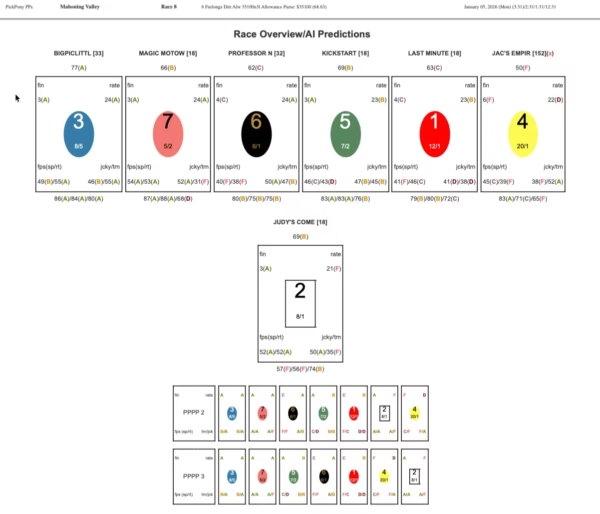
The eighth race features an allowance sprint for registered Ohio-bred three-year-olds and upward which have never won three races. The $35,100 purse and six-furlong distance attract a competitive seven-horse field of state-bred runners.
Pace Analysis
The allowance class level combined with sprint distance creates aggressive early pace scenarios. Last Minute Mikey from post one and Kickstart from post five both possess front-running capabilities that could produce contested opening fractions. The six-furlong distance leaves minimal margin for tactical error, rewarding horses that can secure favorable positions through the opening quarter-mile while conserving enough stamina for the stretch drive.
The Ohio-bred restriction narrows the competitive pool while maintaining allowance-level quality. State-bred horses competing at this level demonstrate legitimate racing ability within the regional breeding program, creating relatively even matchups based on recent form and class progression. The track's pronounced speed bias amplifies the importance of early positioning in six-furlong sprints.
Key Contenders
Bigpiclittlepic emerges as a prominent selection based on recent form analysis. The four-year-old gelding from John Sugar's barn has demonstrated consistent performance in Ohio-bred company, including allowance-level success. Irish Racing notes Bigpiclittlepic “has strong recent form and could build on a close second last time out,” creating professional handicapping consensus. Jose Bracho takes the mount from post three, combining inside positioning with leading rider credentials.
The gelding's breeding by Qurbaan out of a Fappie's Notebook mare provides legitimate allowance-level credentials within Ohio's breeding program. Bigpiclittlepic has earned over $58,000 in career earnings according to breeding records, demonstrating sustained competitive ability at allowance and stakes levels. The gelding's tactical versatility allows adaptation to various pace scenarios, providing flexibility if early fractions become contested.
Kickstart represents the alternative selection from Robert Gorham's barn. The four-year-old gelding by Paynter drew post five with Fernando Salazar Becerra aboard, combining mid-pack positioning with proven riding capability. Handicapping consensus identifies Kickstart as a legitimate contender with appeal at potential odds. The gelding's breeding suggests stamina for six furlongs combined with sufficient early speed to secure forward positions.
Magic Motown adds intrigue from post seven for trainer Justin Radosevich. The four-year-old colt by Cinco Charlie drew Yan Aviles as rider, creating outside positioning challenges in the seven-horse sprint. Irish Racing analysis notes Magic Motown “finished runner-up in this grade previously,” suggesting established competitiveness at allowance level. The outside post requires aggressive tactics early to clear horses entering the first turn or acceptance of a ground-losing trip tracking from behind.
Secondary Choices
Professor Nick completes the analysis from post six for Richard Zielinski's barn. The four-year-old gelding by Flatter drew Victor Fernandez as jockey, combining outside positioning with competent riding ability. Zielinski's multiple entries across the card suggest active involvement at the meet with horses arriving fit and ready to perform.
Judy's Comet rounds out the contenders from post two. Brandon Tapara takes the mount for trainer Richard Zielinski, creating stablemate intrigue with Professor Nick. The inside post provides ground-saving opportunities particularly valuable on Mahoning Valley's configuration, allowing Judy's Comet to secure forward position while conserving energy for the stretch drive.
Last Minute Mikey from post one brings rail position advantages. Alexander Crispin rides for trainer Julie Pappada, combining the rail draw with tactical speed to potentially establish the early lead. The one-hole creates optimal positioning to dictate fractions on the speed-favoring surface.
Betting Strategy and Wagering Angles
The Ohio-bred allowance sprint creates opportunities for value exotic wagers despite quality competition. Keying Bigpiclittlepic in exacta structures while using Kickstart, Magic Motown, and Last Minute Mikey underneath provides coverage of realistic scenarios. The recent form progression shown by Bigpiclittlepic makes the gelding particularly dangerous from the inside post assignment.
In trifecta wagering, boxing the top four or five choices creates comprehensive coverage of likely outcomes. The allowance classification and Ohio-bred restriction create relatively predictable race shapes compared to open claiming events, making narrower trifecta constructions potentially profitable. Superfecta wheels using Bigpiclittlepic on top while spreading underneath provide exposure to value payouts if longshots fill lower positions.
Pick 3 and Pick 4 sequences including Race 8 benefit from singling or keying Bigpiclittlepic given the strong form and inside post. The race's position late in the card makes it a logical singling opportunity in multi-race wagers, allowing players to press potential favorites while spreading earlier or later races. Daily Double opportunities connecting Race 8 to the longer allowance in Race 9 create attractive vertical plays pairing the Ohio-bred sprint with open company competition.
Selections
Win: Bigpiclittlepic
Place: Kickstart
Show: Magic Motown
Race 9 – Allowance, 1 Mile 70 Yards
Post Time: 3:59 PM ET
The ninth race features an allowance event at one mile and 70 yards for three-year-olds and upward which have never won a race other than maiden, claiming, starter, or Ohio-bred, or which have never won two races. The $25,900 purse attracts a competitive ten-horse field.

Pace Analysis
The large field and extended distance create complex pace dynamics with multiple horses possessing sufficient early speed to establish forward positions. Magic Mover from post one and Jus Too Fly from post nine both demonstrate tactical versatility to adapt to various pace scenarios. The one-mile-70-yard distance provides adequate time for the pace to develop naturally, rewarding horses that can secure favorable positions while rating kindly through moderate middle fractions.
The allowance conditions attract horses moving up from maiden or claiming ranks, creating varied class levels within the field. The restriction preventing horses with significant allowance earnings creates opportunities for horses demonstrating improvement patterns to exploit overmatched rivals. The extended distance beyond one mile favors horses with proven stamina and tactical sophistication to manage energy expenditure over the longer journey.
Key Contenders
Law of the Jungle represents the consensus selection from handicappers. The seven-year-old gelding from Ivan Calderon's barn draws post six with Jose Bracho aboard, combining mid-pack positioning with leading rider credentials. Bracho's strong recent form at the meet makes any mount dangerous, particularly in competitive allowance events where rider decisions about pace and position prove crucial.
Lomachenko emerges as another prominent selection from Jay Bernardini's barn. The five-year-old gelding by Mendelssohn drew post seven with Brandon Tapara riding, creating mid-pack positioning with proven jockey capability. Irish Racing analysis projects Lomachenko as a potential factor in the competitive allowance event, suggesting the gelding possesses sufficient class and tactical ability to contend throughout.
Jus Too Fly adds depth from post nine for trainer Nestor Rivera. The four-year-old gelding by Justify drew Alexander Chavez as rider, bringing Breeders' Cup Classic and Triple Crown winner bloodlines to the assignment. The challenging outside post in a ten-horse field creates immediate tactical questions about clearing horses entering the first turn or accepting a ground-losing trip tracking from behind.
Secondary Choices
Magic Mover completes the analysis from post one for Kevin Joy's barn. Erik Barbaran takes the mount on the four-year-old colt, combining rail positioning with competent riding ability. Irish Racing notes Magic Mover “can bounce back from recent disappointments if reproducing his winning form from Keeneland,” suggesting higher class potential than recent Mahoning Valley performances indicate. The rail post creates ground-saving opportunities though also limits tactical flexibility throughout the extended distance.
Romanian Prince represents another dimension from post eight. The five-year-old gelding from Richard Zielinski's barn drew Luis Raul Rivera as jockey, combining outside positioning with veteran riding capability. Zielinski's multiple entries across the card suggest active involvement with horses arriving fit and ready to perform.
Look to the Cross rounds out the contenders from post two. Alexander Crispin rides for Jevon Crumley's operation, bringing solid track knowledge to the assignment. The inside post provides tactical advantages particularly valuable on Mahoning Valley's speed-favoring surface, though the extended distance beyond one mile creates questions about whether early positioning advantages translate to success over the longer journey.
Betting Strategy and Wagering Angles
The competitive ten-horse allowance field creates significant value opportunities in exotic wagers. Keying Law of the Jungle and Lomachenko in exacta structures while using Jus Too Fly, Magic Mover, and Romanian Prince underneath provides coverage of realistic scenarios. The large field increases the likelihood of legitimate contenders hitting the board at value prices, making wider exacta and trifecta constructions potentially more profitable than narrow plays based solely on favorites.
In trifecta wagering, spreading across six or seven horses creates comprehensive coverage of likely outcomes. The allowance classification and extended distance create opportunities for form reversals or unexpected improvements, particularly among horses moving up from maiden or claiming ranks recently. Superfecta wheels using multiple horses on top provide exposure to potentially lucrative payouts in the competitive field.
Pick 3 and Pick 4 sequences concluding with Race 9 allow varied strategic approaches. Using two or three horses in Race 9 while singling earlier races provides balanced coverage. Daily Double opportunities connecting Race 9 to the closing maiden sprint create attractive vertical plays, particularly given the competitive nature of both events requiring multiple horses for adequate coverage.
Selections
Win: Law of the Jungle
Place: Lomachenko
Show: Jus Too Fly
Race 10 – Maiden Special Weight, 6 Furlongs, Ohio Bred Fillies
Post Time: 4:27 PM ET
The tenth race features a maiden special weight sprint for accredited Ohio-bred fillies three years old. The $31,800 purse and six-furlong distance attract a nine-horse field of state-bred maidens closing the afternoon card.
Pace Analysis
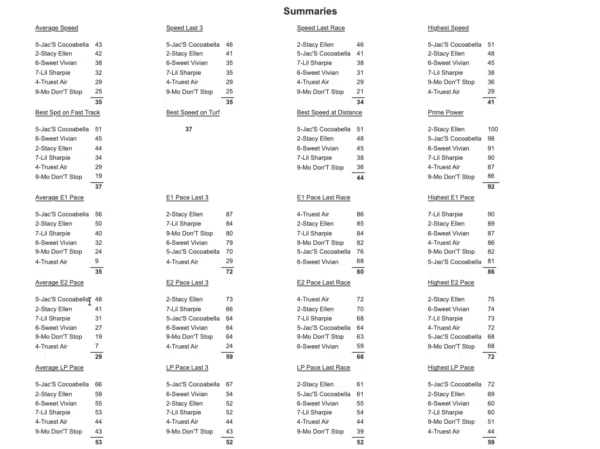
The maiden classification and large field create uncertain early pace dynamics as several fillies lack extensive racing experience. Stacy Ellen from post two and Truest Air from post four both possess sufficient tactical speed to establish forward positions through the opening quarter-mile. The six-furlong distance leaves minimal margin for error, rewarding fillies that can secure favorable positions early while maintaining stamina for the stretch drive.
The Ohio-bred restriction and three-year-old fillies-only conditions create a relatively homogeneous competitive pool. State-bred maidens competing in their first season demonstrate varied levels of racing sophistication, making pace scenarios and post positions particularly influential in determining outcomes. The track's pronounced speed bias amplifies the advantage of forward positioning in six-furlong maiden sprints.
Key Contenders
Stacy Ellen emerges as the overwhelming consensus choice based on recent form progression. The three-year-old filly from Richard Zielinski's barn finished second in her last two starts, demonstrating improvement patterns that suggest maiden graduation approaches. Mauro Cedillo takes the mount from post two, combining inside positioning with proven riding capability at the track.
The filly's recent runner-up performances came at Mahoning Valley, providing proven ability to handle the track configuration while suggesting another forward move could produce maiden success. Irish Racing analysis notes Stacy Ellen “finished second in her last two starts and looks the one to beat,” creating professional handicapping consensus. The inside post assignment provides ground-saving opportunities particularly valuable on Mahoning Valley's speed-favoring surface.
Jac's Cocoabella represents a compelling alternative from Ivan Vazquez's barn. The three-year-old filly by Jac's Fact drew post five with Chelsey Keiser aboard, combining mid-pack positioning with solid jockey capability. Irish Racing projects Jac's Cocoabella as having strong finishing potential, noting the filly “has been knocking on the door with consistent placed efforts”. The filly's breeding provides legitimate credentials within Ohio's breeding program, suggesting sufficient class to compete at maiden special weight level.
Truest Air adds intrigue from post four. The three-year-old filly from Penny Rone's barn drew Luis Raul Rivera as rider, bringing veteran jockey experience to the assignment. Handicapping consensus from multiple sources identifies Truest Air as a legitimate contender despite limited racing exposure. The mid-pack post creates tactical flexibility, allowing Truest Air to secure preferred positions within the opening quarter-mile.
Secondary Choices
Pop's Girl completes the analysis from post one for trainer Larry Smith. Angel Diaz takes the mount on the three-year-old filly making her debut. The rail post creates ground-saving opportunities though also limits tactical flexibility if the pace becomes contentious early. First-time starters from the inside post face challenges establishing comfortable early positions without racing experience.
Lil Sharpie represents another dimension from post seven. The three-year-old filly from Ivan Vazquez's barn drew David Haldar as jockey, creating stablemate intrigue with Jac's Cocoabella. The outside post in a nine-horse maiden sprint creates immediate tactical challenges requiring early speed to clear horses or acceptance of a ground-losing trip.
Playkoz rounds out the contenders from post three. Luciano Hernandez rides for trainer Larry Smith, creating stablemate scenario with Pop's Girl from post one. The Smith decision to enter two fillies suggests confidence in both runners' abilities to compete effectively, though also raises questions about which filly receives aggressive handling.
Betting Strategy and Wagering Angles
The maiden sprint creates value opportunities despite Stacy Ellen's consensus favoritism. Keying Stacy Ellen in exacta structures while using Jac's Cocoabella, Truest Air, and Lil Sharpie underneath provides coverage of upset scenarios. The filly's two consecutive runner-up finishes suggest maiden graduation approaches, though the large field and maiden unpredictability warrant including multiple horses in exotic structures.
In trifecta wagering, boxing the top four or five fillies creates comprehensive coverage of likely outcomes. The maiden classification increases the likelihood of form reversals or unexpected improvements, particularly among fillies adding experience with each start. The Ohio-bred restriction creates relatively predictable race shapes compared to open maiden events, though individual filly development patterns remain variable.
Pick 3 and Pick 4 sequences concluding with Race 10 allow aggressive approaches given the consensus favorite. Singling Stacy Ellen in the finale while spreading earlier races creates efficient ticket construction. Daily Double opportunities connecting Race 9 to Race 10 create attractive vertical plays closing the card, particularly pairing the competitive allowance with the maiden sprint featuring strong favoritism.
Selections
Win: Stacy Ellen
Place: Jac's Cocoabella
Show: Truest Air
Jockey Notes and Insights
Brandon Tapara enters the card with multiple mounts across several races, demonstrating his status as one of the track's leading riders. Recent results show Tapara scoring victories on January 2, including a win aboard Boudin in a six-furlong race at Mahoning Valley. The jockey's consistent presence across claiming and allowance races suggests trainers value his tactical versatility and ability to adapt to various pace scenarios.
Tapara's mounts today include Carson N Spence in Race 1, Man's Choice in Race 3, Betty Who in Race 6, Judy's Comet in Race 8, Lomachenko in Race 9, and Mo Don't Stop in Race 10. The diverse mix of claiming horses, allowance runners, and maidens demonstrates Tapara's broad appeal across multiple class levels. His strongest opportunities appear in Race 3 aboard Man's Choice and Race 9 aboard Lomachenko, both competitive allowance events where his tactical skills prove most valuable.
Jose Bracho maintains his position as one of Mahoning Valley's most active and successful riders. The jockey has accumulated significant earnings during the current meet, with statistics showing strong performance particularly at the six-furlong distance. Bracho's mounts today include multiple horses for leading trainer Jeffrey Radosevich, creating synergy between hot trainer and skilled rider.
Bracho rides Oaks Honey in Race 1, Stay Thirsty Amigo in Race 2 (for Radosevich), Mobil Memory in Race 2 (also Radosevich), Bigpiclittlepic in Race 3, Parker in Race 5, Bigpiclittlepic in Race 8, and Law of the Jungle in Race 9. The concentration of quality mounts suggests trainers recognize Bracho's current form cycle. His strongest opportunities appear in Race 2 aboard the Radosevich duo and Race 8 aboard Bigpiclittlepic, where inside posts and tactical speed combine favorably.
Luis Raul Rivera brings veteran experience and solid track knowledge to his assignments. The jockey has demonstrated leading rider status during previous Mahoning Valley meets, though a 2022 suspension for lack of effort serves as historical context. Rivera has rehabilitated his reputation through consistent performance and professional conduct since returning from suspension.
Rivera's mounts today include Watchoutforweaver in Race 1, Tempered Dream in Race 3, Absolute Grit in Race 7, Romanian Prince in Race 9, and Truest Air in Race 10. The quality of his book suggests trainers maintain confidence in his abilities despite past issues. His strongest opportunities appear in Race 1 aboard consensus pick Watchoutforweaver and Race 3 aboard Tempered Dream, both competitive events where his tactical sophistication proves valuable.
Chelsey Keiser rides regularly at Mahoning Valley with statistics showing 82 wins from 609 starts, representing a 13% win rate. The solid if unspectacular percentage reflects the competitive nature of the circuit and Keiser's role as a journeyman rider accepting diverse mounts across all class levels. Her consistency makes Keiser a reliable choice for trainers seeking professional conduct and competent race riding.
Keiser's mounts today include Ovid in Race 3, Ernie's Martini in Race 4, Jac's Empire in Race 8, Pearl of Aclaim in Race 9, and Jac's Cocoabella in Race 10. Her strongest opportunity comes aboard Ovid in Race 3, where the overwhelming consensus favorite provides legitimate winning chances. The mount demonstrates trainer David Wolochuk's confidence in Keiser's ability to handle a quality horse in an allowance event.
Trainer Notes and Insights
Jeffrey Radosevich dominates current trainer statistics with 10 wins from 38 starters over the past 21 days, representing an exceptional 26% strike rate. The hot streak makes any Radosevich runner dangerous regardless of class level or recent form. Trainers experiencing such concentrated success often benefit from barn momentum, where horses arrive at peak fitness simultaneously while stable morale runs high.
Radosevich sends out Mobil Memory and Shes a Storm in Race 2, both entered in the same one-mile claiming event for Ohio-bred fillies and mares. The coupled entry creates questions about which filly receives aggressive riding tactics, though Radosevich's current form suggests both arrive fit and ready to perform. The trainer's success with claiming horses makes both entries legitimate contenders despite being stablemates.
Richard Zielinski maintains consistent involvement across the card with multiple entries in several races. The North Ridgeville-based trainer has operated at Mahoning Valley since the track's winter meet inception, establishing familiarity with the track configuration and surface characteristics. Zielinski's longevity and consistent presence make his runners reliable betting propositions, particularly in allowance and claiming races where his experience provides advantages.
Zielinski saddles Man's Choice and Tempered Dream in Race 3, both entered in the one-mile Ohio-bred allowance event. The trainer's confidence in entering two horses demonstrates depth in his allowance string and belief that both can compete effectively at this level. His other runners include Judy's Comet and Professor Nick in Race 8, plus Stacy Ellen and Mo Don't Stop in Race 10.
Gary Johnson operates as another prominent trainer on today's card with multiple entries. The veteran conditioner sends out the coupled entry of Gottomakeithappen and Rumble Strip Ron in Race 1, both carrying Johnson's colors in the opening claiming event. The coupled entry creates tactical intrigue about which horse receives preferential treatment early, particularly given both draw inside posts suggesting potential pace cooperation.
Johnson also saddles Reinvest in Race 7, entered in the competitive starter allowance sprint. The gelding enters off a runner-up finish according to Irish Racing analysis, suggesting Johnson has the horse peaking appropriately for today's assignment. Johnson's experience managing multiple horses in single races demonstrates his understanding of strategic race placement and tactical decision-making.
Robert Cline represents another established presence at the Mahoning Valley meet with 2 wins from 33 recent starters. While the 6% strike rate appears modest compared to Radosevich's dominance, Cline's consistent involvement suggests his stable maintains adequate quality to compete regularly. His runners typically arrive properly conditioned even if win frequency remains limited.
Cline sends out Angel I'm Not in Race 2 and Carson N Spence in Race 1. The fillies' previous performances suggest both maintain competitive ability at claiming levels, though neither demonstrates the sharp recent form needed to dominate their respective races. Bettors should view Cline runners as solid place and show alternatives rather than aggressive win bets unless odds provide significant value.
Nestor Rivera trains multiple allowance-level horses on today's card, demonstrating his stable's quality depth. The trainer's 5 wins from 23 starts over recent weeks represents a 22% strike rate that warrants attention. Rivera's success rate suggests his horses arrive ready to perform when entered, making his runners worthy of respect in competitive allowance events.
Rivera saddles Time the Avenger in Race 7 and Jus Too Fly in Race 9, both entered in allowance-level competition. The quality of these entries demonstrates Rivera's stable maintains horses capable of competing beyond basic claiming levels. His involvement in higher-class races makes Rivera runners worthy of inclusion in exotic wagering structures.
Best Wagering Strategies and Value Plays
The pronounced inside post bias at Mahoning Valley creates the day's most significant strategic wagering angle. Constructing exotic wagers that emphasize horses combining inside posts (particularly 1-4) with tactical speed provides maximum advantage given the track's configuration and sealed winter surface. This bias proves particularly influential in sprint races where the tight turns and limited stretch reduce closing opportunities.
Race 3 presents the strongest single opportunity for horizontal wagers with Ovid representing overwhelming consensus support from professional handicappers. Using Ovid as a single in Daily Doubles, Pick 3s, and Pick 4s while spreading in other races creates efficient ticket construction at reasonable costs. The gelding's recent course-and-distance victory combined with inside post assignment makes Ovid the logical anchor for multi-race wagers throughout the card.
Pick 3 sequences beginning with Race 1 through Race 3 offer value potential by spreading the competitive claiming opener and filly claiming race before landing on Ovid in Race 3. A reasonable ticket construction uses three horses in Race 1 (Watchoutforweaver, Oaks Honey, Orville B), three horses in Race 2 (Mobil Memory, Angel I'm Not, Shes a Storm), and singles Ovid in Race 3 for a $9 ticket (3x3x1 at $1 base).
Pick 4 sequences from Race 3 through Race 6 create attractive middle-card wagering vehicles. Singling Ovid in Race 3, spreading three horses in Race 4 (Stay Thirsty Amigo, Ernie's Martini, Poppy's Pride), using two horses in Race 5 (Pace, Ghost Bike), and spreading three horses in Race 6 (Clearly Inish, Red Royalty, Dark Thirty) produces an $18 ticket (1x3x2x3 at $1 base) with solid value potential.
Late Pick 4 sequences from Race 7 through Race 10 offer the day's highest upside potential given competitive fields throughout. Using three horses in Race 7 (Don't Stop, Time the Avenger, Reinvest), two horses in Race 8 (Bigpiclittlepic, Kickstart), three horses in Race 9 (Law of the Jungle, Lomachenko, Jus Too Fly), and two horses in Race 10 (Stacy Ellen, Jac's Cocoabella) creates a $36 ticket (3x2x3x2 at $1 base) with coverage of most realistic scenarios while maintaining manageable cost.
Daily Double opportunities connecting consecutive races provide simpler vertical play options throughout the card. The Race 7-8 double pairs the competitive starter allowance with the Ohio-bred allowance, creating scenarios where using two horses in each race produces a $4 ticket (2×2 at $1 base) with reasonable winning probability. Similarly, the Race 9-10 double closing the card allows strategic plays using multiple horses in the competitive open allowance while potentially singling Stacy Ellen in the maiden finale.
Early Daily Doubles connecting Race 1-2 create attractive launching vehicles for the afternoon program. Keying Watchoutforweaver and Oaks Honey in Race 1 with Mobil Memory and Angel I'm Not in Race 2 produces a $4 ticket (2×2 at $1 base) covering the most likely scenarios in both competitive claiming events. The modest investment provides solid expected value if favorites hold form.
Exacta box strategies prove most effective in competitive claiming and maiden races where multiple horses demonstrate legitimate winning chances. Race 5's ten-horse claiming field warrants boxing four or five horses (Pace, Ghost Bike, Parker, Hagler, Had Right) to capture the likely winner regardless of finishing order. The $12-$20 investment (four-horse box at $1 = $12; five-horse box at $1 = $20) provides comprehensive coverage of realistic outcomes while managing risk.
Trifecta wagering offers the best value potential in larger fields where favorites appear vulnerable or multiple contenders demonstrate similar ability levels. Race 7's nine-horse starter allowance sprint creates ideal trifecta conditions, with competitive horses throughout the field suggesting potential for value payouts. A structured trifecta using Don't Stop and Time the Avenger on top (2 horses), with four horses in second position (Don't Stop, Time the Avenger, Reinvest, More Than Five), and six horses for third (all remaining runners) produces a $48 ticket (2x4x6 at 50-cent base) with solid value potential if the race unfolds as projected.
The track's speed bias creates specific betting angles throughout the card. In sprint races, favor horses demonstrating early speed from inside posts while viewing outside-posted closers with skepticism unless significant class advantages exist. This approach proves particularly relevant in Races 4, 7, 8, and 10, where six-furlong distances amplify positional advantages. Conversely, route races at one mile and beyond (Races 1, 2, 3, 5, 6, 9) reduce but don't eliminate the inside bias, making mid-pack tactical types viable alternatives to pure speed horses.
Cold weather conditions amplify existing track biases by creating a harder, faster surface that particularly favors early speed. Handicappers should adjust normal pace projections to account for the sealed winter racing strip's tendency to produce faster early fractions that hold throughout races. This adjustment suggests betting against pure closers in sprint races while respecting front-runners and pace pressers even when their recent speed figures appear pedestrian.
The ten-race card provides multiple opportunities for rolling exotic wagers where early race profits fund subsequent plays. Conservative bettors might begin with modest investments in early Daily Doubles and Pick 3s, then increase wager sizes if early races produce profits. This strategic approach manages bankroll while maintaining exposure to potential late-card payouts when carryovers and field sizes create value opportunities.
Single-race strategies should emphasize value over chalk throughout the competitive claiming and starter allowance races. Race 7's starter allowance sprint featuring Don't Stop as the BRISNET Staff feature pick represents a prime example where professional consensus creates potential over-betting of the favorite. Bettors seeking value might emphasize Time the Avenger and Reinvest in exacta and trifecta structures while respecting Don't Stop's credentials without over-concentrating resources on the consensus choice.
The card's structure with claiming races early, allowances mid-card, and maiden events late creates natural wagering progression opportunities. Aggressive players might press early claiming races seeking quick profits, then utilize those funds for more conservative plays in allowance races where form proves more reliable. Conservative players might reverse this approach, beginning with allowance races featuring clearer form before attempting claiming and maiden speculation late.
Ultimately, successful wagering at Mahoning Valley requires understanding and respecting the track's pronounced biases while identifying horses whose running styles match the configuration. Inside speed remains paramount in sprints, tactical versatility proves valuable in routes, and forward positioning matters throughout the card regardless of distance. Bettors who construct wagers emphasizing these fundamental principles while managing bankroll prudently position themselves for profitable afternoons at this winter racing stronghold.