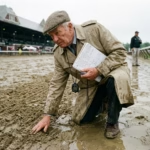
Pick Pony Track Condition Report — Belterra Park, June 11, 2026
Track Surface & Bias
Belterra Park's dirt (D) surface typically plays speed-favoring, especially in sprints, with a clear edge to front-runners and pace-pressing stalkers who secure position early. Inside posts are historically advantageous in dirt sprints, with posts 1–3 carrying a statistical edge as they can grab the rail and save ground through the turn, while wide posts (7–9) often require extra early effort and underperform when the track is fast and biased to speed. In dirt routes, the inside draw remains favorable, but tactically versatile runners (able to sit just off the pace) often finish best when early fractions get hot and front-runners come back late.
On the turf (T) inner oval, the profile tilts toward mid-pack closers with an inside draw, as horses who can settle, save ground on the rail, and quicken entering the lane tend to excel. Ground-saving trips are particularly valuable in fields of six to nine, making inside posts on the turf a consistent historical positive, while wider posts are more workable for horses with a strong sustained late kick but still must overcome extra ground loss on the turns. Assuming standard summer conditions with a fast main track and firm-to-good turf, the overall lean is speed and inside on dirt, and stalking/mid-pack trips with rail or near-rail draws on turf.
Handicapper’s Edge
Under these conditions, bettors can tilt tickets toward early speed and inside draws on the dirt, especially in one-turn sprints where outside posts are at a structural disadvantage and need both talent and trip to overcome the bias. On turf, prioritize inside and mid-gate posts with tactical or mid-pack running styles, upgrading horses who routinely save ground and produce a strong final-eighth kick, while demanding a price on deep closers or wide-drawn runners who will likely travel farther.