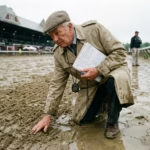
Pick Pony Track Condition Report — Horseshoe Indianapolis, June 22, 2026
Track Surface & Bias
The dirt (D) main track at Horseshoe Indianapolis has recently been playing fast and generally speed-favoring, with a consistent lean toward horses that secure position on or near the lead, especially along the inside paths and rail. This configuration typically benefits front-runners and pace-pressers breaking from inside to middle posts, while deep closers remain more trip-dependent and need an honest or contested pace to fully impact the finish. Even when light moisture hits the surface, the sandy profile has historically stayed fast to good and continues to be relatively kind to speed.
The turf (T) course has recently been listed firm, tending to reward tactical speed and stalking types who can sit close and quicken, rather than one-run closers that need softer going and a big collapse up front. Historical patterns at this course show a post bias toward inside gates (posts 1–3) at middle distances, where saving ground around the tighter turns is a measurable advantage, while wide draws (posts 8+) often must expend extra early energy to avoid losing significant ground. Under these conditions, turf races typically tilt toward forwardly placed tacticians from inside to mid posts, with wide-drawn closers needing both racing luck and a strong pace to overcome the course geometry.
Handicapper’s Edge
With the dirt continuing to favor inside speed and pressers, upgrade runners with proven early foot breaking from inside or just outside the rail, and be cautious about taking short prices on deep closers that need ideal pace setups, especially in routes. On the turf, ground-saving trips and tactical positioning are at a premium; give extra credit to contenders drawn inside with the ability to sit first flight, while using wide-drawn late kickers more defensively unless the projected pace is clearly strong enough to set up their run.