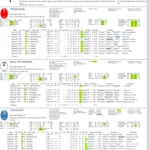
Pick Pony Track Condition Report — Mountaineer Park, August 4, 2026
Weather Forecast
Evening conditions at Mountaineer are expected to be warm and seasonally humid, similar to recent early-August cards at the track, with generally stable footing on both dirt and turf when skies remain mostly clear. Light regional breezes typically run west–northwest to east–southeast across the Ohio River valley in summer twilight hours, which seldom create a meaningful crosswind on the backstretch or stretch.
Track Surface & Bias
On the dirt (D), Mountaineer historically plays honest to slightly speed-favoring when dry to good, with a mild advantage to inside-to-mid posts. Front-runners and tactical stalkers who can secure the rail or sit just off the pace tend to perform best, while deep closers usually need multiple pace factors and traffic to break their way. Recent cards under clear, dry conditions have produced consistent, reliable footing on the main track, reinforcing this small but persistent edge for horses with early position.
On the turf (T), the course is typically trip-sensitive rather than strongly pace-biased, with mid-to-inside draws and versatile, tactical runners holding the most reliable advantage. Wide-sweeping closers can still win, but they generally require a genuinely strong early tempo and a clean outer lane, which is less common on standard Mountaineer turf routes. Historical patterns suggest that maintaining position within two to three lengths of the lead entering the far turn is a key ingredient for success on this course.
Handicapper’s Edge
Today's likely conditions favor early speed and tactical versatility on both surfaces, so upgrading horses that can secure position quickly from inside or middle posts is logical. From a wagering standpoint, be more cautious with one-dimensional deep closers, especially those breaking from wider gates on either surface, unless the field clearly contains multiple committed pace types to force a collapse.