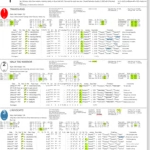
Pick Pony Track Condition Report — Thistledown Racetrack, September 8, 2026
Weather Forecast
Regional guidance for the Cleveland / North Randall area going into this week indicates cooler, drier conditions behind an early‑week front, following a stretch of hot, fast-track weather to start September. Recent analysis for nearby dates at Thistledown has noted mostly sunny skies, low precipitation risk, and light to moderate west–northwest winds around 8–10 mph, supporting a firm dirt surface during the afternoon card. With the main frontal passage already through Ohio, large‑scale severe weather probabilities over the broader region are low, pointing toward only isolated shower or storm chances rather than widespread rain.
Track Surface & Bias
With a dirt (D) card under seasonally warm but not extreme temperatures and no sustained soaking rain in the immediate lead‑up, Thistledown's main track is expected to play fast to standard by first post, with good moisture retention but no significant cupping or deepening. Historically, on dry, fast dirt at Thistledown, forwardly placed runners—especially pace-pressers and tactical stalkers—tend to enjoy an edge over deep closers, as the surface rewards horses that can secure position early and maintain momentum around the sweeping turns. Inside to mid posts often prove slightly advantageous in sprints, where saving ground into the first turn and avoiding wide paths can be critical, while routes are more balanced but still reward horses able to establish position within the first furlong.
Given the absence of prolonged rain and the expectation of relatively light winds, kickback should be moderate, not extreme, which supports stalking types who sit just off the speed without being buried in traffic. However, Thistledown dirt can tighten up and become “lightning fast” on clear, warm days, making it difficult for deep closers to reel in loose leaders if early fractions are not contested. Handicappers should watch early races for confirmation of whether the rail is especially live; recent patterns on similarly fast days have not shown a persistent dead‑rail scenario, but subtle intra‑day shifts are possible.
Handicapper’s Edge
Under a likely fast, dry dirt scenario, early speed and tactical pace positioning should be given extra weight in wagering decisions, particularly in sprint races where riders who aggressively secure the first flight often control outcomes. Trip and post-position analysis should focus on horses drawn inside to middle slots with proven gate speed or stalking versatility, while deep closers dependent on collapsing paces may be downgraded unless the race shape promises multiple committed front‑runners.