Track Characteristics & Configuration
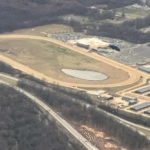
Belmont Park’s main track is a 1.5-mile dirt oval known as “Big Sandy,” featuring an exceptionally long 1,097-foot homestretch. The track has multiple turf courses and chutes that allow for varied race distances with single-turn configurations, reducing the advantage of inside post positions in longer races.
Distance-Specific Handicapping Strategies
Sprint Races (6-7 Furlongs)
Focus on early speed horses and pace pressers, as they win approximately 62% of dirt sprints. Post position bias is minimal in sprint races, with inside, middle, and outside posts performing equally. Prioritize horses with tactical speed who can secure good early position.
One-Mile Races
Inside post positions (1-3) show significant advantage, accounting for 52% of victories. Early speed remains crucial with 48% of wins going to wire-to-wire or pace-pressing types. Closers struggle to make up ground in the long backstretch run.
Route Races (1+ Miles)
The track becomes more balanced for longer distances, with only 20% of races won wire-to-wire compared to 30% in sprints. Outside gates become preferable for route races. At 1 1/16 miles specifically, early leaders win more frequently and inside posts regain some advantage.
Surface Bias Analysis
Belmont Park doesn’t have a strong inherent track bias due to its configuration. However, like most North American tracks, it tends to slightly favor horses who stay close to the pace. The track can be tiring due to its size, causing horses with lower stamina to fade in the stretch.
Daily bias monitoring is essential, as any track can change from day to day based on weather and maintenance. Watch for patterns in early races where speed horses either hold up under pressure or fade when challenged.
Key Handicapping Factors
Speed Figures
Beyer Speed Figures remain paramount for Belmont handicapping. Focus on representative recent ratings rather than single performances, as they provide the most reliable predictor of competitive ability.
Class and Distance Analysis
Evaluate how horses have performed at similar class levels and distances. Belmont’s demanding nature often separates horses by class, making this factor crucial for longer races.
Track Experience
Horses with previous success over Belmont’s surface gain significant advantages. The track’s unique characteristics reward horses who have adapted to its demands.
Pace Analysis
Study pace dynamics carefully, particularly in route races where Belmont’s long stretch allows for tactical positioning changes. Look for horses with tactical speed who can position themselves within striking distance of the leaders.
Turf Racing Considerations
Turf Sprints
The inner turf course heavily favors early speed, with over one-third of races won wire-to-wire. Inside post positions provide advantages on the narrower turf course.
Turf Routes
Longer grass races offer the most balanced competition with slight preference for stalking trips and middle posts (4-6). Mid-pack positioning often proves optimal.
Daily Handicapping Process
- Check track conditions and recent bias patterns through NYRA analyst notes
- Analyze speed figures with emphasis on Beyer ratings for class assessment
- Evaluate post positions based on race distance and surface
- Study pace scenarios focusing on tactical speed rather than pure closing ability
- Consider track experience and surface preferences from past performances
- Monitor weather impacts as Belmont’s dirt surface can change with moisture
The optimal approach combines tactical speed analysis with class evaluation, recognizing that Belmont’s demanding nature rewards horses who can maintain position throughout while having enough stamina to finish strongly in the extended homestretch.