Intro to handicapping
There are four main factors that affect a horse's current form: class, speed, and pace. Current form refers to the horse's physical condition. Class is the level of competition at which he has raced effectively. Speed is how fast the horse has run. Pace is the rate of speed at which the horse is most comfortable.
Professional handicappers “mark up” their past performance sheet to highlight factors they deem important for handicapping the race finish order. With Pick Pony Past Performance Sheets, these numbers are automatically scanned, calculated, and highlighted. Here's the typical routine you should follow.
Handicapping steps (checklist)
Using Past Performance analysis generated by Pick Point from Bris race data files. Add notes for each as needed.
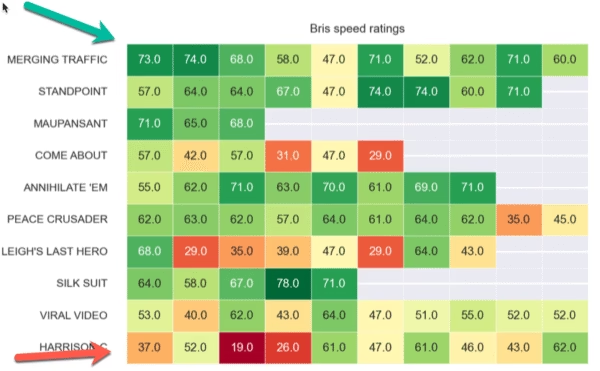
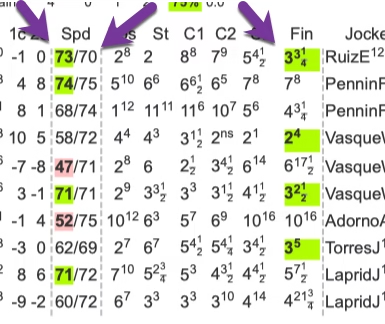
Look for patterns in Bris speed rating
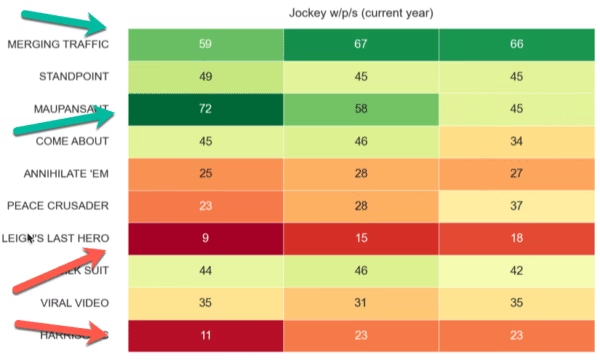
Note best jockeys
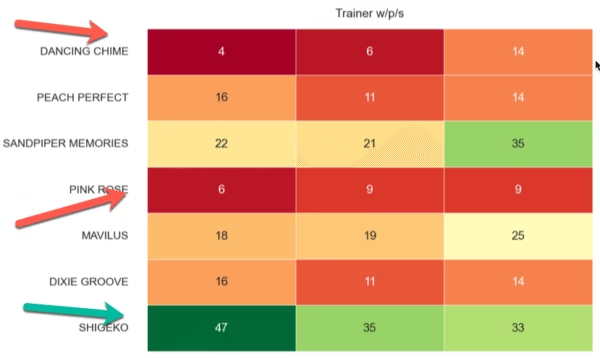
Note best trainers
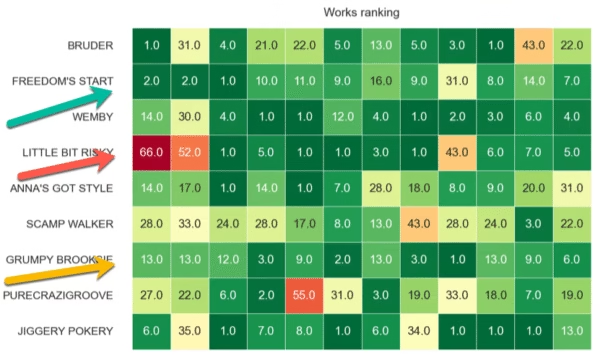
Look for patterns in works
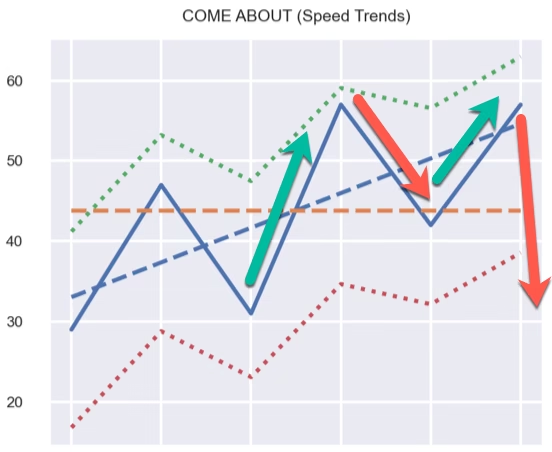
Note in trends in Speed. Look for bounces off the Bollinger Bands
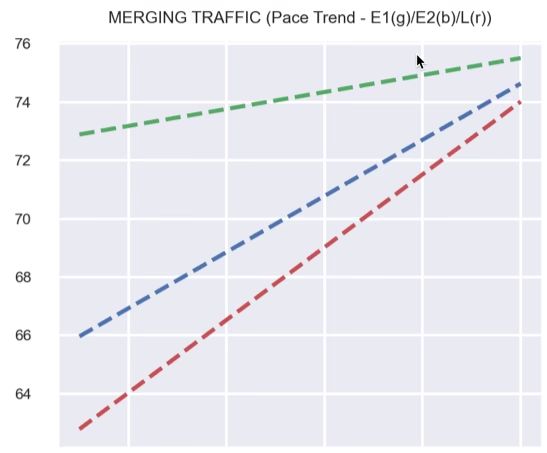
Note any trends in E1/E2/LP pace
Look at the race shape in the Quinn Speed chart and note each race at top. For each horse, highlight the Runstyle (next to the horse name) in green (high correlation) or blue. Or just use Pick Pony's Pace Trend charts.
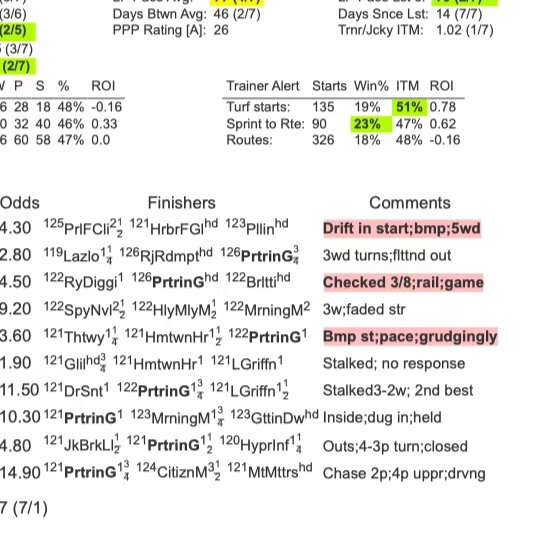
Highlight all Ultimate PP comments in green, blue, or red as you see needed
Or let Pick Pony's Past Performance sheet which automatically highlights entries for you.
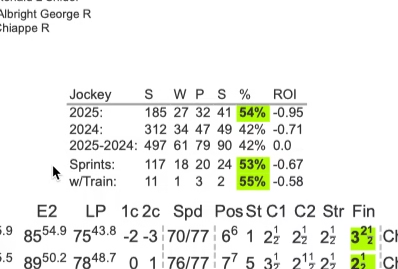
Highlight all jockey stats > 50%
Pick Pony's Past Performance Sheets automatically scan and highlight above-average jockey stats for you.
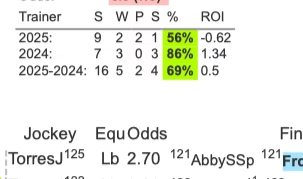
Highlight all trainer stats > 50%
Pick Pony's Past Performance Sheets automatically scan and highlight above-average trainer stats for you.
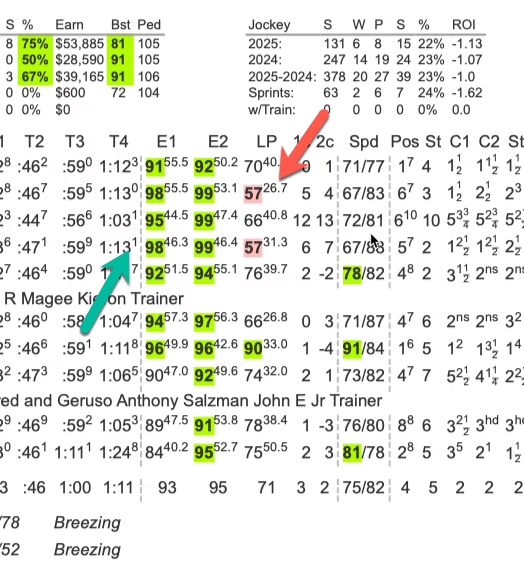
Highlight all E1/E2/LP stats that are greater than par
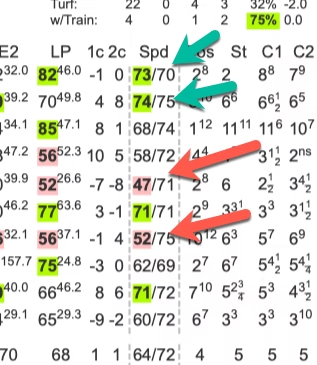
Highlight all Speed stats that are greater than par
Highlight all 1st, 2nd, and 3rd finishes in green

Look for patterns in the lane that are preferred by the horse. Remember: Any post favors E1. Inside post favors LP. Post position is less of a factor the higher the quality of the horse.
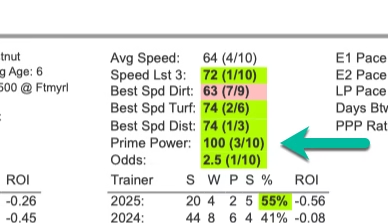
Highlight Prime Power ranking 1st through 4th in green
Evaluate the horse’s performance under pressure
Look at the horses speed compared to the average speed for that race. Also look at their finish. Do they perform well under pressure (a class runner) or does she give up when outclassed?
Look for a favorable race shape
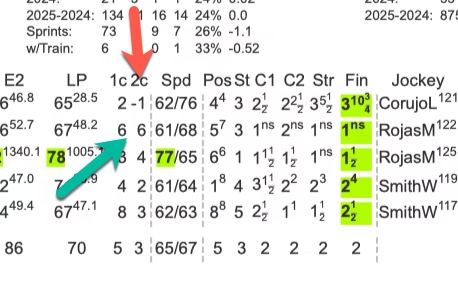
Similar to above, look at the race shape and note how the horse performed with that shape. Compare horses 1c and 2c to the races E1/E2 Par to see if the race shape is favorable.
Rank horses and assign odds
Option 1 (preferred) Rank each horse (or at least rank top 5) on the Odds Calculator page.
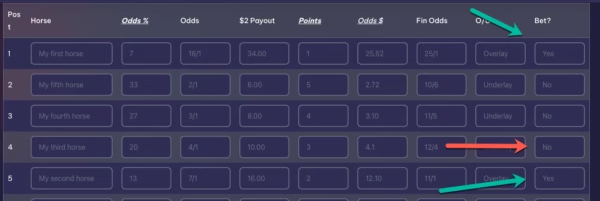
Use the Odds Calculator Form on the Handicapping Steps page. Review each horse and add points to gauge potential for this race.
Use the odds in the Odds Calculator Form to rank the horses (The odd % column can be used to rank – the higher, the better).
Add ML odds to the Odds $ column.
As race time approaches, adjust the Odds $ column as needed. Look for “Yes” in the Bet? column to find overlays with a 50% edge. The closer you can get to race time, the better—sometimes, the big bets come in right at the last moment.
Option 2 (by hand)
Using the ML as a starting point, record your predicted odds, using the odds as a means to indicate “close calls” in your handicapping
Assign each horse odds of winning and look for value (where actual odds are better than your estimate). You can used the Horse Race Betting and Odds table to convert your percent-chance-of-winning to actual odds.
Place bets
As the start time approaches, scratch horses with Win odds less than 3:1, Place odds less than 4:1, and Show odds less than 6:1.
Notes about evaluating current form
Make notes on the horse's current form and adjust your predicted place as needed.
First, evaluate the current form of each horse. Don't necessarily eliminate a horse you deem not in top form, but rather cast doubt on otherwise logical contenders or give a reason for a closer look at borderline entrants.
Check the last start – it will be the best indicator. If there is no start within the last 45 days, find another layoff and see how the horse fared when returning. Note that Grade 1 horses typically return in top form after long layoffs.
Distance and surface should be similar as should class (within one level of his last start).
Check the trainer's win percentage. Trainers focus on Win% – the higher their Win%, the more likely his starters are in peak current form and running well. Similarly, watch for an improvement in form when a horse is transferred to a winning barn.
Check the horse's finish in the last races. If in the lower half without being competitive at any stage, they are likely off form. If they ran well early but slowed in the homestretch after their energy was spent, they may be approaching good form. Even if they are late runners, a finish in the top half of the field hints that they are in form.
Check the workouts. A horse with an irregular workout pattern or one that does not have a timed workout in the last week may be in bad form.
Sudden improvement in form with 3-year-olds
A sudden improvement in form for 3-year-olds, especially early in the season, is common.