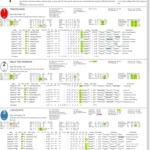
A busy Sunday of Thoroughbred action features the seasonal return of graded winners, key stakes with early implications for the coming campaign, and fresh layers of analysis for bettors targeting major cards. From a pivotal turf sprint at Santa Anita to deep handicapping of the Aqueduct program and national wagering spotlights, today's slate offers both narrative intrigue for racing fans and structured opportunity for horseplayers.
The highlight comes in California, where Queen Maxima kicks off her 5-year-old season in the Las Cienegas Stakes, while national outlets sharpen the lens on Aqueduct and key weekend races across the country with in-depth selections and strategy pieces. Together, these developments frame an afternoon in which class-tested stakes runners and emerging allowance types share the stage with informed wagering opinions that are likely to shape the betting pools.
Queen Maxima Returns in Santa Anita’s Las Cienegas
Queen Maxima, a familiar name in the California turf sprint ranks, launches her 5-year-old campaign in the $100,000 Las Cienegas Stakes (G3T) at Santa Anita, a spot that should provide an immediate gauge of her position in the division. The mare, campaigned by Dutch Girl Holdings and Irving Ventures, has built a reputation on sharp late acceleration and consistency against quality company, and connections have chosen this downhill turf dash as a logical seasonal starting point. The Las Cienegas, traditionally a proving ground for specialist turf sprinters, again assembles a competitive field, but Queen Maxima's back class and proven affinity for the course make her one of the afternoon's focal runners.
Her return also carries strategic implications for the winter and spring turf programs in Southern California. A strong performance would position her for graded assignments later in the meet and potentially set the tone for a campaign anchored around short grass stakes. With the race offering a blend of seasoned stakes performers and ambitious up-and-comers, how Queen Maxima handles her first start of the year—fitness, tactical speed, and finishing punch—will be closely scrutinized by handicappers and horsemen alike as they assess the hierarchy of West Coast turf sprinters heading into the heart of the season.
Aqueduct Card Draws Detailed Handicapping Focus
The Aqueduct Sunday program receives comprehensive treatment from a leading handicapper, with a race-by-race breakdown that highlights both formful favorites and potential value plays. Early on the card, horses such as Coquito and Luna Moth are identified as central players in their respective events, each bringing consistent local form and class relief angles that appeal to bettors seeking reliable starting points in multi-race wagers. Later sprints and routes on the dirt are parsed with attention to pace dynamics, recent Beyer Speed Figures, and trainer patterns, offering a structured roadmap for navigating a card that leans heavily on state-bred talent and familiar winter campaigners.
Particular emphasis is placed on the middle and late sequences, where speed-oriented runners like Gatsby in the third and durable veterans such as Light the Way are profiled as key pace protagonists with strong recent records. The allowance optional claiming event for 3-year-old New York-breds in Race 6 is framed as a pivotal steppingstone, with Pantherian, Wamo, and Miami Kaz forming the core of a competitive field rich in upside. The analysis underscores how trip, race flow, and subtle equipment and Lasix changes could tilt outcomes, giving serious players a analytically grounded framework for constructing tickets across exactas, trifectas, and the late multi-race wagers.
Weekend National Spotlight: Key Races and Betting Angles
Nationally, a comprehensive weekend racing overview isolates several key stakes and allowance events as the backbone of the betting menu, with attention to both proven stakes performers and emerging 3-year-olds. Races such as the Leonatus Stakes at Turfway Park, recently won by Baby Max, are used as touchstones for evaluating current form, track-specific trends, and synthetic-track specialists that could reappear in coming weeks. The coverage ties individual races into broader storylines, including early-season positioning for sophomores aiming at longer-term goals and the development of regional stars in winter circuits.
From a wagering standpoint, the national report blends opinion and structure, outlining suggested plays that range from strong win positions on apparent standouts to more intricate exotic strategies built around logical favorites and live longshots. By highlighting pace scenarios, surface preferences, and projected odds, the piece functions as a guide for players looking to target the most attractive overlays on a busy weekend card. In doing so, it contextualizes local events—like Aqueduct's allowance races and stakes at Turfway or other winter venues—within a unified national betting strategy that rewards disciplined race selection and value-driven ticket construction.