Get more in-depth analysis, expert picks, handicapper reports, AI picks, handicapping tools, in-article data tooltips, NO ADVERTISEMENTS, and other membership perks with a Pick Pony subscription!
Don’t forget Pick Pony’s Expert Picks, AI Picks, and Past Performance Sheets/Racing Forms!
The Pick Pony Handicapper's Report is published daily and provides analysis of all races on the card. A Pick Pony analyst prepares the report, so selections may differ from the Pick Pony Expert Picks, which are based on the consensus of all Pick Pony analysts.
The 2026 Aqueduct winter meet opens on Wednesday, January 1, with an eight-race card beginning at 12:40 PM ET. This marks the inaugural day of a 45-race meet that continues through March 30, offering Thursday-Sunday racing until mid-February. The featured third race, an Allowance Optional Claiming contest at 1 1/8 miles for a $79,000 purse, anchors an afternoon of competitive action across varied conditions and class levels.
The Big A begins the new year with balanced fields and meaningful prize money throughout the card. From opening maiden sprints to closing starter allowance routes, the program provides handicappers with opportunities across all betting levels. The card showcases New York-bred talent while also featuring open company conditions that attract quality horses from top regional connections.
Weather and Track Conditions
Aqueduct faces typical winter conditions for New Year's Day, with temperatures in the low 20s°F and partly sunny skies with breezy conditions. The main dirt track is listed as fast as of morning reports. These cold winter temperatures are standard for the season and should not significantly impact the racing surface, which has been sealed and maintained for winter racing.
Historical track data from recent winter meets indicates the Aqueduct main track has played relatively fairly under similar conditions, with no pronounced speed or closing bias. The track consistently handles winter weather well, producing reliable racing surfaces despite challenging temperatures. Expect the dirt to be firm and fast, favoring honest pace and tactical positioning over any inherent track advantage.
Track Bias and Post Position Analysis
Historical post position data from Aqueduct reveals important patterns that handicappers should incorporate into their analysis. In dirt sprints, posts 4 through 6 have produced 53 percent of winners, with post 4 showing a particularly strong 16 percent win rate. Conversely, inside posts 1 through 3 demonstrate reduced impact values around 0.85, making them statistically disadvantaged positions. Post 2 has been especially weak, winning just 4 percent of dirt sprints in recent samples.
For dirt routes, the post position bias diminishes considerably. Analysis of nearly 1,300 races shows every dirt route post position winning between 12 and 16 percent of races, indicating a more equitable playing field across the starting gate. However, the inside two posts still maintain a slight advantage in turf routes, with win percentages of 16 and 14 percent respectively.
Winter conditions at Aqueduct can exacerbate the anti-inside bias in sprints, as the inner path becomes more churned and demanding. Horses breaking from posts 7 and outward in sprints can use the wider draw to their advantage, avoiding kickback and finding better footing. These statistical patterns should inform both win betting and exotic construction throughout today's card.
Race 1 – Maiden Optional Claiming
Post Time
12:40 PM ET
Pace Analysis
This six-furlong maiden sprint for three-year-olds features a compact field of six runners with $70,000 at stake. The pace scenario appears moderate, with likely early pressure from multiple runners showing tactical speed. Wonder Mist figures to press or contest the early lead, while Pretty Boy Miah and Final Joke possess enough speed to stay within striking distance through the opening quarter. The pace should be honest without becoming suicidal, potentially setting up both stalkers and closers with legitimate winning chances.
Key Contenders
Wonder Mist draws significant handicapper attention as the morning-line favorite despite making just his second career start. Trained by Wesley Ward, who maintains an impressive 25 percent win rate with first-time starters and even higher success rates with juvenile sprinters at major meets, this son of Candy Ride debuted at Kentucky Downs and now drops to optional claiming company. Ward's pattern with horses like this involves finding the right spot after educational debuts, and the class relief combined with the trainer's prowess makes Wonder Mist dangerous. The post 4 draw aligns perfectly with Aqueduct's sprint bias favoring positions 4-6.
Final Joke represents an intriguing first-time starter for trainer Danny Gargan. By Practical Joke out of a Street Sense mare, the breeding suggests both speed and tactical ability for this distance. Gargan has shown solid results in 2025 with an 18 percent win rate, and first-time starters from his barn merit respect when backed by solid workouts. With Kendrick Carmouche aboard, Final Joke offers the tactical speed to secure favorable position while possessing the pedigree to sustain his run through the final furlong.
Secondary Choices
Pretty Boy Miah enters as another firster with strong connections. Trained by Jeremiah Englehart and piloted by Manuel Franco, who combines for a 22 percent win rate at Aqueduct, this son of Beau Liam makes his debut for Team Penney Racing. Franco's 53 percent in-the-money rate at the Big A means he consistently puts horses in position to hit the board. The outside post 6 draw in this small field removes any inside traffic concerns and allows Franco to dictate his own trip. First-time starters for Englehart running at this level often show improvement second time out, but the connections wouldn't be debuting here without confidence.
Complexington, trained by James Ryerson and ridden by Jose Lezcano, represents another angle worth considering. Lezcano maintains a stellar 22 percent win rate with 60 percent in-the-money performance at Aqueduct. The post 5 position keeps Complexington in the favorable 4-6 sweet spot for Aqueduct sprints.
Longshots
Laysen debuts for Richard Dutrow Jr., a veteran trainer with extensive Aqueduct experience. While Dutrow's statistics have been modest in recent years, his ability to have horses ready for their first start cannot be dismissed entirely. At likely generous odds from post 1, Laysen could provide exotic value if able to overcome the inside post disadvantage.
Sonofasonofasailor, trained by Jena Antonucci, brings the credentials of being the first female trainer to win a Triple Crown race with her 2023 Belmont Stakes victory with Arcangelo. While her overall percentages remain modest, Antonucci's ability to peak horses for important spots makes any runner from her barn worth monitoring.
Betting Strategy and Wagering Angles
The race sets up for a two-horse exacta box featuring Wonder Mist and Final Joke, with Pretty Boy Miah included in trifecta and superfecta play. Ward's pattern with second-time starters dropping in class shows strong profitability, while Final Joke's debut represents the type of angle that produces overlays when backed by quality jockeys. Consider vertical wagers using Wonder Mist on top with Final Joke and Pretty Boy Miah underneath, expanding to include Complexington for the bottom two legs of superfectas.
Selections
Win: Wonder Mist
Place: Final Joke
Show: Pretty Boy Miah
Race 2 – Starter Allowance
Post Time
1:09 PM ET
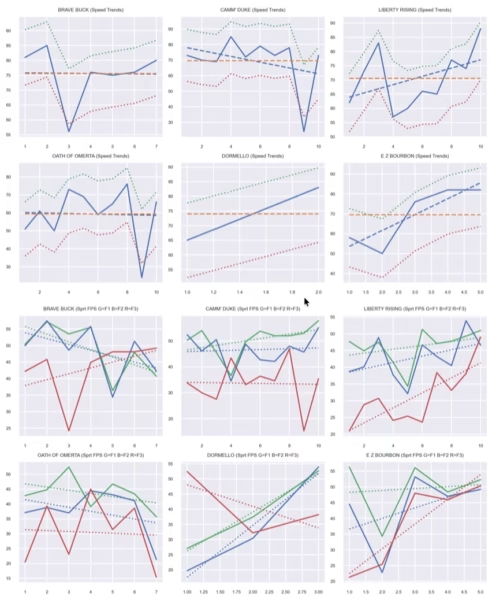
Pace Analysis
This 6 1/2-furlong starter allowance for New York-breds four years old and upward presents a competitive sprint with a likely contested pace. Brave Buck possesses tactical speed and will look to secure favorable early position, potentially pressing or contesting the early lead. The compact six-horse field reduces the likelihood of excessive early pressure, but E Z Bourbon and Camm' Duke both show early speed tendencies that could engage Brave Buck through the opening quarter. The pace should favor those with early positioning while remaining honest enough to allow closers like Dormello a chance to close late.
Key Contenders
Brave Buck emerges as the overwhelming favorite and rightfully so. Trained by Linda Rice, who set a NYRA record with 165 wins in 2025 and maintains a 28 percent win rate at Aqueduct, this five-year-old gelding recently scored impressively at Aqueduct on December 6. Rice's 44 percent in-the-money rate at the Big A demonstrates her consistency in placing horses to succeed. The Carmouche-Rice combination produces a 20 percent win rate with nearly 50 percent in-the-money performance. Brave Buck's recent victory came in this same classification, indicating he has found his proper level. The rail draw could present minor concerns given the inside post bias against positions 1-3 in sprints, but Carmouche's tactical awareness should mitigate this factor. Brave Buck possesses the speed to overcome the post and establish position quickly.
Dormello represents the most dangerous alternative. Making his second career start for Hall of Fame trainer William Mott, this four-year-old colt won impressively on debut at 6 1/2 furlongs at Aqueduct. Mott's pattern with lightly raced horses shows a 22 percent win rate with second-time starters at Aqueduct, and his horses typically improve with racing experience. Jose Lezcano takes the mount, bringing his 22 percent win rate and 60 percent in-the-money performance to bear. Dormello's running style suggests he may settle off the pace and rely on a closing kick, which aligns well with the likely pace scenario. The post 5 position places him in the statistically favorable 4-6 range for Aqueduct sprints.
Secondary Choices
E Z Bourbon adds depth to the exotic wagering picture. Trained by Mark Hennig and ridden by Reylu Gutierrez, this four-year-old gelding shows a 20 percent win rate and 60 percent in-the-money performance in his career. His recent form includes a victory at one mile at Aqueduct, suggesting he handles the main track well. The post 6 draw keeps him outside potential early traffic while still within the favorable posts 4-6 range. E Z Bourbon's early tactical speed allows him to secure good position without forcing the pace, making him a logical threat if the top two underperform.
Liberty Rising makes his third career start for trainer Patrick Quick. With Moreno Hernandez aboard, this four-year-old colt steps into starter allowance company seeking his first victory. While the statistics don't strongly favor this combination, the mid-pack running style could benefit if the pace becomes contested.
Longshots
Camm' Duke, trained by James Ryerson with Eric Cancel riding, brings extensive experience with 28 career starts. However, his modest 7 percent win rate and 36 percent in-the-money performance suggest he has found his ceiling. At likely double-digit odds, Camm' Duke could factor in the exotics if able to secure a forward position and benefit from any pace meltdown.
Oath of Omerta represents Jena Antonucci's entry with Christopher Elliott aboard. While both trainer and jockey show respectable percentages, the combination hasn't clicked frequently enough to inspire confidence in this competitive field.
Betting Strategy and Wagering Angles
The dominant position of Brave Buck makes this race ideal for vertical exotic play. Key Brave Buck on top in exactas and trifectas, spreading underneath with Dormello, E Z Bourbon, and potentially Liberty Rising. For those seeking value, a Dormello win bet offers reasonable odds on a horse with significant upside from a Hall of Fame trainer. The Pick 3 and Pick 4 beginning with this race should heavily feature Brave Buck while including Dormello as secondary coverage.
Selections
Win: Brave Buck
Place: Dormello
Show: E Z Bourbon
Race 3 – Allowance Optional Claiming
Post Time
1:38 PM ET

Pace Analysis
The featured race of the card brings six accomplished runners together at the classic distance of 1 1/8 miles. This race serves as a centerpiece not only for its purse but for the quality of horses assembled and the tactical chess match it presents. The pace scenario appears moderate to honest, with Willintoriskitall likely to show early speed from post 6 while King's Leap may also seek forward position. The two-turn route configuration allows for pace development, and the projected tempo should set up well for the closers Refuah and Cut the Cord. Brad Cox's Wynstock figures to rate kindly in mid-pack, positioning himself for a sustained drive through the stretch.
Key Contenders
Refuah commands serious respect as a proven route runner with an impressive résumé. This seven-year-old gelding trained by Joe Sharp has compiled a 15 percent win rate with a remarkable 70 percent in-the-money performance over 40 career starts. His running style as the slowest closer in the field positions him perfectly for the expected pace scenario. Sharp maintains a 23 percent win rate with 54 percent ITM at his current meet, and Kendrick Carmouche's 20 percent win rate adds another layer of consistency. Refuah's recent form includes both a win and a runner-up finish at one mile at Aqueduct, demonstrating his affinity for the track. The post 3 draw allows Carmouche to save ground throughout while staying close enough to launch his characteristic late run. The 123-pound assignment and distance stretching to 1 1/8 miles both favor his deep closing style.
King's Leap enters with momentum from back-to-back victories, showing a 43 percent career win rate over 14 starts. Trained by M. Anthony Ferraro and partnered with Jaime Rodriguez, who maintains a 22 percent win rate at Aqueduct, this four-year-old gelding has found consistency at the allowance level. His running style as a pace-pressing type means he'll likely track the early speed without forcing the issue. The rail post presents a tactical advantage in this route configuration, allowing Rodriguez to save ground throughout while remaining within striking distance of the leaders. King's Leap's recent successes came at one mile and 1 1/8 miles, both at Aqueduct, confirming his comfort with the track and these conditions.
Wynstock brings the impressive credentials of trainer Brad Cox, whose 25 percent overall win rate and exceptional success at all levels makes any runner from his barn dangerous. This five-year-old horse carries 121 pounds and breaks from post 5 with Manuel Franco aboard. Franco's 22 percent win rate and 53 percent in-the-money performance at Aqueduct combines well with Cox's pattern of improving horses off setbacks. Wynstock earned $528,600 in career earnings over 25 starts with five victories. While his 20 percent win rate trails some competitors, the Cox factor cannot be ignored. His recent seventh-place finish at Aqueduct suggests a need for improvement, but Cox excels at making tactical adjustments. The mid-pack draw allows Franco to ride conservatively early while positioning for a sustained stretch drive.
Secondary Choices
Cut the Cord presents an interesting alternative as another deep closer in the field. This seven-year-old gelding trained by Fernando Abreu shows a 25 percent win rate over 28 career starts. Ridden by Sahin Civaci, who demonstrates a 23 percent win rate with 62 percent in-the-money performance in the sample, Cut the Cord won a race three back at Aqueduct at one mile. His closing style mirrors Refuah's approach, though his statistics suggest slightly better front-end ability. The post 4 position places him perfectly within the favorable posts 4-6 range that dominates Aqueduct sprint statistics, and while this is a route, the general principle of middle posts providing tactical flexibility remains valid. If the pace becomes contested, Cut the Cord looms as a major player.
Palace Boss, trained by Horacio De Paz with Luis Rivera Jr. riding, brings experience with 14 career starts but has struggled to reach the winner's circle consistently, posting just a 14 percent win rate. His recent eighth-place finish at one mile at Aqueduct suggests he may be overmatched in this company. The combination of the 121-pound assignment and the post 2 draw makes his path to victory challenging.
Longshots
Willintoriskitall represents Richard Dutrow Jr. with Yedsit Hazlewood aboard from post 6. The lightest impost at 118 pounds provides some compensation, and Hazlewood shows an impressive 43 percent win rate in the sample with 71 percent in-the-money performance. However, the small sample size raises questions about the statistical significance. Willintoriskitall's recent third at one mile at Aqueduct followed by a victory at one mile on turf at Belmont at the Big A demonstrates versatility. The outside post requires burning energy to secure position in the early stages, but if able to establish clear early command, Willintoriskitall could steal this at a price.
Betting Strategy and Wagering Angles
The feature race demands deep exotic coverage given the quality and the multiple viable winning scenarios. Construct exactas keying Refuah and King's Leap over Wynstock, Cut the Cord, and Willintoriskitall. For trifectas, use a partial wheel placing Refuah and King's Leap on top, with Wynstock, Cut the Cord, and Willintoriskitall underneath in all permutations. The race quality justifies more aggressive investment in exotics than win betting, as several horses possess legitimate winning chances depending on pace dynamics.
Consider the Pick 3 sequences heavily featuring this race's logical contenders while spreading in the surrounding races. The 1 1/8-mile distance and allowance optional claiming classification create enough uncertainty to warrant spreading among the top four selections rather than singling any runner.
Selections
Win: Refuah
Place: King's Leap
Show: Wynstock
Race 4 – Maiden Claiming
Post Time
2:08 PM ET
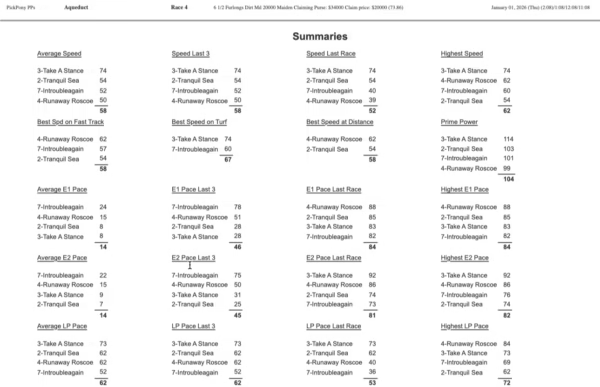
Pace Analysis
This 6 1/2-furlong maiden claiming sprint for three-year-olds at the $20,000 claiming level features seven runners with varied experience levels. The pace projects to be moderate, with Tranquil Sea and Charlie My Boy likely to show early speed. The distance and classification suggest these horses are still finding their footing, which typically produces uneven early fractions. Closers should receive a fair opportunity if able to navigate early positioning without losing too much ground.
Key Contenders
Always Packen draws expert handicapper support as a homebred making his career debut. Trained by Bruce Levine and ridden by Luis Rivera Jr., this three-year-old son of Tale of Ekati represents an interesting statistical angle. Levine maintains a 25 percent win rate with first-time starters in maiden claiming dirt sprints, producing a solid $3.32 return on investment. Always Packen's dam, Vivant, showed consistent early speed throughout her career, suggesting this runner may inherit tactical pace ability. The post 6 draw places him outside potential early traffic while maintaining flexibility for Rivera to choose his trip. The combination of a trainer with proven first-time starter success and a jockey with local experience merits attention, particularly at likely generous odds.
Flint Steel represents Linda Rice, the dominant force at Aqueduct with her record-setting 165 victories in 2025. Making his debut with Jose Lezcano aboard, this son of Mor Spirit benefits from Rice's 23 percent win rate at the Big A. The Rice-Lezcano combination produces reliable results, with both ranking among the top connections at the meet. However, the rail post presents challenges given the documented inside bias against positions 1-3 in sprints. Lezcano's experience should help mitigate this disadvantage by seeking outside position early. Rice's pattern with first-time starters shows she typically has them competitive immediately when entered at appropriate levels.
Take a Stance makes his second career start after finishing eighth of nine at six furlongs at Aqueduct on debut. Now stretching to 6 1/2 furlongs with the addition of blinkers, this three-year-old gelding trained by Michelle Nevin shows potential for improvement. The equipment change and distance adjustment both signal connections believe they've identified solutions to debut shortcomings. Yedsit Hazlewood takes the mount from post 3, a position that faces the same inside bias challenges as the rail. The 117-pound catch weight suggests some concerns about the runner's physical condition or class level.
Secondary Choices
Tranquil Sea enters off a promising runner-up finish at course and distance. Trained by Jeremiah Englehart with Jaime Rodriguez riding, this three-year-old colt demonstrated ability in his debut and logically should move forward with that experience. The post 2 draw presents challenges based on historical data, but his tactical speed allows Rodriguez to work toward more favorable position early. The form from the debut suggests competitiveness at this level.
Charlie My Boy represents Linda Rice's second entry in the race, ridden by Eric Cancel. As another debut runner from Rice's stable, this three-year-old colt merits respect based purely on the trainer's success rate. Rice wouldn't enter two in the same race without confidence in both. Cancel's 24 percent win rate and 57 percent in-the-money performance adds professional reliability. The post 5 position provides tactical flexibility.
Introubleagain makes his fourth career start for Amelia Green with Manuel Franco aboard. While his record shows no victories in three attempts, Franco's presence suggests connections believe he's ready to break through. The post 7 draw keeps him outside traffic, though it requires more early speed to secure position in a sprint.
Longshots
Runaway Roscoe, trained by Chris Englehart with Sahin Civaci riding, has failed to hit the board in two career starts. The post 4 position is favorable based on statistics, but the performances to date suggest this may be too ambitious a spot. At likely double-digit odds, Runaway Roscoe could provide superfecta value if taking a dramatic step forward.
Betting Strategy and Wagering Angles
The maiden claiming classification creates enough uncertainty to warrant spreading in exotic wagers. Use a three-horse exacta box featuring Always Packen, Flint Steel, and Take a Stance. Expand to include Tranquil Sea and Charlie My Boy in trifecta play. The logical structure keys Rice's runners while incorporating the debut angle with Always Packen and the equipment change with Take a Stance. Conservative bettors may prefer place betting on Always Packen at likely generous odds rather than risking win exposure.
Selections
Win: Always Packen
Place: Flint Steel
Show: Take a Stance
Race 5 – Claiming
Post Time
2:38 PM ET
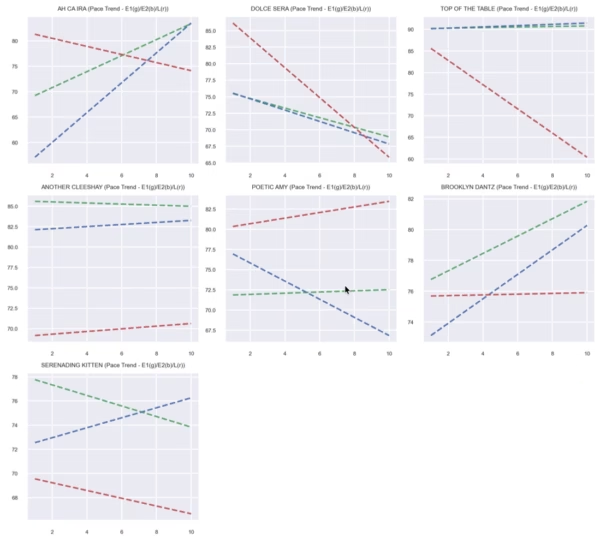
Pace Analysis
This one-mile claiming race for fillies and mares four years old and upward at the $17,500 level features seven runners in a route configuration. The pace should develop moderately, with several runners showing tactical speed without confirmed front-running tendencies. The one-mile distance allows for pace development and strategic positioning throughout the first turn and backstretch. Closers receive a fair opportunity at this distance and class level, particularly if the early pace becomes contested.
Key Contenders
Top of the Table represents Linda Rice, entering off recent positive form at Aqueduct. Rice's dominance at the meet with 28 percent win rate and 44 percent in-the-money performance makes any runner from her stable dangerous at this level. Ridden by Sahin Civaci, who shows a 23 percent win rate in available samples, this five-year-old filly has demonstrated competitiveness at this claiming level. The post 3 position provides some tactical flexibility, though it falls within the historically disadvantaged inside posts 1-3 range in sprints. At the one-mile distance, the post position bias diminishes significantly, making the draw less concerning. Top of the Table's recent form suggests she has found her appropriate class level and should factor prominently.
Ah Ca Ira enters from the Jorge Abreu barn with Manuel Franco aboard. The Franco factor cannot be understated given his 22 percent win rate and 53 percent in-the-money performance at Aqueduct. This four-year-old filly draws the rail post, which provides a ground-saving advantage in route races where the post position bias is more equitable. Abreu maintains solid statistics at Aqueduct with a 28 percent win rate, creating a reliable trainer-jockey combination. Ah Ca Ira's recent racing record shows competitive efforts at this level, and the connections clearly believe she's positioned for a forward move.
Another Cleeshay, trained by Michael Miceli with Christopher Elliott riding, enters from post 4 with tactical flexibility. Elliott's 15 percent win rate trails the top jockeys in the field, but his consistency at 42 percent in-the-money provides reliability. The post 4 position historically shows the strongest win rate in sprints at 16 percent, and while this diminishes in routes, the middle draw still offers advantages. This four-year-old filly has shown competitiveness at the claiming level and could benefit from a favorable pace scenario.
Secondary Choices
Serenading Kitten represents the Devon Gittens stable with Reylu Gutierrez riding. Gutierrez maintains a 22 percent win rate with 41 percent in-the-money performance, providing professional competence. The post 7 draw provides clear paths throughout the race without early positioning concerns. This four-year-old filly's recent form suggests she's competitive at this level.
Poetic Amy and Brooklyn Dantz round out the field with modest recent form. Both possess experience at this class level but face challenging assignments given the quality of the top selections. Brooklyn Dantz carries just 116 pounds with Dalila Rivera aboard, suggesting connections are seeking every possible advantage.
Dolce Sera represents the DeLauro barn with Jorge Vargas Jr. riding. At seven years old with extensive experience, this mare brings seasoning but faces runners in better current form. The post 2 draw presents challenges, and recent performances suggest she may be overmatched.
Longshots
The depth of this field limits longshot appeal, though any of the bottom four could factor in exotics if the pace becomes contested or favorites underperform. Conservative handicappers should focus wagering on the top four selections.
Betting Strategy and Wagering Angles
The Rice factor with Top of the Table combined with Franco aboard Ah Ca Ira creates a competitive race suitable for exacta boxes and trifecta wheels. Key Top of the Table and Ah Ca Ira in exactas, expanding to include Another Cleeshay and Serenading Kitten in trifectas. The claiming level and fillies-and-mares classification create enough unpredictability to warrant spreading rather than keying a single runner. Consider show betting on Top of the Table for conservative value given Rice's consistency.
Selections
Win: Top of the Table
Place: Ah Ca Ira
Show: Another Cleeshay
Race 6 – Maiden Claiming
Post Time
3:08 PM ET
Pace Analysis
This one-mile maiden claiming race for New York-bred three-year-olds at the $40,000 claiming level features eight runners in a route configuration. The pace should develop honestly, with several runners possessing tactical speed without confirmed front-running tendencies. The one-mile distance around two turns allows horses to establish rhythm early while positioning for stretch drives. The classification suggests developing horses still learning their craft, which typically produces varied pace scenarios depending on early tactical decisions by riders.
Key Contenders
True Adirondacker draws strong expert support as a second-time starter for Linda Rice. This three-year-old colt debuted with a disappointing ninth-place finish over this distance at Aqueduct but reportedly needed that start while tiring badly in the final quarter. Now adding Lasix for Rice, who shows exceptional statistics with second-time starters dropping from maiden special weight to maiden claiming with a 31 percent win rate and $2.05 return on investment, True Adirondacker represents a classic Rice pattern. She dominated the 2025 Aqueduct meets with 51 wins at the winter meet and 15 at the spring meet, demonstrating her ability to place horses perfectly. Sahin Civaci takes the mount from post 6, a favorable draw in the statistically strong posts 4-6 range. The outside position allows Civaci to avoid traffic while securing clear passage throughout. The form cycle and trainer pattern make True Adirondacker the logical choice despite disappointing debut.
The Obliterator represents Richard Dutrow Jr. with Yedsit Hazlewood aboard from post 7. Drawing the second-furthest outside post provides clear early paths while maintaining flexibility. This three-year-old colt makes his career debut with limited published workouts, making evaluation challenging. However, Dutrow's experience at Aqueduct and his ability to have runners competitive early cannot be dismissed. The morning line suggests The Obliterator attracts support at 2-1, indicating confidence from connections or market forces. The outside post requires burning early energy to secure position but eliminates traffic concerns.
Big Brooklyn debuts for Carlos Martin with Jose Lezcano riding from the rail post. Lezcano's 22 percent win rate and 60 percent in-the-money performance at Aqueduct provides professional reliability. The rail post in routes shows a 16 percent win rate in turf routes and remains competitive in dirt routes, though the inside posts 1-3 face general disadvantages in sprints. At one mile, the post position impact diminishes. Martin's training pattern and Lezcano's presence indicate connections believe Big Brooklyn is ready for competition.
Secondary Choices
Sicilian Dancer, trained by Michelle Nevin with Luis Rivera Jr. aboard, makes his career debut from post 4. The favorable middle post combined with blinkers equipment suggests connections have prepared this three-year-old gelding deliberately for this spot. Nevin's statistics show modest percentages, but the equipment and post combination merit attention in exotic wagering.
Charlie Hustle enters for Jorge Abreu with Jaime Rodriguez riding from post 2. Abreu maintains a 28 percent win rate, creating intrigue for this debut runner. Rodriguez's 22 percent win rate adds professional competence. The inside post presents challenges, but Rodriguez's experience should help navigate traffic concerns.
Reign It In makes his second start after finishing sixth of nine at one mile at Aqueduct. The blinkers-off equipment change suggests trainer Charlton Baker is seeking improved focus or behavior. Reylu Gutierrez rides from post 3, a position facing inside bias challenges. Without stronger form signals, Reign It In faces difficult assignments.
Longshots
Zip for Rick debuts for Ricardo Legall from post 5 with Omar Hernandez Moreno riding. The lack of published information and modest trainer statistics suggest longshot status at best. Takahama rounds out the field from post 8 with Dalila Rivera aboard at 115 pounds, indicating connections are providing weight relief while acknowledging physical or class concerns.
Betting Strategy and Wagering Angles
The Rice factor with True Adirondacker dominates analysis, but the maiden classification and New York-bred restriction create uncertainty warranting exotic coverage. Key True Adirondacker on top in exactas with The Obliterator, Big Brooklyn, and Sicilian Dancer underneath. Expand trifectas to include Charlie Hustle for coverage if the top selections falter. Conservative bettors should emphasize place and show betting on True Adirondacker rather than aggressive win exposure given the debut competition and maiden unpredictability.
Selections
Win: True Adirondacker
Place: The Obliterator
Show: Big Brooklyn
Race 7 – Claiming
Post Time
3:38 PM ET
Pace Analysis
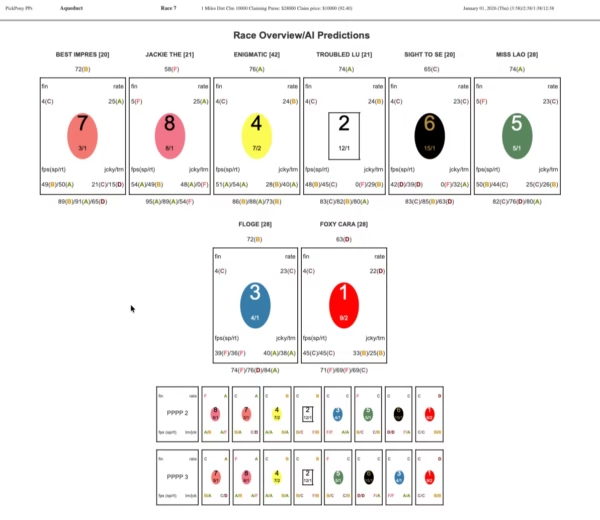
This one-mile claiming race for fillies and mares four years old and upward at the $10,000 level features eight runners. The pace should develop moderately, with several runners showing tactical speed without confirmed front-running styles. The $10,000 claiming level represents the lowest classification on today's card, typically producing competitive but unpredictable results. The one-mile distance allows pace development through the first turn and backstretch, with positioning becoming critical entering the final turn.
Key Contenders
Jackie the Joker receives expert handicapper support as a seven-year-old mare trained by Ilkay Kantarmaci with Gokhan Kocakaya aboard. This veteran mare carries extensive experience with 123 lifetime starts. Recent form includes a victory in a race at around this claiming level at Saratoga with a competitive figure. The post 8 draw provides clear paths throughout the race without early traffic concerns. While the outside post requires more ground to cover, the one-mile distance diminishes this disadvantage compared to sprints. Kantarmaci's barn has shown solid first-off-claim statistics over the past year, though Jackie the Joker comes from several starts with current connections. The experience level and recent competitive figures make her a logical choice at likely generous odds.
Floge enters from the Jesus Romero stable with Jose Lezcano riding from post 3. Lezcano's 22 percent win rate and 60 percent in-the-money performance provides professional reliability that elevates any mount. This five-year-old filly receives a two-pound weight allowance at 121 pounds, suggesting she qualifies as a non-winner since July 1, 2025. The post 3 position provides tactical flexibility while facing the inside bias concerns that affect positions 1-3 in sprints. At one mile, this disadvantage diminishes. Romero's training pattern and Lezcano's presence create intrigue for exotic wagering.
Foxy Cara represents the Figueroa barn with Reylu Gutierrez aboard from post 1. The rail post provides a ground-saving advantage in route races, where post position bias shows more equity than sprints. Gutierrez maintains a 22 percent win rate, offering consistency. This six-year-old mare carries 123 pounds without allowances, indicating she has won more recently than some competitors. The combination of rail post and experienced jockey merits attention.
Secondary Choices
Enigmatic, trained by Panagiotis Synnefias with Julio Hernandez riding, draws post 4 with 123 pounds. The middle post historically shows strength at Aqueduct, though at one mile the advantage diminishes. This five-year-old filly's recent form will determine her competitiveness.
Sight to See represents Devon Gittens with Sahin Civaci aboard from post 6. The combination receives a two-pound allowance at 121 pounds. Civaci shows a 23 percent win rate in available samples, creating modest intrigue. The post 6 position provides tactical options.
Best Impression enters for Michelle Giangiulio with Jose Antonio Gomez riding from post 7. This five-year-old filly carries 123 pounds without allowances. The outside draw requires early positioning work but eliminates traffic concerns.
Longshots
Troubled Luck and Miss Lao round out the field with challenging form profiles. Troubled Luck represents Edward DeLauro with Jorge Vargas Jr. riding from post 2, facing inside post challenges. Miss Lao carries just 114 pounds with Dalila Rivera aboard from post 5, indicating significant weight relief to compensate for class or physical concerns.
Betting Strategy and Wagering Angles
The $10,000 claiming level creates unpredictability that favors spreading in exotic wagers rather than confident win betting. Use a four-horse exacta box featuring Jackie the Joker, Floge, Foxy Cara, and Enigmatic. The combination of the claiming level, fillies-and-mares classification, and one-mile distance produces enough variables to warrant conservative approach betting strategies. Consider place betting on Jackie the Joker if offered generous odds, as her experience advantage becomes more pronounced at this claiming level.
Selections
Win: Jackie the Joker
Place: Floge
Show: Foxy Cara
Race 8 – Starter Allowance
Post Time
4:08 PM ET
Pace Analysis
The closing race features nine runners in a one-mile starter allowance for four-year-olds and upward who have started for claiming prices of $50,000 or less. The $60,000 purse attracts competitive horses at this classification level. The pace scenario appears contested, with House United showing early speed tendencies and Reynolds Channel possessing tactical pace ability. The one-mile distance allows pace development, and positioning through the first turn becomes critical. With nine runners, traffic and trip handicapping assume increased importance. The pace should set up favorably for mid-pack stalkers and closers if the early tempo becomes contested.
Key Contenders
Interceptor draws significant handicapper support as a four-year-old gelding trained by Michael Maker with Manuel Franco riding from post 6. Franco's 22 percent win rate and 53 percent in-the-money performance at Aqueduct combines with Maker's solid training statistics to create a formidable combination. Interceptor carries 121 pounds and shows consistent form with a third-place finish recently at one mile at Aqueduct. The post 6 position places him in the historically favorable 4-6 range that produces 53 percent of sprint winners, and while this advantage diminishes in routes, the middle draw still provides tactical flexibility. Franco's ability to place horses in optimal position throughout races makes him particularly dangerous in competitive route races with large fields. Interceptor's running style as a fast stalker allows Franco to track the early pace without forcing the issue, positioning for a sustained stretch drive.
House United represents Ilkay Kantarmaci with Sahin Civaci aboard from the outside post 9. This five-year-old gelding shows a consistent 11 percent win rate with 42 percent in-the-money performance over 19 career starts. His running style as the fastest leader in the field suggests he'll look to establish early position from the outside post. The post 9 draw presents challenges requiring additional ground to cover, but it eliminates inside traffic concerns. Kantarmaci's stable has demonstrated strong first-off-claim statistics, though House United has been with the barn for multiple starts. Recent form includes a third at 1 1/8 miles at Aqueduct, demonstrating comfort with the track. The combination of the outside post and front-running style creates a scenario where House United must execute perfectly to prevail.
Coffee Talk enters for Linda Rice with Kendrick Carmouche riding from post 5. Rice's dominance at Aqueduct with 28 percent win rate makes any runner from her stable dangerous. Carmouche brings a 20 percent win rate with 49 percent in-the-money performance. This four-year-old gelding carries 123 pounds and shows competitive form with a recent win at Aqueduct. The post 5 position provides optimal tactical flexibility in the middle of the large field. Coffee Talk's running style as a fast leader suggests he'll press or contest the early pace, which could lead to a contested scenario benefiting closers. However, Rice's pattern of placing horses perfectly and Carmouche's tactical awareness create confidence they can navigate the pace dynamics effectively.
Secondary Choices
Remi's Moon represents George Weaver with Eric Cancel riding from post 4. Cancel's 24 percent win rate and 57 percent in-the-money performance provides professional reliability. Weaver maintains solid statistics at Aqueduct, and this five-year-old gelding shows a 33 percent win rate over nine career starts with recent Kentucky-based racing. The return to New York racing could signal connections believe he's ready for a strong effort. The post 4 historically shows strength at Aqueduct, creating intrigue.
Did It Dialed draws expert attention as a four-year-old gelding trained by William Morey with Christopher Elliott aboard. Recent racing at Turfway Park and now debuting at Aqueduct with a new trainer create questions about form translation. However, the expert pick suggests handicappers see potential value. Elliott's 15 percent win rate trails top jockeys but provides consistency. The post 7 position provides clear paths.
Reynolds Channel, trained by Amelia Green with Jaime Rodriguez riding, shows extensive experience with 18 career starts. The post 1 rail position provides ground-saving opportunities in the route, and Rodriguez's 22 percent win rate adds professional competence. Recent form includes competitive efforts at Aqueduct.
Gamebred represents Charlton Baker with Jose Lezcano aboard from post 2. Lezcano's 22 percent win rate and 60 percent in-the-money performance elevates this four-year-old gelding's chances. The inside post requires tactical awareness to avoid traffic.
Longshots
Redacted enters from post 3 for Panagiotis Synnefias with Julio Hernandez riding. Carrying 121 pounds after recent scratches due to illness[scratch watch], Redacted faces questions about current fitness. Salming rounds out the field from post 8 for Rob Atras with Reylu Gutierrez aboard at 123 pounds.
Betting Strategy and Wagering Angles
The competitive nine-horse field creates ideal conditions for deep exotic coverage. Use a three-horse exacta wheel featuring Interceptor, Coffee Talk, and House United with all nine runners underneath for coverage. Expand to trifectas using partial wheels with the top three on top, spreading underneath with Remi's Moon, Did It Dialed, Reynolds Channel, and Gamebred. The large field and competitive nature justify aggressive exotic investment over win betting. The closing race on the card makes it ideal for Pick 3, Pick 4, and Pick 5 payoffs if able to successfully navigate earlier races while spreading in this competitive finale.
Selections
Win: Interceptor
Place: Coffee Talk
Show: House United
Jockey Notes and Insights
Manuel Franco emerges as the dominant rider on today's card with multiple strong mounts throughout the afternoon. His 22 percent win rate and 53 percent in-the-money performance at Aqueduct makes him particularly dangerous when paired with quality trainers. Franco rides Pretty Boy Miah in Race 1, Wynstock for Brad Cox in Race 3, Introubleagain in Race 4, Ah Ca Ira in Race 5, and Interceptor in Race 8. His tactical awareness and ability to secure favorable position throughout races create significant advantages, particularly in route races with large fields. The combination of quality mounts and superior statistics makes Franco central to exotic wagering strategies across the card.
Jose Lezcano maintains an impressive 22 percent win rate with 60 percent in-the-money performance at Aqueduct, making him another key rider to follow. He pilots Dormello for Bill Mott in Race 2, Complexington in Race 1, Flint Steel for Linda Rice in Race 4, Big Brooklyn in Race 6, Floge in Race 7, and Gamebred in Race 8. Lezcano's consistency in placing horses in optimal position creates reliable betting opportunities, particularly when paired with top trainers like Rice and Mott. His experience navigating Aqueduct's main track provides tactical advantages that show in his impressive in-the-money percentage.
Kendrick Carmouche brings a 20 percent win rate with 49 percent in-the-money performance to his mounts. He rides Final Joke in Race 1, the heavily favored Brave Buck for Linda Rice in Race 2, Refuah in the featured Race 3, and Coffee Talk for Rice in Race 8. The Carmouche-Rice combination has been particularly effective at Aqueduct, with Rice's dominance at the meet complemented by Carmouche's tactical awareness. His ability to rate horses effectively in contested pace scenarios makes him especially dangerous in route races.
Eric Cancel demonstrates a 24 percent win rate with 57 percent in-the-money performance, riding Sonofasonofasailor in Race 1, Camm' Duke in Race 2, Charlie My Boy for Linda Rice in Race 4, and Remi's Moon in Race 8. Cancel's consistency and professional approach make him reliable in supporting roles, particularly when mounted on horses from established barns. His tactical flexibility allows him to adapt to various pace scenarios effectively.
Jaime Rodriguez maintains a 22 percent win rate with 52 percent in-the-money performance. He pilots Wonder Mist for Wesley Ward in Race 1, Palace Boss in Race 3, Tranquil Sea in Race 4, Charlie Hustle in Race 6, and Reynolds Channel in Race 8. Rodriguez's ability to execute tactical instructions from diverse trainers makes him valuable across different racing situations. His experience at Aqueduct shows in his consistent performance metrics.
Sahin Civaci shows a 23 percent win rate in available samples and rides across multiple races including Top of the Table for Linda Rice in Race 5, True Adirondacker for Rice in Race 6, Cut the Cord in Race 3, and House United in Race 8. His versatility in handling different running styles and his effectiveness when paired with Rice create betting angles worth following. Civaci's tactical approach adapts well to Aqueduct's main track characteristics.
Trainer Notes and Insights
Linda Rice dominates the trainer landscape at Aqueduct after setting a NYRA record with 165 wins in 2025. Her 28 percent win rate and 44 percent in-the-money performance at Aqueduct makes her the single most important trainer on today's card. Rice saddles multiple runners including Brave Buck in Race 2, Flint Steel and Charlie My Boy in Race 4, Top of the Table in Race 5, True Adirondacker in Race 6, and Coffee Talk in Race 8. Her ability to place horses perfectly within their class levels, combined with her exceptional second-time starter statistics, creates numerous betting opportunities. Rice's pattern with horses dropping from maiden special weight to maiden claiming produces a 31 percent win rate with $2.05 return on investment, making True Adirondacker particularly attractive in Race 6. Her dominance at the winter meet with 51 wins and spring meet with 15 wins demonstrates sustained excellence.
Wesley Ward brings elite credentials to Race 1 with Wonder Mist. Ward's 25 percent lifetime first-time starter win rate establishes him as one of the premier trainers of young horses in North America. His success rate with juvenile sprinters at major meets reaches 43 percent at venues like Keeneland spring meets, though his statistics vary by track. Ward's pattern involves educational debuts followed by class relief for second starts, making Wonder Mist's drop to optional claiming significant. His overall win rate between 24 and 28 percent from 2018 through 2022 demonstrates sustained excellence. When Ward debuts or runs horses in spots like Race 1, the combination of trainer skill and tactical placement creates strong betting opportunities.
Brad Cox enters Race 3 with Wynstock, bringing his impressive 25 percent overall win rate to bear. Cox earned Eclipse Awards as outstanding trainer in both 2020 and 2021, establishing him among the elite conditioners in North America. While his first-time starter win rate of 19 percent trails his overall statistics, Cox's pattern shows horses typically improve off debuts. This characteristic makes his experienced runners particularly dangerous. Cox's success at Oaklawn Park in stakes races, with six wins in the last 13 Kentucky Derby prep races, demonstrates his ability to peak horses for important spots. His 28 percent win rate at Saratoga and consistent high percentages across circuits show versatility and sustained excellence.
William Mott brings Hall of Fame credentials to Race 2 with Dormello. Mott's 22 percent win rate with second-time starters at Aqueduct aligns with his overall pattern of improving horses with racing experience. With over 5,500 career wins and more than $366.7 million in career purse earnings, Mott ranks fourth in North American career earnings and eighth in all-time wins. His ability to develop horses patiently creates betting opportunities when his lightly raced runners make their second starts. Mott's pattern with maidens shows he typically has them competitive immediately when placed appropriately, with improvement expected in subsequent starts.
Richard Dutrow Jr. saddles multiple runners including Laysen in Race 1, Willintoriskitall in Race 3, and The Obliterator in Race 6. Dutrow's extensive Aqueduct experience spanning decades creates tactical knowledge of the track and its quirks. While his recent statistics show a 36 percent in-the-money rate at Saratoga, his ability to have horses ready for important spots remains relevant. Dutrow's pattern with first-time starters and his aggressive tactical approach creates interesting betting angles, particularly at generous odds.
Jeremiah Englehart trains Pretty Boy Miah in Race 1 and Tranquil Sea in Race 4. His pattern with first-time starters shows solid preparation, with debut runners typically showing competitive efforts. The combination with top jockeys like Franco enhances the effectiveness of his runners.
Jena Antonucci brings historic credentials as the first female trainer to win an American Triple Crown race with Arcangelo's 2023 Belmont Stakes victory. While her overall percentages remain modest with approximately 10 percent win rate, her ability to peak horses for important spots and her training under Hall of Famer D. Wayne Lukas creates intrigue. Antonucci saddles Sonofasonofasailor in Race 1 and Oath of Omerta in Race 2.
George Weaver enters Race 8 with Remi's Moon, bringing credentials developed through working as an assistant for D. Wayne Lukas and Todd Pletcher before establishing his own stable in 2002. Weaver's high-percentage outfit races mainly on the East Coast, with summer base at Saratoga and year-round presence in New York. His Grade 1 victories and development of horses like Vekoma demonstrate his ability to maximize talent.
Michael Maker trains Interceptor in Race 8, bringing his proven success at multiple circuits. Maker's consistency and ability to place horses appropriately creates reliable betting opportunities, particularly when paired with top jockeys like Franco.
Best Wagering Strategies and Value Plays
Today's Aqueduct card presents multiple wagering opportunities across varied classification levels and distances. The strategic approach should emphasize Linda Rice runners throughout the card while incorporating Hall of Fame and Eclipse Award-winning trainers in exotic sequences.
The vertical exotic strategy should focus heavily on Race 3, the featured Allowance Optional Claiming event at 1 1/8 miles. The quality of this field combined with the two-turn route configuration creates ideal conditions for trifecta and superfecta investment. Construct multi-race sequences involving Races 2, 3, and 4 for Pick 3 plays, utilizing Brave Buck as a single or strong preference in Race 2 while spreading in Races 3 and 4.
The daily double connecting Races 1 and 2 provides value opportunities, particularly if Wonder Mist attracts heavy public support in Race 1, potentially creating overlay opportunities on alternatives like Final Joke. Combining this with Brave Buck in Race 2 creates a playable two-race sequence at potentially attractive odds.
The late Pick 4 covering Races 5 through 8 represents the most challenging but potentially rewarding sequence. The combination of lower claiming levels in Races 5 and 7 with competitive starter allowances in Races 6 and 8 creates enough uncertainty to produce attractive payoffs. Focus Rice runners Top of the Table and True Adirondacker as singles or strong preferences while spreading in Races 7 and 8.
Rolling exotic strategies work effectively at Aqueduct, particularly when Linda Rice runners provide reliable early sequence winners. Beginning with Brave Buck in Race 2 as a rolling single creates opportunities to build bankroll for later races. Similarly, using True Adirondacker in Race 6 as another potential rolling single allows concentration of funds on the challenging Race 7 and competitive Race 8 finale.
Place and show betting provides value in several spots where morning-line odds may not reflect true probability. Always Packen in Race 4 represents a classic example, where expert handicapper support combined with strong trainer statistics suggests the horse offers better value in place and show pools than win betting at potentially short odds. Similarly, True Adirondacker in Race 6 may attract heavy win betting support given the Linda Rice factor, potentially creating value in the place and show pools.
Exacta boxes work effectively in races with clear top-two or top-three contenders. Race 2 presents an ideal exacta box opportunity with Brave Buck and Dormello representing overwhelming quality advantages over the remainder of the field. While the odds may not offer tremendous value, the reliability creates building blocks for multi-race sequences.
The Pick 5 beginning with Race 4 and continuing through Race 8 presents an attractive all-or-nothing wagering proposition. The maiden claiming opener in Race 4 creates uncertainty balanced by the Linda Rice factors in Races 5 and 6. Structured correctly with Rice runners as singles or partial spreads combined with wider coverage in Races 4 and 7, this sequence offers potential for significant payoffs relative to investment.
Single-race win betting should focus on the strongest trainer-jockey combinations where odds exceed apparent probability. Wonder Mist in Race 1, while deservedly favored, may offer value if odds drift above 2-1 given Wesley Ward's first-time starter statistics. Refuah in Race 3 represents another single-race win betting opportunity, particularly if odds reach 4-1 or higher, given the pace scenario and closing style advantages.
The show parlay strategy creates conservative building opportunities beginning with Brave Buck in Race 2. Placing conservative show bets on the strongest favorites throughout the card while parlaying winnings creates managed risk with potential for acceptable returns. This approach works particularly well at Aqueduct, where Rice's consistency in placing horses creates reliable in-the-money finishes.
Superfecta play becomes viable in races with full fields and competitive depth. Race 8 with nine runners presents ideal superfecta conditions, allowing structured play using the top three contenders while spreading underneath with mid-priced alternatives. The combination of full field and competitive class level creates potential for attractive payoffs while maintaining statistical probability.
The early Pick 5 beginning with Race 1 requires aggressive spreading in the opening maiden sprint while concentrating on quality in Race 2 with Brave Buck. This sequence demands bankroll allocation favoring the mid-races where Rice runners provide reliability while accepting variance in the opening and closing legs. Structured properly, this represents one of the most attractive all-or-nothing wagers on the card, particularly if early races produce favorite defeats creating carryover value.
Cross-track wagering strategies should incorporate Aqueduct races into multi-track sequences with simulcast offerings. The reliability of Rice runners creates anchor legs for multi-track Pick 4 and Pick 5 sequences, allowing concentration on challenging legs at alternative venues while securing probable winners at Aqueduct.
The most important strategic principle remains disciplined bankroll management combined with recognition of trainer and jockey patterns. Linda Rice's dominance, Wesley Ward's first-time starter success, Brad Cox's consistent excellence, and William Mott's second-time starter improvement create identifiable patterns producing positive expectation when odds exceed apparent probability.
Conservative bettors should emphasize Rice runners in win, place, and show pools while incorporating them as rolling singles in multi-race sequences. Aggressive bettors should structure complex vertical exotics in the feature race while using Rice runners as anchor legs in Pick 3, Pick 4, and Pick 5 sequences. The combination of approaches allows adaptation to individual risk tolerance while capitalizing on the clear quality advantages present throughout today's card.