
Racing returns to Parx Racing on Monday, December 29, 2025, with a competitive 10-race card featuring a diverse mix of maiden claiming, starter allowances, and claiming conditions. First post is 12:05 PM EST, with the card concluding around 4:08 PM EST. The day's racing includes the Philly Big 5 wager spanning races 6-10, offering bettors an attractive multi-race betting opportunity.
The card features several competitive claiming races in the $7,500-$25,000 range alongside maiden races at various levels. Race conditions range from a low-level maiden claiming opener to higher-end allowance optional claiming conditions in the featured ninth race. With purses ranging from $19,000 to $52,000, the day presents solid opportunities for both horsemen and bettors.
Track management has published multiple scratches across the card, including veterinarian scratches in races 1, 2, and 4, plus illness-related scratches in race 9. Bettors should verify final field compositions before committing to multi-race wagers.
Weather and Track Conditions
The National Weather Service forecasts temperatures reaching approximately 50°F for the high with an overnight low around 23°F in Bensalem, Pennsylvania. A Dense Fog Advisory remains in effect until 10:00 AM EST, which could impact early morning training and track preparation but should dissipate well before first post.
Current track conditions indicate a fast dirt surface is expected throughout the card. With clear weather anticipated after the morning fog lifts and no precipitation in the forecast, the main track should remain fast and consistent across all 10 races. These conditions typically favor Parx Racing's well-documented speed bias.
The absence of moisture and moderate temperatures create ideal racing conditions for Monday's card. Horses with tactical speed and early pressing styles should benefit from the anticipated fast surface, particularly in sprint races where Parx's speed-favoring profile becomes most pronounced.
Track Bias and Post Position Analysis
Parx Racing exhibits one of the most documented track biases in mid-Atlantic racing. Statistical analysis confirms distinct advantages based on distance, post position, and running style that handicappers must incorporate into their selections.
In sprint races at six to seven furlongs, inside posts demonstrate a significant advantage. Horses breaking from posts 1-3 win at a 15.6% clip, while those starting from post 7 or beyond win only 8.71% of the time. The rail post specifically wins 17% of sprint races, making it the single strongest post position on the track. Posts 5 and 8 have historically been the weakest positions in sprint distances. The proximity to the rail correlates directly with winning percentage, with each post position farther outside reducing win probability.
Route races exceeding one mile present a different dynamic. While conventional wisdom suggested outside posts (4-9) performed better in larger fields historically, recent data through 2019 indicates an emerging inside bias in route races as well. Posts 1-3 now win routes at a 16.44% rate compared to just 8.52% for posts 7 and beyond. The correlation coefficient of -0.877 in Parx's two-turn races indicates an extremely strong relationship between post position and success, matching Monmouth Park for the strongest post bias among mid-Atlantic tracks.
Parx maintains a reputation as a quintessential speed track where early position proves paramount. Wire-to-wire winners occur 34% of the time in sprint races, with front-runners and early stalkers commanding clear advantages over closers. Horses positioned within two lengths of the lead at the first call demonstrate significantly higher win percentages than those rating off the pace.
The track configuration and racing surface combine to create scenarios where horses gaining early position can control fractions and maintain their advantage through the stretch. Closers require exceptionally slow early fractions to successfully rally, making pace handicapping essential for identifying vulnerable speed horses versus legitimate front-runners with the tactical ability to rate.
Race 1: Maiden Claiming $10,000-$12,500 (6 Furlongs)
Post Time: 12:05 PM EST
This 16-horse maiden claiming sprint for three-year-olds and up presents the challenge of handicapping horses that have repeatedly failed to reach the winner's circle. The $10,000-$12,500 claiming range represents the lower echelon of competitive racing, where physical limitations, temperament issues, or simply lack of ability have prevented these runners from graduating. Two horses – Irish Wish and Week's Strong – have been scratched by the veterinarian, reducing the field to 14 starters.
Pace Analysis
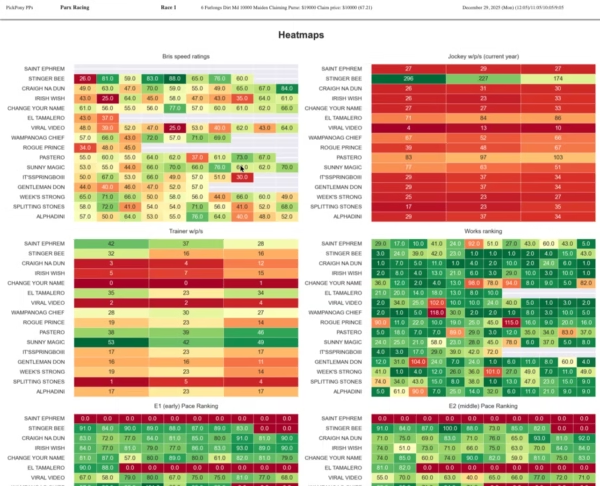
The pace scenario projects as moderate with multiple horses showing tactical early speed but no confirmed wire-to-wire specialists. Wampanoag Chief figures to show early from the inside while Pastero and Change Your Name should secure stalking positions within striking distance. The six-furlong distance favors horses with natural early speed given Parx's documented sprint bias, where 37% of winners lead wire-to-wire and 17% win from the rail post.
With 14 runners in the gate, early position becomes critical. Horses breaking from the outside posts face significant disadvantages in securing favorable trips, requiring jockeys to commit horses early or navigate through traffic in the stretch. The moderate projected pace suggests no suicidal speed duel will occur, allowing tactical speed horses to remain competitive throughout.
Key Contenders
Pastero emerges as the consensus selection from multiple handicapping sources. This Scott Lake trainee enters with a 0-1-4 record from nine career starts, demonstrating consistent competitiveness without reaching the winner's circle. The gelding's four third-place finishes indicate ability at this claiming level, and second time at the six-furlong distance could produce the needed improvement. Lake trains at an 11% win rate with $1.5 million in earnings at the current Parx meet, demonstrating his stable's competitiveness. Dexter Haddock takes the mount, a rider winning at 17% with 43% in-the-money frequency. The #10 post presents some concerns, but Pastero's tactical speed should allow Haddock to secure a forward position early.
Wampanoag Chief makes his debut for Elliott Soto-Martinez with rider Melvis Gonzalez from the favorable #8 post. The three-year-old gelding by Munnings has shown training competency with published workouts suggesting readiness for first asking. Debut runners in maiden claiming races warrant skepticism, as connections offering horses for sale in their first start rarely possess supreme confidence. However, some trainers use maiden claiming as an entry point for late-developing prospects, and Wampanoag Chief's breeding suggests more talent than typical debut claimers. Gonzalez rides at 14% at the meet.
Saint Ephrem debuts for Hall of Fame trainer John C. Servis, whose 18% career win rate and 29% meet strike rate command respect. First-time starters for Servis merit consideration, particularly when the trainer shows confidence by entering at this claiming level. The three-year-old gelding by Tiz the Law represents quality breeding, though the decision to debut in a claimer rather than maiden special weight suggests physical or training limitations. Anthony Nunez rides for the powerhouse barn. The #1 post provides optimal positioning in this sprint.
Secondary Choices
Stinger Bee brings experience with a 0-3-2 record from 13 starts for trainer Robert Mosco. The four-year-old has demonstrated consistency without winning, typical of this claiming level. Recent workouts show maintenance activity, and the #2 post provides tactical advantages. Mychel Sanchez rode this gelding previously, but the mount switches to Mosco's regular rider for this assignment.
Splitting Stones exits a second-place finish in his most recent start, showing improved form for trainer Joann Bertone. The four-year-old gelding's 0-2-2 record from 11 starts reflects inconsistency, but placing second last out represents positive momentum. Julio Correa rides from the unfavorable #15 post, requiring early commitment to secure position.
Betting Strategy and Wagering Angles
The race structure presents challenges with 14 starters and limited form separation. Pastero offers value as a horse consistently competitive at this level now receiving excellent rider/trainer connections. The #10 post creates some risk, but tactical speed and Haddock's skill mitigate these concerns. A win bet on Pastero represents the primary approach.
For vertical exotic wagers, constructing a ticket with Pastero on top while spreading underneath captures potential value. Using Pastero over Saint Ephrem, Wampanoag Chief, and Stinger Bee in exactas provides coverage of the logical contenders while maintaining affordable ticket costs. The large field creates opportunities for longshot trifecta payoffs, where including Splitting Stones and Sunny Magic in the third position could produce substantial returns if the pace scenario unfolds favorably.
Multi-race players should use Pastero as a single in Pick 3 and Pick 4 sequences, as the maiden claiming opener traditionally produces the most reliable result on cards featuring these conditions.
Selections
Win: 10 Pastero
Place: 1 Saint Ephrem
Show: 8 Wampanoag Chief
Race 2: Starter Optional Claiming (1 Mile 70 Yards)
Post Time: 12:32 PM EST
This nine-horse route features three-year-olds and upward who have started for $16,000 or less and have never won two races, or those entered at the $16,000 claiming price. The unique 1 mile 70-yard distance at Parx favors horses with tactical speed who can secure position before the first turn while maintaining enough stamina for the extended sprint distance. One horse – Extrasexymcsteemee – has been scratched by the veterinarian, reducing the field to eight starters.
Pace Analysis
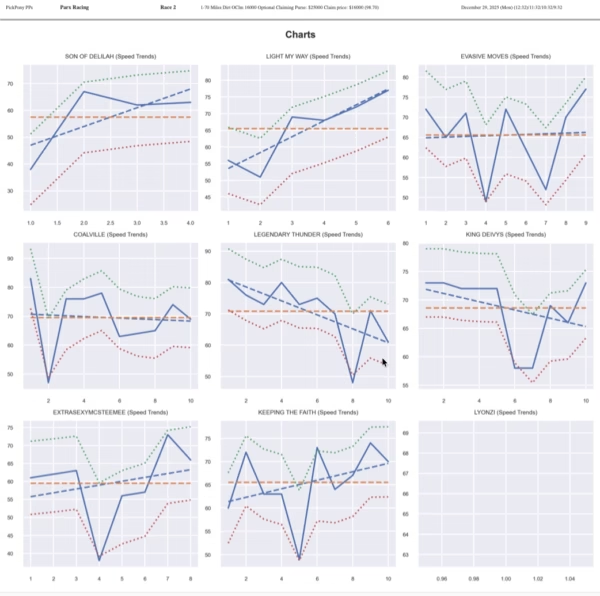
The pace projects as moderate to honest with several horses capable of securing early position. Light My Way and Evasive Moves figure to show speed from the gate, while Keeping the Faith should stalk within striking distance. The 1 mile 70-yard configuration creates a unique dynamic where horses must balance early speed to secure position before the turn while conserving energy for the stretch run.
Historical data indicates that approximately 29% of winners at this distance lead wire-to-wire, with stalkers within 2-3 lengths of the lead at the half-mile pole showing the highest win percentages. Closers face significant disadvantages unless extremely slow early fractions materialize. With eight starters, traffic concerns diminish compared to larger fields, allowing horses to establish comfortable positions early.
Key Contenders
Keeping the Faith draws strong support from handicappers for trainer Jacinto Solis with Dexter Haddock riding. The three-year-old colt has demonstrated tactical speed and tactical ability in previous starts, positioning himself effectively before making sustained rallies. Haddock's 17% win rate and intimate knowledge of Parx's racing surface provide significant advantages. The #8 post allows Haddock to assess early pace development while maintaining flexibility for positioning. Solis trains competently at the claiming and starter levels, understanding how to place horses for optimal success.
Son of Delilah enters for trainer Edward Coletti Jr. with Francisco Martinez aboard from the rail post. The three-year-old colt possesses early speed that matches Parx's bias profile, and the inside draw provides optimal positioning in a route race where saving ground on both turns proves essential. Martinez wins at 14% for the meet with solid tactical skills. The rail post historically produces strong results in Parx route races when horses possess sufficient tactical speed to clear and secure position.
Legendary Thunder brings experience for Scott Lake with Abner Adorno riding. The four-year-old gelding's previous races demonstrate competitiveness at this level, and Lake's understanding of class dynamics positions this horse appropriately. Adorno wins at 17% with 49% in-the-money frequency. The #5 post provides sufficient room for early maneuvering without forcing outside positioning.
Secondary Choices
King Deivys represents another Scott Lake entry with Jorge Vargas Jr. taking the mount from the #6 post. The four-year-old gelding fits the class conditions and could benefit from favorable pace development. Lake's dual entry suggests confidence in both horses, with the trainer potentially holding opinions on which runner better suits the expected pace scenario.
Light My Way exits recent races showing speed, and if rider Gonzalez can secure a clear early lead with moderate fractions, this horse could prove difficult to pass in the stretch. The #2 post facilitates early positioning.
Betting Strategy and Wagering Angles
The race presents competitive dynamics with several horses possessing realistic winning chances. Keeping the Faith represents the logical win selection given the rider/trainer combination and tactical advantages. A win bet provides the foundation for approaching this race.
For exotic wagers, constructing exactas with Keeping the Faith on top over Son of Delilah, Legendary Thunder, and King Deivys captures the most probable outcomes while maintaining reasonable ticket costs. The route distance and starter optional claiming conditions create less predictability than straight claiming races, warranting broader coverage in vertical exotics.
Multi-race sequence players should consider using Keeping the Faith as a single or including 2-3 horses in Pick 3/Pick 4 tickets, as nine-horse fields provide manageable coverage costs.
Selections
Win: 8 Keeping the Faith
Place: 1 Son of Delilah
Show: 5 Legendary Thunder
Race 3: Starter Optional Claiming Fillies & Mares (1 Mile 70 Yards)
Post Time: 12:59 PM EST
Seven fillies and mares three years old and upward who have started for $25,000 or less with specific conditions compete over the 1 mile 70-yard distance. This race represents a significant step up in quality from the first two events, with a $32,000 purse attracting horses with proven winning records. The class restrictions create a competitive environment where form analysis and pace scenarios prove decisive.
Pace Analysis
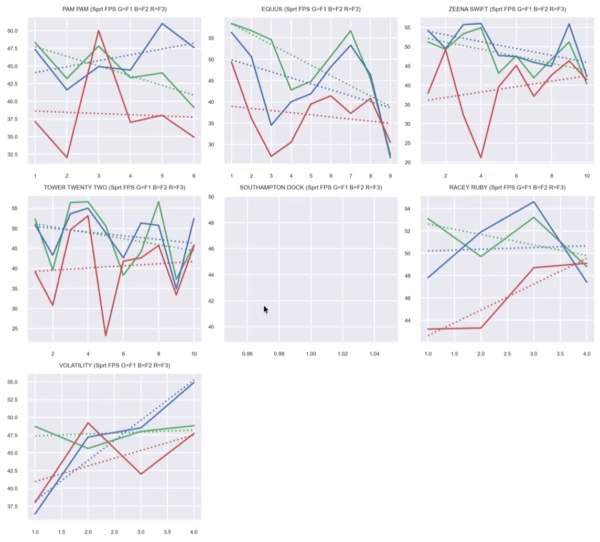
Pam Pam figures to control early fractions from her inside post with tactical speed, while Racey Ruby also shows early inclination. Volatility possesses the ability to stalk comfortably before launching her bid. The pace projects as moderate, allowing tactical speed horses to establish comfortable positions without engaging in speed duels that compromise stretch performance.
Tower Twenty Two's closing style makes her dependent on honest early fractions to set up her rally. If Pam Pam secures an uncontested lead with moderate splits, closers will face significant challenges overcoming that advantage given Parx's speed-favoring surface. The seven-horse field provides clean trips for most runners, reducing the impact of traffic concerns.
Key Contenders
Pam Pam emerges as the overwhelming favorite with a 30% win probability according to statistical models. The Jamie Ness-trained four-year-old filly enters with a 23-6-9-12 record and over $406,000 in career earnings, demonstrating consistent success at this level. Ness trains at a remarkable 23% win rate with 61% of his starters finishing in the money. The trainer's dominant presence at Parx creates significant advantages through intimate track knowledge and quality horsemanship. Yedsit Hazlewood takes the mount from the rail post, providing optimal positioning. Recent races show Pam Pam competing against similar opposition with strong performances, including a win last out. The #1 post in this route represents the single strongest position on the card.
Tower Twenty Two presents the primary threat as a deep closer for trainer Silvino Ramirez with Eliseo Ruiz riding. The three-year-old filly recorded a dominant 2-length victory in her most recent start, displaying impressive late acceleration. With 4-7-10 from 18 career starts and over $252,000 in earnings, Tower Twenty Two possesses proven class. Ramirez trains at 22% with an impressive 70% in-the-money rate. Ruiz contributes a 24% win rate and 55% ITM frequency. The #4 post provides sufficient room for a closer to navigate, though Tower Twenty Two requires honest pace to maximize her rally. Her running style creates vulnerability if Pam Pam controls moderate fractions.
Volatility represents another Jamie Ness trainee, giving the barn two serious contenders. The five-year-old mare brings a 3-5-12 record from 29 starts with over $268,000 in earnings. Her mid-pack stalking style suits Parx's pace dynamics, and Melvis Gonzalez rides capably from the #7 post. Ness's dual entry suggests both fillies merit serious consideration, with the trainer potentially splitting preferences based on pace development expectations. Volatility's tactical versatility allows her to adapt to various race scenarios.
Secondary Choices
Racey Ruby enters off a second-place finish in her previous start for trainer Michael Catalano Jr. with Ruben Silvera riding. The four-year-old filly possesses early speed that could compromise Pam Pam's lead if engaged early. With a 25% career win rate and 67% ITM frequency from 12 starts, Racey Ruby demonstrates consistent competitiveness. The #6 post allows tactical flexibility.
Equus brings tactical speed for trainer Pompeyo Gomez with Joezer Rangel aboard from the #2 post. The four-year-old filly's 3-5-8 record from 19 starts shows regular competitiveness without dominant performances. Recent form suggests she fits at this level, and the inside post provides positioning advantages.
Betting Strategy and Wagering Angles
Pam Pam represents exceptional value despite likely short odds given her class advantage, tactical speed, optimal post position, and elite trainer/jockey combination. A win bet provides the foundation, with consideration for show betting if odds drop below even money, as her consistency produces high ITM frequencies.
For exotic wagers, using Pam Pam on top in exactas over Tower Twenty Two, Volatility, and Racey Ruby captures the most probable outcomes. The race structure suggests the Jamie Ness duo should dominate, making an exacta box of Pam Pam and Volatility appealing for smaller budgets.
In trifectas, keying Pam Pam on top with Tower Twenty Two and Volatility for second, then spreading wider for third position, creates value opportunities if longer prices fill the trifecta. Tower Twenty Two's closing style makes her more likely for place/show positions rather than winning unless pace dynamics shift dramatically.
Multi-race sequence players should strongly consider using Pam Pam as a single, as this represents the strongest individual selection on the entire card given the class/connections/position advantages.
Selections
Win: 1 Pam Pam
Place: 4 Tower Twenty Two
Show: 7 Volatility
Race 4: Claiming $7,500 (6.5 Furlongs)
Post Time: 1:26 PM EST
Eight three-year-olds and four-year-olds and upward who have never won three races compete at the $7,500 claiming level over 6.5 furlongs. Two horses – Banjo and Back East – have been scratched by the veterinarian, reducing the field to six runners. The small field creates cleaner racing conditions but reduces exotic payoffs. Three horses drew allowances for not winning since November 29.

Pace Analysis
Au Some Warrior and Drunkle both show early speed tendencies, creating potential for an early duel that could compromise their chances. Biagio possesses tactical speed to stalk the leaders, while Sir Mendel typically rates farther back before closing. With only six runners, the pace scenario becomes critical, as speed horses have nowhere to hide from each other in the early stages.
The 6.5-furlong distance creates a unique dynamic where horses must maintain speed longer than a standard six-furlong sprint while not requiring the stamina of a one-turn mile. Horses with sustained speed rather than pure early burst tend to excel at this configuration.
Key Contenders
Au Some Warrior turned in a winning performance two starts back at this track before finishing fourth (beaten six lengths) in his most recent outing. For trainer Elliott Soto-Martinez with Anthony Salgado riding, the three-year-old gelding drops back to a level where he previously succeeded. With a record of 2-5-10 from 20 starts and over $255,000 in career earnings, Au Some Warrior demonstrates class and consistency. The #2 post provides excellent positioning, and recent workouts suggest readiness. The weight allowance for not winning since November 29 further enhances his chances. Salgado's 17% win rate adds competence to the assignment.
Biagio represents a stalker with tactical speed for trainer J. Guadalupe Guerrero with Andrew Wolfsont riding. The four-year-old gelding brings a 2-5-6 record from 18 starts with consistent competitiveness. Recent performances show Biagio competing effectively against similar competition. Guerrero trains at 14% with a solid 58% ITM rate. The #4 post allows Biagio to assess early pace development before committing. His running style creates tactical advantages if Au Some Warrior and Drunkle engage in a speed duel.
Bobo Liver enters for Scott Lake with Joezer Rangel aboard. The four-year-old gelding recorded a victory two starts back at this track before a disappointing eighth-place finish in his recent race. With 2-3-4 from nine starts, Bobo Liver fits this claiming level. Lake's 11% win rate and intimate knowledge of Parx create advantages. The #5 post provides neutral positioning. Weight allowances enhance his chances, and the stalking style could benefit from pace scenarios.
Secondary Choices
Sir Mendel brings closing ability for trainer Andrew Simoff with Julio Hernandez riding. The four-year-old gelding's tactical style makes him dependent on honest early fractions. The #6 post provides room for a closing rally. With limited closing opportunities at Parx, Sir Mendel faces challenges unless pace collapses occur.
Hoppy Time shows some recent form for trainer Jordan Bullock with Kendry Rivera aboard from the rail post. The gelding's 2-4-5 record demonstrates occasional competitiveness, though consistency remains an issue.
Betting Strategy and Wagering Angles
The small field creates limited exotic payoff potential but increases confidence in key selections. Au Some Warrior represents the primary win selection given his previous success at this level, favorable post position, and tactical advantages. The weight allowance provides additional edges.
For exacta wagers, boxing Au Some Warrior with Biagio captures the two most logical winners while keeping costs minimal in a six-horse field. Adding Bobo Liver for trifecta coverage provides value if Lake's trainee returns to his winning form from two starts back.
Multi-race sequence players should use Au Some Warrior with confidence as a single or include 2-3 horses for broader coverage given the small field dynamics.
Selections
Win: 2 Au Some Warrior
Place: 4 Biagio
Show: 5 Bobo Liver
Race 5: Maiden Claiming $30,000-$40,000 Two-Year-Olds (6 Furlongs)
Post Time: 1:53 PM EST
Ten two-year-old colts and geldings compete in this maiden claiming sprint with claiming prices ranging from $30,000 to $40,000. One horse – Onceinawhile – has been scratched by the stewards, leaving nine runners. Two-year-old maiden racing presents unique handicapping challenges, as horses possess limited racing experience and connections' intentions vary widely. The $40,000 claiming level represents mid-tier conditions where horses with physical issues or limited talent begin their careers.
Pace Analysis
Raging Cajun and Finance both show early speed in their limited racing histories, while J Cody and Mybandit possess tactical ability to stalk. Two-year-old pace scenarios prove difficult to project accurately, as horses frequently show different running styles in subsequent starts after gaining racing experience. The six-furlong distance requires sustained speed rather than pure early velocity, favoring horses with some tactical dimension.
Post position becomes particularly important in two-year-old races, as inexperienced horses breaking from extreme outside posts often struggle with gate positioning and traffic navigation. The rail post can intimidate young horses unfamiliar with tight racing conditions.
Key Contenders
Mybandit emerges as a consensus selection after showing improvement in recent workouts for trainer Richard Vega with Eliseo Ruiz riding. The two-year-old gelding's breeding by Street Sense suggests quality, and workouts indicate readiness for competitive performance. Ruiz contributes a strong 24% win rate with 55% ITM frequency. The #4 post provides neutral positioning without extremes that could compromise this inexperienced runner. Vega's competence in developing young horses creates confidence.
Raging Cajun brings the most racing experience in the field with three second-place finishes from six starts for trainer Edward Allard. The gelding has consistently competed well without reaching the winner's circle, demonstrating ability at this level. Angel Rodriguez takes the mount, a rider with a 29% win rate and exceptional 68% ITM frequency. With Rodriguez's patient style and Raging Cajun's tactical speed, this combination could finally break through. The #9 post presents challenges in a sprint, requiring Rodriguez to commit early or navigate traffic. His 0-3-3 record suggests competitiveness with the breakthrough potentially imminent.
Finance debuts for trainer Marya Montoya with Mychel Sanchez aboard. First-time starters in maiden claiming races warrant skepticism, but Sanchez's presence adds credibility given his leading-rider status. The 24% win rate and elite positioning skills suggest connections believe this gelding possesses ability. Montoya's barn shows competence with young horses. The #3 post provides good positioning for a debut runner who needs clean conditions to show his best.
Secondary Choices
J Cody makes his debut for Marya Montoya with Dexter Haddock riding from the #5 post. The trainer/jockey combination commands respect, and having two starters suggests confidence in the barn's current form. Haddock's experience with young horses creates advantages.
Alastar brings some racing experience with one third-place finish from three starts. The #10 post creates significant challenges in this sprint where early position proves critical.
Betting Strategy and Wagering Angles
Two-year-old maiden claiming races create uncertainty that favors broader coverage in exotic wagers. Mybandit represents the primary win selection given breeding, connections, and post position. A conservative win bet provides the foundation.
For exacta coverage, using Mybandit on top over Raging Cajun, Finance, and J Cody captures horses with realistic winning chances while maintaining affordable costs. Raging Cajun's consistency makes him an excellent exacta horse beneath Mybandit.
In trifectas, spreading wider to include Alastar and Thomas Benjamin provides value if the race unfolds unpredictably, which frequently occurs in two-year-old maiden claiming events. The $30,000-$40,000 claiming range creates more competitiveness than bottom-level maiden claimers, justifying broader exotic coverage.
Selections
Win: 4 Mybandit
Place: 9 Raging Cajun
Show: 3 Finance
Race 6: Claiming $7,500 Fillies & Mares (1 Mile 70 Yards)
Post Time: 2:20 PM EST
Eleven fillies and mares three years old and upward who have not won since September 29 compete at the $7,500 claiming level over the 1 mile 70-yard distance. This represents the first leg of the Philly Big 5 sequence. Weight allowances of three pounds are available for fillies and mares who haven't won at a mile or over since November 29. The claiming restrictions create a competitive environment where recent form and fitness prove decisive.
Pace Analysis
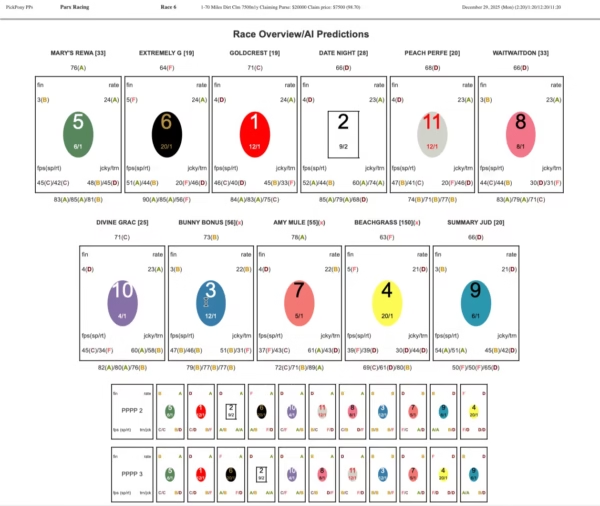
The pace projects as moderate with several fillies showing early inclination. Date Night Kisses and Bunny Bonus figure to show speed from their inside posts, while Divine Grace should secure stalking position. With 11 starters, traffic management becomes a factor, particularly for horses breaking from extreme outside posts who must commit early to secure favorable positions.
The 1 mile 70-yard distance creates unique challenges for fillies and mares at this claiming level, as the extended sprint requires both speed and stamina that some claiming horses lack. Horses who have previously won at the distance demonstrate proven ability to handle the configuration.
Key Contenders
Divine Grace represents the consensus selection for dominant trainer Jamie Ness with leading rider Mychel Sanchez aboard. The five-year-old mare's recent performances show competitiveness at this level, and the Ness-Sanchez combination produces exceptional results with a 28% win rate when paired. Ness's 23% meet win rate and Sanchez's 24% strike rate create powerful synergies. The #10 post presents challenges in this route, requiring Sanchez to navigate traffic early, but his elite skills mitigate these concerns. Divine Grace's tactical stalking style allows positioning flexibility. The weight allowance further enhances her chances.
Peach Perfect enters for trainer Thomas Iannotti IV with Francisco Martinez riding from the extreme outside #11 post. The six-year-old mare possesses tactical speed that could benefit from the wide post by allowing clean early positioning without traffic concerns. Martinez wins at 14% with solid tactical skills. Recent form shows Peach Perfect competing against similar opposition with respectable efforts. The outside post requires commitment but prevents getting trapped inside or behind slower horses.
Date Night Kisses brings early speed for Jamie Ness with Yedsit Hazlewood aboard from the #2 post. The six-year-old mare's front-running style matches Parx's bias, and the inside post facilitates early positioning. Hazlewood wins at 27% with 59% ITM frequency, ranking among the top riders at the meet. Ness's dual entry suggests confidence in both fillies, with tactical considerations determining which receives primary backing.
Secondary Choices
Waitwaitdonttellme shows some tactical speed for trainer Leslye Bouchard with Franklin Gonzalez Jr. riding. The five-year-old mare's stalking style could benefit from pace development. The #8 post provides neutral positioning.
Amy Mule represents a Scott Lake entry with Dexter Haddock riding. The four-year-old filly possesses tactical ability, and Lake's claiming expertise creates advantages. The #7 post allows flexibility.
Longshots
Goldcrest exits recent races showing some competitiveness for trainer Silvino Ramirez with Julio Correa aboard from the rail post. The five-year-old mare fits the class conditions, and the inside post provides optimal positioning. At likely longshot odds, Goldcrest offers trifecta value if pace scenarios favor her stalking style.
Betting Strategy and Wagering Angles
Divine Grace represents the logical win selection despite challenges from the outside post. The elite trainer/jockey combination justifies confidence. A win bet provides the foundation, with additional consideration for show betting given the 11-horse field creating competitive dynamics.
For exacta coverage, using Divine Grace on top over Peach Perfect, Date Night Kisses, and Waitwaitdonttellme captures the most probable outcomes. Boxing Divine Grace with Date Night Kisses provides concentrated coverage on the Ness duo.
In trifectas, spreading to include Amy Mule, Goldcrest, and Mary's Reward in the third position creates value opportunities while keeping costs manageable. The 11-horse field produces attractive payoffs when longshots fill trifecta positions.
As the first leg of the Philly Big 5, bettors should consider using Divine Grace as a single or including 2-3 fillies for broader multi-race coverage.
Selections
Win: 10 Divine Grace
Place: 11 Peach Perfect
Show: 2 Date Night Kisses
Race 7: Claiming $25,000 (7 Furlongs)
Post Time: 2:47 PM EST
Ten three-year-olds and upward who have not won since September 29 or have never won four races compete at the $25,000 claiming level over seven furlongs. Weight allowances of three pounds are available for non-winners since November 29. This race represents solid claiming conditions with competitive horses and represents the second leg of the Philly Big 5 sequence.
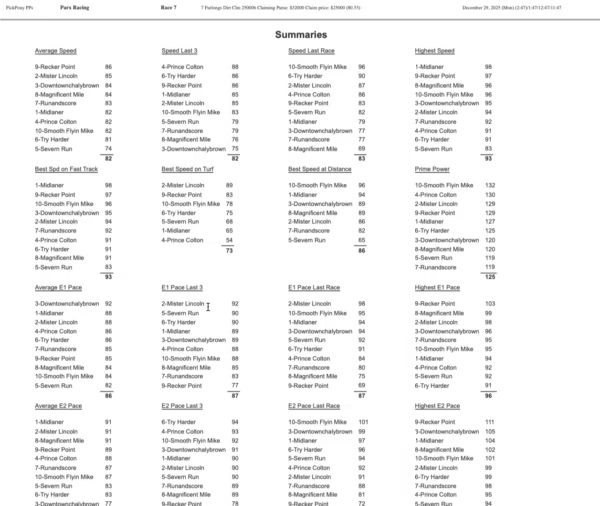
Pace Analysis
Multiple horses show early speed tendencies, creating potential for honest or rapid early fractions. Mister Lincoln, Downtownchalybrown, and Prince Colton all possess tactical speed, while Recker Point typically shows early velocity from his front-running style. The pace scenario projects as honest, potentially setting up closers like Try Harder and Smooth Flyin Mike.
The seven-furlong distance requires horses to maintain speed around one turn while sustaining their efforts through a longer stretch run than six-furlong sprints. Horses with tactical versatility demonstrate advantages at this configuration, as they can adapt to various pace scenarios.
Key Contenders
Recker Point emerges as a strong selection for leading trainer Jamie Ness with Yedsit Hazlewood riding. The five-year-old gelding brings a 4-8-12 record from 24 starts with over $575,000 in career earnings, demonstrating consistent quality. Recent performances show Recker Point competing against similar or better opposition with solid efforts. Ness trains at 23% with exceptional 61% ITM frequency, while Hazlewood contributes a strong 27% win rate with 59% in-the-money production. The #9 post allows flexibility for establishing position without forcing outside trips. Recker Point's front-running style matches Parx's bias, and if he secures the early lead with controlled fractions, he could prove difficult to catch. The weight allowance enhances his chances.
Try Harder presents a closing threat for trainer Richard Vega with elite rider Eliseo Ruiz aboard. The four-year-old gelding's 6-20-29 record from 44 starts demonstrates remarkable consistency with a 66% in-the-money frequency. Recent races show Try Harder finishing third twice against similar competition, suggesting he fits this level perfectly. Ruiz contributes a 24% win rate with 55% ITM frequency, providing exceptional tactical skills for navigation and timing of closing bids. The #6 post provides room for a closer to maneuver. If honest pace develops with multiple speed horses engaging early, Try Harder's deep closing ability could produce victory. The form cycle suggests a breakthrough performance is imminent.
Smooth Flyin Mike recorded a dominant victory in his most recent start, displaying impressive gate-to-wire speed. The five-year-old gelding for trainer Silvino Ramirez with Luis Ocasio riding possesses a 7-11-13 record from 24 starts, demonstrating frequent competitiveness. The 29% career win rate ranks among the highest in this field. Smooth Flyin Mike's front-running style matches Parx's bias, though he faces challenges from the #10 post in controlling early position. If he breaks alertly and secures the lead, his tactical speed could withstand challenges. Recent form suggests confidence, and the weight allowance adds value.
Secondary Choices
Severn Run brings tactical speed with weight allowances for trainer T. Bernard Houghton with Anthony Salgado riding. The three-year-old gelding recorded back-to-back victories at Penn National before this assignment. The class test moving to Parx presents challenges, but recent confidence creates potential.
Runandscore enters for trainer Miguel Rodriguez with Dexter Haddock aboard. The five-year-old gelding possesses closing ability and has won six of 28 career starts. The #7 post provides neutral positioning for a closer.
Betting Strategy and Wagering Angles
The race presents competitive dynamics with multiple horses possessing realistic winning chances. Recker Point represents the primary selection given elite trainer/jockey connections, tactical advantages, and favorable running style for Parx. A win bet provides the foundation.
For exacta coverage, boxing Recker Point with Try Harder and Smooth Flyin Mike captures the three most logical contenders while keeping costs reasonable. Try Harder's consistent competitiveness makes him an excellent exacta horse beneath Recker Point if pace develops favorably.
In trifectas, adding Severn Run, Prince Colton, and Runandscore for third position creates value opportunities. The 10-horse field produces attractive payoffs when spreads include logical contenders at various price points.
As the second leg of the Philly Big 5, bettors should consider using Recker Point as a single or including Try Harder and Smooth Flyin Mike for broader coverage.
Selections
Win: 9 Recker Point
Place: 6 Try Harder
Show: 10 Smooth Flyin Mike
Race 8: Maiden Special Weight Two-Year-Olds (6 Furlongs)
Post Time: 3:14 PM EST
Eight two-year-old colts and geldings compete in this maiden special weight sprint at the highest level of maiden conditions. The $50,000 purse attracts horses with quality breeding and connections who possess confidence in their runners' abilities. Maiden special weight races represent significantly higher class than maiden claiming events, as these horses are not offered for sale.
Pace Analysis
Ponder and Dream and Mysterioso both show early speed in their limited racing experience, while Capitaine could provide pace pressure. The pace projects as moderate to honest depending on how aggressively early speed horses commit. Two-year-old maiden special weight races frequently feature pace collapses when inexperienced horses engage in early duels, creating opportunities for tactical horses rating just off the pace.
Post position proves particularly critical in two-year-old races, as inexperienced runners struggle with wide posts requiring navigation skills they haven't developed. Inside posts provide advantages by simplifying trip requirements.
Key Contenders
Ponder and Dream stands as the overwhelming favorite with consistent placings in three career starts. For trainer Robert Reid Jr. with leading rider Mychel Sanchez aboard, the two-year-old colt possesses tactical speed demonstrated in recent performances. The 0-1-3 record shows a horse repeatedly competitive but unable to close the deal, suggesting readiness for breakthrough. Sanchez's 24% win rate and elite tactical skills create significant advantages, particularly in maiden races where rider experience dramatically influences outcomes. The #6 post provides excellent positioning without extremes. Recent workouts suggest continued forward progression. The combination of experience edge over debut runners and elite connections makes Ponder and Dream the logical selection despite likely short odds.
Mysterioso brings tactical speed for trainer Cathal Lynch with Frankie Pennington riding. The two-year-old gelding's 0-2-2 record from two starts shows consistent competitiveness with two second-place finishes. Horses who place second in their first two starts frequently win on third asking after gaining racing education. Lynch trains at an impressive 23% with 64% ITM frequency. Pennington contributes a 22% win rate with solid tactical ability. The #5 post provides favorable positioning adjacent to the favorite. Mysterioso's early speed creates potential advantages if he can secure position before engaging Ponder and Dream.
Gold in My Hands makes his debut for trainer Hugo Padilla with Eliseo Ruiz aboard. First-time starters in maiden special weight races merit more consideration than debut maiden claimers, as connections demonstrate confidence by not offering the horse for sale. Ruiz's presence adds credibility given his 24% win rate. Padilla trains competently with young horses. Debut runners require exceptional circumstances to defeat experienced rivals in maiden special weight company, but this colt's connections suggest ability.
Secondary Choices
Capitaine debuts for Cathal Lynch with Angel Cruz riding. Lynch's dual entry suggests confidence in both runners, with different tactical profiles providing options based on pace development. Cruz wins at 18% with respectable tactical skills. The #8 post creates challenges.
B Raging On brings limited racing experience but shows some competitiveness in previous starts. The #1 post provides optimal positioning if this runner possesses sufficient ability.
Betting Strategy and Wagering Angles
Ponder and Dream represents the strongest individual selection in a maiden special weight race, though likely short odds reduce win bet value. The experience edge over multiple debut runners combined with elite connections justifies confidence. Consider win/place betting depending on final odds.
For exacta coverage, using Ponder and Dream on top over Mysterioso, Gold in My Hands, and Capitaine captures the most probable outcomes. Boxing Ponder and Dream with Mysterioso provides concentrated coverage on the two most experienced and best-connected runners.
In trifectas, spreading to include B Raging On and Buff Gary creates value opportunities if debut runners exceed expectations or pace scenarios develop unpredictably.
As the third leg of the Philly Big 5, bettors should strongly consider using Ponder and Dream as a single given the experience and connections advantages.
Selections
Win: 6 Ponder and Dream
Place: 5 Mysterioso
Show: 2 Gold in My Hands
Race 9: Allowance Optional Claiming Fillies & Mares (6.5 Furlongs)
Post Time: 3:41 PM EST
Twelve fillies and mares three years old and upward who have never won two races other than maiden, claiming, starter, or state bred, or have never won three races, compete at the $52,000 purse level. This represents the highest-class race on the card with competitive allowance conditions. Two horses – Carousel Queen and Strong Like Sara – have been scratched (Carousel Queen by veterinarian, Strong Like Sara by private veterinarian due to illness), leaving 10 starters.
Pace Analysis
Multiple fillies show early speed, creating potential for honest fractions. Aoife's Magic and Macanga both possess front-running tendencies, while Dewey Doit demonstrates tactical speed. The pace projects as competitive with several horses capable of contesting early position. Centre Court Champ's tactical stalking style positions her to capitalize if early speed engages.
The 6.5-furlong distance favors horses with sustained speed rather than pure early velocity. Fillies who can rate comfortably while maintaining striking position demonstrate advantages at this configuration.
Key Contenders
Centre Court Champ emerges as a strong selection for trainer Robert Mosco with Yedsit Hazlewood riding. The seven-year-old mare brings extensive experience with over $529,000 in career earnings, demonstrating quality and consistency. Recent performances show Centre Court Champ competing effectively against similar or tougher opposition. Mosco trains competently at the allowance level, understanding how to place horses for optimal success. Hazlewood contributes an exceptional 27% win rate with 59% ITM frequency, ranking among the elite riders at the meet. The #12 post creates challenges, requiring Hazlewood to navigate traffic or commit early for position, but his tactical skills mitigate these concerns. Centre Court Champ's stalking style allows flexibility to adapt to pace scenarios. The weight allowance enhances her chances.
Dewey Doit represents Scott Lake with Andrew Wolfsont aboard. The four-year-old filly possesses tactical speed demonstrated in recent races. Lake trains at 11% with solid understanding of allowance conditions. The #5 post provides excellent positioning without forcing extreme strategies. Recent form suggests competitiveness at this level, and the tactical style matches Parx's bias favoring horses with early speed or stalking ability.
Aoife's Magic enters for trainer David Dotolo with Frankie Pennington riding. The four-year-old filly's 4-7-9 record from 13 starts demonstrates consistent competitiveness with a 31% win rate and exceptional 69% ITM frequency. Recent races show Aoife's Magic competing against similar opposition with strong efforts. Dotolo trains at 20% with solid horsemanship. Pennington contributes a 22% win rate. The #7 post allows positioning flexibility. Aoife's Magic's front-running style matches Parx's bias, and if she secures early position with controlled fractions, she could prove difficult to pass.
Secondary Choices
Tap Dancin Cowgirl brings tactical speed for trainer Flint Stites with Ricardo Chiappe riding. The three-year-old filly recorded a victory in her previous start, demonstrating ability at this level. The #6 post provides good positioning.
Delray enters for trainer J. Tyler Servis with Abner Adorno aboard. The three-year-old filly possesses tactical ability, and the Servis barn demonstrates competence with young fillies. The #11 post creates challenges.
Betting Strategy and Wagering Angles
The race presents highly competitive allowance conditions with multiple fillies possessing realistic winning chances. Centre Court Champ represents the primary selection given experience, earnings, and elite rider connections. The outside post creates risks but Hazlewood's skills justify confidence. A win bet provides the foundation.
For exacta coverage, boxing Centre Court Champ with Dewey Doit and Aoife's Magic captures the three most logical contenders. Adding Tap Dancin Cowgirl and Delray for trifecta coverage creates value opportunities.
The 10-horse allowance field produces attractive exotic payoffs, particularly if longshots fill positions. Consider using Centre Court Champ over Dewey Doit and Aoife's Magic in exactas, then spreading wider for third position in trifectas.
As the fourth leg of the Philly Big 5, bettors should carefully evaluate whether to use Centre Court Champ as a single or spread given the competitive allowance conditions and outside post concerns.
Selections
Win: 12 Centre Court Champ
Place: 5 Dewey Doit
Show: 7 Aoife's Magic
Race 10: Claiming $7,500 (6.5 Furlongs)
Post Time: 4:08 PM EST
Sixteen three-year-olds and four-year-olds and upward who have never won three races compete at the $7,500 claiming level over 6.5 furlongs. This represents the finale and fifth leg of the Philly Big 5 sequence. Multiple horses have been scratched or return from recent scratches, including Fazaro, Max Forward Speed, Dads Good Runner, and Hawkstone. Weight allowances of three pounds are available for non-winners since November 29.
Pace Analysis
With 16 starters, the pace scenario becomes complex with multiple horses showing early speed. Curious Soul, Coach Knight, and Simply Disregarded all possess tactical speed, while numerous others could contest early position. The large field creates traffic concerns and positioning challenges, particularly for horses breaking from extreme outside posts. Early position becomes paramount given Parx's speed bias and the difficulty of navigating traffic in large sprint fields.
Key Contenders
Simply Disregarded emerges as a logical selection for trainer Ronald Abrams with Andrew Wolfsont riding. The three-year-old gelding recorded a victory at this track in his most recent start, displaying front-running ability with sustained speed through the stretch. The 2-4-5 record from 10 starts shows consistent competitiveness, with the recent victory suggesting upward trajectory. Abrams trains at 14% with solid 57% ITM frequency. The #8 post provides neutral positioning without forcing extreme strategies. Simply Disregarded's tactical speed allows securing favorable position before traffic develops. The weight allowance further enhances his chances.
Dads Good Runner brings experience and class for trainer Alan Bedard with Francisco Martinez riding. The six-year-old gelding possesses over $198,000 in career earnings, demonstrating proven quality above this $7,500 claiming level. Recent form shows some regression, but the class advantage creates potential for dominant performance if fitness returns. Martinez wins at 14% with solid tactical skills. The #14 post creates significant challenges in this large sprint field, requiring Martinez to commit early or navigate substantial traffic. Despite the post concerns, Dads Good Runner's class edge justifies consideration.
Coach Knight enters for trainer J. Tyler Servis with Frankie Pennington aboard. The three-year-old gelding's 4-9-11 record from 17 starts demonstrates regular competitiveness with a 24% win rate and exceptional 65% ITM frequency. Recent races show Coach Knight competing effectively against similar opposition, including a victory two starts back followed by a close third-place finish. Servis trains at 14% with solid horsemanship. Pennington contributes a 22% win rate. The #4 post provides excellent positioning. Coach Knight's mid-pack stalking style allows tactical flexibility.
Secondary Choices
Curious Soul recorded a victory in his most recent start for trainer Josue Arce with Mychel Sanchez riding. The three-year-old gelding's 3-5-9 record shows consistent competitiveness, and the recent victory suggests confidence. Arce trains at 25% with solid 57% ITM frequency. Sanchez's leading rider status adds appeal. The #3 post provides good positioning.
Union Purrfection enters from the #12 post for trainer Kathleen Demasi with Kendry Rivera aboard. The three-year-old gelding recorded a victory in his previous start, demonstrating ability. The weight concession adds value, though the outside post creates challenges.
Betting Strategy and Wagering Angles
The 16-horse field creates substantial exotic payoff potential but increases difficulty in identifying winners. Simply Disregarded represents the logical selection given recent victory, tactical advantages, and favorable post position. A win bet provides the foundation.
For exacta coverage, using Simply Disregarded on top over Coach Knight, Curious Soul, and Dads Good Runner captures horses with realistic winning chances. The large field warrants broader trifecta coverage including Union Purrfection, Lucchesi, and Happyflyer at various price points.
As the final leg of the Philly Big 5, bettors should carefully evaluate whether to use Simply Disregarded as a single or spread given the large field and inherent unpredictability of 16-horse claiming sprints.
Consider wheeling Simply Disregarded on top in exactas with 5-6 horses underneath, as the large field produces attractive payoffs when the favorite hits.
Selections
Win: 8 Simply Disregarded
Place: 4 Coach Knight
Show: 3 Curious Soul
Jockey Notes and Insights
Mychel Sanchez dominates the Parx Racing jockey standings with exceptional consistency throughout 2025. The Venezuelan rider leads the meet with a 24% win rate and 51% in-the-money frequency, positioning him fourth nationally with 298 wins. Sanchez's partnership with leading trainer Jamie Ness produces remarkable results, with the duo hitting at 28% when combined. The rider's tactical skills and intimate knowledge of Parx's racing surface create significant advantages across all race types. Sanchez excels with young horses in maiden races and demonstrates patience with closers in route races. His mounts command respect regardless of post position or odds.
Yedsit Hazlewood delivers exceptional value as an underrated rider at the meet. Currently winning at 27% with a 59% in-the-money rate, Hazlewood combines tactical excellence with strong finishing ability. His partnership with trainer Jamie Ness produces consistent results, and he demonstrates particular skill navigating traffic in large fields. Hazlewood's ability to secure favorable trips from various post positions makes his mounts attractive in exotic wagering. The rider shows versatility across distances and surface conditions, with strong performances in both sprint and route races.
Dexter Haddock maintains steady productivity with a 17% win rate and 43% in-the-money percentage. The veteran rider brings experience and tactical knowledge that proves valuable in claiming races where trip handicapping becomes essential. Haddock demonstrates patience with closing horses and timing ability in stretch rallies. His partnerships with trainers Scott Lake and Jacinto Solis produce consistent results. Haddock's understated style and professional approach create value opportunities when he secures mounts at attractive odds.
Eliseo Ruiz contributes solid production with a 24% win rate and 55% in-the-money frequency while earning over $3.7 million in 2025. The rider demonstrates particular skill with horses requiring tactical positioning and well-timed rallies. Ruiz's partnerships with multiple trainers create diverse opportunities across claiming and allowance conditions. His finishing ability in stretch drives makes his mounts attractive for exacta and trifecta coverage in underneath positions.
Frankie Pennington delivers consistent results with a 22% win rate and 42% in-the-money percentage. The rider shows versatility across race types and demonstrates strong gate skills with young horses in maiden races. Pennington's tactical positioning and patience create value, particularly in route races where trip handicapping proves decisive. His ability to secure favorable trips from various post positions adds appeal.
Trainer Notes and Insights
Jamie Ness dominates Parx Racing with an exceptional 23% win rate and 61% in-the-money frequency through late 2025. The trainer leads the nation with 345 wins and remains on pace to win the national training title for the first time since 2012. Ness operates full barns at Parx, Delaware Park, and Laurel Park, with approximately 140 horses in training. His stable maintains remarkable consistency, hitting at 25% overall with 58% of starters finishing in the money throughout his career. Ness excels across all race types but demonstrates particular dominance in claiming and starter allowance conditions where his placement skills prove decisive. The trainer's partnerships with jockeys Mychel Sanchez and Yedsit Hazlewood produce exceptional results. Ness's intimate knowledge of Parx's racing surface and track biases creates significant advantages. His horses regularly return following layoffs in sharp form, and equipment changes typically signal readiness for improved performances.
Scott Lake brings decades of experience and over 6,450 career wins to his Parx operation. While his current stable has scaled back from the massive operations of his peak years, Lake maintains competitiveness with an 11% win rate and consistent claiming-level success. The trainer excels at placing horses appropriately in claiming conditions and demonstrates sharp timing when moving horses up or down in class. Lake's partnerships with jockeys Dexter Haddock and Abner Adorno produce regular results. The trainer shows particular skill with route horses and tactical speed types that match Parx's bias. Lake's claiming selections prove shrewd, with newly claimed horses frequently improving after joining his barn.
John C. Servis operates a quality stable with an 18% career win rate and impressive 29% strike rate at the current Parx meet. The Hall of Fame trainer brings pedigree and prestige to the claiming and allowance ranks, with horses regularly outperforming their odds. Servis demonstrates conservative placement strategies, entering horses where they possess legitimate winning chances rather than overmatching runners. His first-time starters command respect, particularly in maiden special weight conditions. The trainer's partnerships with capable riders and attention to detail create advantages across race types. Servis's success with fillies and mares proves particularly notable, with patient development programs producing consistent results.
Michael Pino emerged as the meet's most dominant trainer through mid-2025, winning at an astounding 40% rate with 69% in-the-money frequency. While his stable operates with limited starters compared to volume trainers, Pino's placement skills and horsemanship produce exceptional results. The trainer demonstrates particular success in allowance and stakes conditions where his horses regularly exceed expectations. Pino's partnerships with quality riders and strategic equipment changes signal readiness for improved performances. His recent dominance suggests a barn operating at peak efficiency with horses peaking for their assignments.
J. Tyler Servis maintains competent operations with a 14% win rate and solid placement skills across claiming and allowance conditions. The trainer shows success with younger horses in development and demonstrates patience allowing runners to progress naturally. His partnerships with capable riders create consistent results, particularly in route races where tactical development proves essential.
Best Wagering Strategies and Value Plays
The December 29 Parx card presents multiple strategic wagering opportunities across various bet types and race sequences. Bettors should approach the card with understanding of track biases, trainer/jockey patterns, and optimal bet structures for maximizing value.
Single Race Strategies
Race 3 featuring Pam Pam represents the strongest individual betting opportunity on the card. The combination of elite trainer Jamie Ness, leading rider Yedsit Hazlewood, optimal rail post position, and tactical speed creates overwhelming advantages. While odds will likely be short, Pam Pam's consistency and class edge justify win betting with confidence. Conservative bettors should consider win/place or place/show combinations to ensure return given the expected odds.
Race 8's Ponder and Dream presents similar dynamics in the maiden special weight, where experience edge over debut runners combined with elite connections creates strong win probability. Despite likely favoritism, the colt's progression and rider advantage justify confidence.
Value opportunities emerge in Race 1's maiden claiming opener, where Pastero offers reasonable odds despite strong credentials. The Scott Lake-trained gelding's consistency at this level combined with Dexter Haddock's tactical skills creates win bet value, particularly if odds drift above 3-1.
Vertical Exotic Strategies
Exacta wagering proves optimal in races with clear top two horses but competitive underneath scenarios. Race 3 provides excellent exacta opportunities by using Pam Pam on top over Tower Twenty Two and Volatility, capturing the most probable outcomes while maintaining affordable costs. The route distance and proven class creates confidence in these three fillies separating from the field.
Race 7 offers competitive exacta possibilities with Recker Point, Try Harder, and Smooth Flyin Mike creating multiple winning scenarios. Boxing these three horses captures pace-dependent outcomes where different running styles produce varying results based on early fraction development.
Trifecta coverage becomes most attractive in large fields where longshots create payoff value. Race 10's 16-horse claiming sprint presents ideal trifecta conditions where using Simply Disregarded on top with 4-5 horses for second, then spreading wider for third position, produces substantial returns if the structure holds. The large field and claiming conditions create unpredictability that favors broader coverage.
Multi-Race Sequence Strategies
The Philly Big 5 spanning races 6-10 presents the day's signature wagering opportunity. This $0.50 base wager requires selecting winners in all five consecutive races for potentially substantial payoffs. Strategic ticket construction proves essential for manageable costs while maintaining winning probability.
Conservative approach using singles in strongest races (Race 6: Divine Grace, Race 8: Ponder and Dream) while spreading in competitive races (Race 7, Race 9, Race 10) creates balanced tickets. A sample structure might include:
Race 6: Divine Grace (single)
Race 7: Recker Point, Try Harder, Smooth Flyin Mike
Race 8: Ponder And Dream (single)
Race 9: Centre Court Champ, Dewey Doit, Aoife's Magic
Race 10: Simply Disregarded, Coach Knight, Curious Soul, Dads Good Runner
This structure produces 36 combinations at $0.50 base ($18 total), capturing logical contenders while maintaining reasonable cost. Aggressive players might single all three highest-probability races (6, 8) while spreading wider in races 7, 9, and 10.
Pick 3 and Pick 4 sequences offer additional value opportunities with lower minimums. The final Pick 3 (races 8-9-10) presents attractive odds given competitive fields in races 9 and 10. Using Ponder and Dream as a single in race 8, then spreading 3-4 horses in races 9 and 10 creates affordable tickets with solid winning probability.
Early Pick 4 sequences (races 1-4) provide value by including Pastero, Keeping the Faith, and Pam Pam as logical singles or top selections, then spreading in the competitive race 4. This structure produces manageable costs while attacking races with clear hierarchies.
Daily Double Opportunities
Strategic daily double wagering targets races with clear standouts connected to competitive races. The Race 7-8 daily double combines competitive claiming conditions with a maiden special weight favorite. Using Recker Point and Try Harder in race 7 over Ponder and Dream in race 8 creates value if both favorites prevail.
The Race 3-4 daily double connects the day's strongest selection (Pam Pam) with a smaller competitive claiming sprint. Using Pam Pam as a single over Au Some Warrior and Biagio provides excellent value potential at manageable cost.
Value Play Identification
Several races present overlay opportunities where horses offer better value than their true winning probability suggests. These situations occur when betting public underestimates factors like trainer form, jockey skill, or tactical advantages.
Au Some Warrior in Race 4 represents potential value if odds exceed 2-1. The gelding's recent victory at this level combined with favorable post position and weight allowances creates winning probability higher than typical odds in competitive claiming sprints.
Try Harder in Race 7 offers excellent place/show value given remarkable consistency (66% ITM rate) and ideal pace setup if multiple speed horses engage. At projected odds of 9-2 or higher, Try Harder provides exceptional value for horizontal exotic positions.
Goldcrest in Race 6 presents longshot trifecta value from the rail post if pace develops favorably. At likely double-digit odds, including this mare in third position of trifecta tickets creates payoff leverage while maintaining logical race analysis.
Bankroll Management Approach
Successful wagering on competitive claiming and allowance cards requires disciplined bankroll allocation across bet types. Conservative players should allocate 50-60% of bankroll to win/place/show bets on highest-probability selections (Pam Pam, Ponder and Dream, Divine Grace), 20-30% to vertical exotics (exactas, trifectas) in competitive races, and 10-20% to multi-race sequences.
Aggressive players seeking larger payoffs should reduce single-race wagering to 30-40% of bankroll while increasing multi-race sequence allocation to 30-40% and vertical exotics to 30% of bankroll. This approach maximizes upside potential while maintaining foundation bets on strongest selections.
The card's structure with multiple competitive claiming races and the Philly Big 5 sequence creates excellent conditions for balanced wagering approaches. Bettors should avoid over-concentration on single races or bet types, instead spreading risk across the card while emphasizing highest-probability scenarios with strong value propositions.
Get more in-depth analysis, expert picks, handicapper reports, AI picks, handicapping tools, in-article data tooltips, NO ADVERTISEMENTS, and other membership perks with a Pick Pony subscription!
Don’t forget Pick Pony’s Expert Picks, AI Picks, and Past Performance Sheets/Racing Forms!
The Pick Pony Handicapper's Report is published daily and provides analysis of all races on the card. A Pick Pony analyst prepares the report, so selections may differ from the Pick Pony Expert Picks, which are based on the consensus of all Pick Pony analysts.
Racing returns to Parx Racing on Monday, December 29, 2025, with a competitive 10-race card featuring a diverse mix of maiden claiming, starter allowances, and claiming conditions. First post is 12:05 PM EST, with the card concluding around 4:08 PM EST. The day's racing includes the Philly Big 5 wager spanning races 6-10, offering bettors an attractive multi-race betting opportunity.
The card features several competitive claiming races in the $7,500-$25,000 range alongside maiden races at various levels. Race conditions range from a low-level maiden claiming opener to higher-end allowance optional claiming conditions in the featured ninth race. With purses ranging from $19,000 to $52,000, the day presents solid opportunities for both horsemen and bettors.
Track management has published multiple scratches across the card, including veterinarian scratches in races 1, 2, and 4, plus illness-related scratches in race 9. Bettors should verify final field compositions before committing to multi-race wagers.
Weather and Track Conditions
The National Weather Service forecasts temperatures reaching approximately 50°F for the high with an overnight low around 23°F in Bensalem, Pennsylvania. A Dense Fog Advisory remains in effect until 10:00 AM EST, which could impact early morning training and track preparation but should dissipate well before first post.
Current track conditions indicate a fast dirt surface is expected throughout the card. With clear weather anticipated after the morning fog lifts and no precipitation in the forecast, the main track should remain fast and consistent across all 10 races. These conditions typically favor Parx Racing's well-documented speed bias.
The absence of moisture and moderate temperatures create ideal racing conditions for Monday's card. Horses with tactical speed and early pressing styles should benefit from the anticipated fast surface, particularly in sprint races where Parx's speed-favoring profile becomes most pronounced.
Track Bias and Post Position Analysis
Parx Racing exhibits one of the most documented track biases in mid-Atlantic racing. Statistical analysis confirms distinct advantages based on distance, post position, and running style that handicappers must incorporate into their selections.
In sprint races at six to seven furlongs, inside posts demonstrate a significant advantage. Horses breaking from posts 1-3 win at a 15.6% clip, while those starting from post 7 or beyond win only 8.71% of the time. The rail post specifically wins 17% of sprint races, making it the single strongest post position on the track. Posts 5 and 8 have historically been the weakest positions in sprint distances. The proximity to the rail correlates directly with winning percentage, with each post position farther outside reducing win probability.
Route races exceeding one mile present a different dynamic. While conventional wisdom suggested outside posts (4-9) performed better in larger fields historically, recent data through 2019 indicates an emerging inside bias in route races as well. Posts 1-3 now win routes at a 16.44% rate compared to just 8.52% for posts 7 and beyond. The correlation coefficient of -0.877 in Parx's two-turn races indicates an extremely strong relationship between post position and success, matching Monmouth Park for the strongest post bias among mid-Atlantic tracks.
Parx maintains a reputation as a quintessential speed track where early position proves paramount. Wire-to-wire winners occur 34% of the time in sprint races, with front-runners and early stalkers commanding clear advantages over closers. Horses positioned within two lengths of the lead at the first call demonstrate significantly higher win percentages than those rating off the pace.
The track configuration and racing surface combine to create scenarios where horses gaining early position can control fractions and maintain their advantage through the stretch. Closers require exceptionally slow early fractions to successfully rally, making pace handicapping essential for identifying vulnerable speed horses versus legitimate front-runners with the tactical ability to rate.
Race 1: Maiden Claiming $10,000-$12,500 (6 Furlongs)
Post Time: 12:05 PM EST
This 16-horse maiden claiming sprint for three-year-olds and up presents the challenge of handicapping horses that have repeatedly failed to reach the winner's circle. The $10,000-$12,500 claiming range represents the lower echelon of competitive racing, where physical limitations, temperament issues, or simply lack of ability have prevented these runners from graduating. Two horses – Irish Wish and Week's Strong – have been scratched by the veterinarian, reducing the field to 14 starters.
Pace Analysis
The pace scenario projects as moderate with multiple horses showing tactical early speed but no confirmed wire-to-wire specialists. Wampanoag Chief figures to show early from the inside while Pastero and Change Your Name should secure stalking positions within striking distance. The six-furlong distance favors horses with natural early speed given Parx's documented sprint bias, where 37% of winners lead wire-to-wire and 17% win from the rail post.
With 14 runners in the gate, early position becomes critical. Horses breaking from the outside posts face significant disadvantages in securing favorable trips, requiring jockeys to commit horses early or navigate through traffic in the stretch. The moderate projected pace suggests no suicidal speed duel will occur, allowing tactical speed horses to remain competitive throughout.
Key Contenders
Pastero emerges as the consensus selection from multiple handicapping sources. This Scott Lake trainee enters with a 0-1-4 record from nine career starts, demonstrating consistent competitiveness without reaching the winner's circle. The gelding's four third-place finishes indicate ability at this claiming level, and second time at the six-furlong distance could produce the needed improvement. Lake trains at an 11% win rate with $1.5 million in earnings at the current Parx meet, demonstrating his stable's competitiveness. Dexter Haddock takes the mount, a rider winning at 17% with 43% in-the-money frequency. The #10 post presents some concerns, but Pastero's tactical speed should allow Haddock to secure a forward position early.
Wampanoag Chief makes his debut for Elliott Soto-Martinez with rider Melvis Gonzalez from the favorable #8 post. The three-year-old gelding by Munnings has shown training competency with published workouts suggesting readiness for first asking. Debut runners in maiden claiming races warrant skepticism, as connections offering horses for sale in their first start rarely possess supreme confidence. However, some trainers use maiden claiming as an entry point for late-developing prospects, and Wampanoag Chief's breeding suggests more talent than typical debut claimers. Gonzalez rides at 14% at the meet.
Saint Ephrem debuts for Hall of Fame trainer John C. Servis, whose 18% career win rate and 29% meet strike rate command respect. First-time starters for Servis merit consideration, particularly when the trainer shows confidence by entering at this claiming level. The three-year-old gelding by Tiz the Law represents quality breeding, though the decision to debut in a claimer rather than maiden special weight suggests physical or training limitations. Anthony Nunez rides for the powerhouse barn. The #1 post provides optimal positioning in this sprint.
Secondary Choices
Stinger Bee brings experience with a 0-3-2 record from 13 starts for trainer Robert Mosco. The four-year-old has demonstrated consistency without winning, typical of this claiming level. Recent workouts show maintenance activity, and the #2 post provides tactical advantages. Mychel Sanchez rode this gelding previously, but the mount switches to Mosco's regular rider for this assignment.
Splitting Stones exits a second-place finish in his most recent start, showing improved form for trainer Joann Bertone. The four-year-old gelding's 0-2-2 record from 11 starts reflects inconsistency, but placing second last out represents positive momentum. Julio Correa rides from the unfavorable #15 post, requiring early commitment to secure position.
Betting Strategy and Wagering Angles
The race structure presents challenges with 14 starters and limited form separation. Pastero offers value as a horse consistently competitive at this level now receiving excellent rider/trainer connections. The #10 post creates some risk, but tactical speed and Haddock's skill mitigate these concerns. A win bet on Pastero represents the primary approach.
For vertical exotic wagers, constructing a ticket with Pastero on top while spreading underneath captures potential value. Using Pastero over Saint Ephrem, Wampanoag Chief, and Stinger Bee in exactas provides coverage of the logical contenders while maintaining affordable ticket costs. The large field creates opportunities for longshot trifecta payoffs, where including Splitting Stones and Sunny Magic in the third position could produce substantial returns if the pace scenario unfolds favorably.
Multi-race players should use Pastero as a single in Pick 3 and Pick 4 sequences, as the maiden claiming opener traditionally produces the most reliable result on cards featuring these conditions.
Selections
Win: 10 Pastero
Place: 1 Saint Ephrem
Show: 8 Wampanoag Chief
Race 2: Starter Optional Claiming (1 Mile 70 Yards)
Post Time: 12:32 PM EST
This nine-horse route features three-year-olds and upward who have started for $16,000 or less and have never won two races, or those entered at the $16,000 claiming price. The unique 1 mile 70-yard distance at Parx favors horses with tactical speed who can secure position before the first turn while maintaining enough stamina for the extended sprint distance. One horse – Extrasexymcsteemee – has been scratched by the veterinarian, reducing the field to eight starters.
Pace Analysis
The pace projects as moderate to honest with several horses capable of securing early position. Light My Way and Evasive Moves figure to show speed from the gate, while Keeping the Faith should stalk within striking distance. The 1 mile 70-yard configuration creates a unique dynamic where horses must balance early speed to secure position before the turn while conserving energy for the stretch run.
Historical data indicates that approximately 29% of winners at this distance lead wire-to-wire, with stalkers within 2-3 lengths of the lead at the half-mile pole showing the highest win percentages. Closers face significant disadvantages unless extremely slow early fractions materialize. With eight starters, traffic concerns diminish compared to larger fields, allowing horses to establish comfortable positions early.
Key Contenders
Keeping the Faith draws strong support from handicappers for trainer Jacinto Solis with Dexter Haddock riding. The three-year-old colt has demonstrated tactical speed and tactical ability in previous starts, positioning himself effectively before making sustained rallies. Haddock's 17% win rate and intimate knowledge of Parx's racing surface provide significant advantages. The #8 post allows Haddock to assess early pace development while maintaining flexibility for positioning. Solis trains competently at the claiming and starter levels, understanding how to place horses for optimal success.
Son of Delilah enters for trainer Edward Coletti Jr. with Francisco Martinez aboard from the rail post. The three-year-old colt possesses early speed that matches Parx's bias profile, and the inside draw provides optimal positioning in a route race where saving ground on both turns proves essential. Martinez wins at 14% for the meet with solid tactical skills. The rail post historically produces strong results in Parx route races when horses possess sufficient tactical speed to clear and secure position.
Legendary Thunder brings experience for Scott Lake with Abner Adorno riding. The four-year-old gelding's previous races demonstrate competitiveness at this level, and Lake's understanding of class dynamics positions this horse appropriately. Adorno wins at 17% with 49% in-the-money frequency. The #5 post provides sufficient room for early maneuvering without forcing outside positioning.
Secondary Choices
King Deivys represents another Scott Lake entry with Jorge Vargas Jr. taking the mount from the #6 post. The four-year-old gelding fits the class conditions and could benefit from favorable pace development. Lake's dual entry suggests confidence in both horses, with the trainer potentially holding opinions on which runner better suits the expected pace scenario.
Light My Way exits recent races showing speed, and if rider Gonzalez can secure a clear early lead with moderate fractions, this horse could prove difficult to pass in the stretch. The #2 post facilitates early positioning.
Betting Strategy and Wagering Angles
The race presents competitive dynamics with several horses possessing realistic winning chances. Keeping the Faith represents the logical win selection given the rider/trainer combination and tactical advantages. A win bet provides the foundation for approaching this race.
For exotic wagers, constructing exactas with Keeping the Faith on top over Son of Delilah, Legendary Thunder, and King Deivys captures the most probable outcomes while maintaining reasonable ticket costs. The route distance and starter optional claiming conditions create less predictability than straight claiming races, warranting broader coverage in vertical exotics.
Multi-race sequence players should consider using Keeping the Faith as a single or including 2-3 horses in Pick 3/Pick 4 tickets, as nine-horse fields provide manageable coverage costs.
Selections
Win: 8 Keeping the Faith
Place: 1 Son of Delilah
Show: 5 Legendary Thunder
Race 3: Starter Optional Claiming Fillies & Mares (1 Mile 70 Yards)
Post Time: 12:59 PM EST
Seven fillies and mares three years old and upward who have started for $25,000 or less with specific conditions compete over the 1 mile 70-yard distance. This race represents a significant step up in quality from the first two events, with a $32,000 purse attracting horses with proven winning records. The class restrictions create a competitive environment where form analysis and pace scenarios prove decisive.
Pace Analysis
Pam Pam figures to control early fractions from her inside post with tactical speed, while Racey Ruby also shows early inclination. Volatility possesses the ability to stalk comfortably before launching her bid. The pace projects as moderate, allowing tactical speed horses to establish comfortable positions without engaging in speed duels that compromise stretch performance.
Tower Twenty Two's closing style makes her dependent on honest early fractions to set up her rally. If Pam Pam secures an uncontested lead with moderate splits, closers will face significant challenges overcoming that advantage given Parx's speed-favoring surface. The seven-horse field provides clean trips for most runners, reducing the impact of traffic concerns.
Key Contenders
Pam Pam emerges as the overwhelming favorite with a 30% win probability according to statistical models. The Jamie Ness-trained four-year-old filly enters with a 23-6-9-12 record and over $406,000 in career earnings, demonstrating consistent success at this level. Ness trains at a remarkable 23% win rate with 61% of his starters finishing in the money. The trainer's dominant presence at Parx creates significant advantages through intimate track knowledge and quality horsemanship. Yedsit Hazlewood takes the mount from the rail post, providing optimal positioning. Recent races show Pam Pam competing against similar opposition with strong performances, including a win last out. The #1 post in this route represents the single strongest position on the card.
Tower Twenty Two presents the primary threat as a deep closer for trainer Silvino Ramirez with Eliseo Ruiz riding. The three-year-old filly recorded a dominant 2-length victory in her most recent start, displaying impressive late acceleration. With 4-7-10 from 18 career starts and over $252,000 in earnings, Tower Twenty Two possesses proven class. Ramirez trains at 22% with an impressive 70% in-the-money rate. Ruiz contributes a 24% win rate and 55% ITM frequency. The #4 post provides sufficient room for a closer to navigate, though Tower Twenty Two requires honest pace to maximize her rally. Her running style creates vulnerability if Pam Pam controls moderate fractions.
Volatility represents another Jamie Ness trainee, giving the barn two serious contenders. The five-year-old mare brings a 3-5-12 record from 29 starts with over $268,000 in earnings. Her mid-pack stalking style suits Parx's pace dynamics, and Melvis Gonzalez rides capably from the #7 post. Ness's dual entry suggests both fillies merit serious consideration, with the trainer potentially splitting preferences based on pace development expectations. Volatility's tactical versatility allows her to adapt to various race scenarios.
Secondary Choices
Racey Ruby enters off a second-place finish in her previous start for trainer Michael Catalano Jr. with Ruben Silvera riding. The four-year-old filly possesses early speed that could compromise Pam Pam's lead if engaged early. With a 25% career win rate and 67% ITM frequency from 12 starts, Racey Ruby demonstrates consistent competitiveness. The #6 post allows tactical flexibility.
Equus brings tactical speed for trainer Pompeyo Gomez with Joezer Rangel aboard from the #2 post. The four-year-old filly's 3-5-8 record from 19 starts shows regular competitiveness without dominant performances. Recent form suggests she fits at this level, and the inside post provides positioning advantages.
Betting Strategy and Wagering Angles
Pam Pam represents exceptional value despite likely short odds given her class advantage, tactical speed, optimal post position, and elite trainer/jockey combination. A win bet provides the foundation, with consideration for show betting if odds drop below even money, as her consistency produces high ITM frequencies.
For exotic wagers, using Pam Pam on top in exactas over Tower Twenty Two, Volatility, and Racey Ruby captures the most probable outcomes. The race structure suggests the Jamie Ness duo should dominate, making an exacta box of Pam Pam and Volatility appealing for smaller budgets.
In trifectas, keying Pam Pam on top with Tower Twenty Two and Volatility for second, then spreading wider for third position, creates value opportunities if longer prices fill the trifecta. Tower Twenty Two's closing style makes her more likely for place/show positions rather than winning unless pace dynamics shift dramatically.
Multi-race sequence players should strongly consider using Pam Pam as a single, as this represents the strongest individual selection on the entire card given the class/connections/position advantages.
Selections
Win: 1 Pam Pam
Place: 4 Tower Twenty Two
Show: 7 Volatility
Race 4: Claiming $7,500 (6.5 Furlongs)
Post Time: 1:26 PM EST
Eight three-year-olds and four-year-olds and upward who have never won three races compete at the $7,500 claiming level over 6.5 furlongs. Two horses – Banjo and Back East – have been scratched by the veterinarian, reducing the field to six runners. The small field creates cleaner racing conditions but reduces exotic payoffs. Three horses drew allowances for not winning since November 29.
Pace Analysis
Au Some Warrior and Drunkle both show early speed tendencies, creating potential for an early duel that could compromise their chances. Biagio possesses tactical speed to stalk the leaders, while Sir Mendel typically rates farther back before closing. With only six runners, the pace scenario becomes critical, as speed horses have nowhere to hide from each other in the early stages.
The 6.5-furlong distance creates a unique dynamic where horses must maintain speed longer than a standard six-furlong sprint while not requiring the stamina of a one-turn mile. Horses with sustained speed rather than pure early burst tend to excel at this configuration.
Key Contenders
Au Some Warrior turned in a winning performance two starts back at this track before finishing fourth (beaten six lengths) in his most recent outing. For trainer Elliott Soto-Martinez with Anthony Salgado riding, the three-year-old gelding drops back to a level where he previously succeeded. With a record of 2-5-10 from 20 starts and over $255,000 in career earnings, Au Some Warrior demonstrates class and consistency. The #2 post provides excellent positioning, and recent workouts suggest readiness. The weight allowance for not winning since November 29 further enhances his chances. Salgado's 17% win rate adds competence to the assignment.
Biagio represents a stalker with tactical speed for trainer J. Guadalupe Guerrero with Andrew Wolfsont riding. The four-year-old gelding brings a 2-5-6 record from 18 starts with consistent competitiveness. Recent performances show Biagio competing effectively against similar competition. Guerrero trains at 14% with a solid 58% ITM rate. The #4 post allows Biagio to assess early pace development before committing. His running style creates tactical advantages if Au Some Warrior and Drunkle engage in a speed duel.
Bobo Liver enters for Scott Lake with Joezer Rangel aboard. The four-year-old gelding recorded a victory two starts back at this track before a disappointing eighth-place finish in his recent race. With 2-3-4 from nine starts, Bobo Liver fits this claiming level. Lake's 11% win rate and intimate knowledge of Parx create advantages. The #5 post provides neutral positioning. Weight allowances enhance his chances, and the stalking style could benefit from pace scenarios.
Secondary Choices
Sir Mendel brings closing ability for trainer Andrew Simoff with Julio Hernandez riding. The four-year-old gelding's tactical style makes him dependent on honest early fractions. The #6 post provides room for a closing rally. With limited closing opportunities at Parx, Sir Mendel faces challenges unless pace collapses occur.
Hoppy Time shows some recent form for trainer Jordan Bullock with Kendry Rivera aboard from the rail post. The gelding's 2-4-5 record demonstrates occasional competitiveness, though consistency remains an issue.
Betting Strategy and Wagering Angles
The small field creates limited exotic payoff potential but increases confidence in key selections. Au Some Warrior represents the primary win selection given his previous success at this level, favorable post position, and tactical advantages. The weight allowance provides additional edges.
For exacta wagers, boxing Au Some Warrior with Biagio captures the two most logical winners while keeping costs minimal in a six-horse field. Adding Bobo Liver for trifecta coverage provides value if Lake's trainee returns to his winning form from two starts back.
Multi-race sequence players should use Au Some Warrior with confidence as a single or include 2-3 horses for broader coverage given the small field dynamics.
Selections
Win: 2 Au Some Warrior
Place: 4 Biagio
Show: 5 Bobo Liver
Race 5: Maiden Claiming $30,000-$40,000 Two-Year-Olds (6 Furlongs)
Post Time: 1:53 PM EST
Ten two-year-old colts and geldings compete in this maiden claiming sprint with claiming prices ranging from $30,000 to $40,000. One horse – Onceinawhile – has been scratched by the stewards, leaving nine runners. Two-year-old maiden racing presents unique handicapping challenges, as horses possess limited racing experience and connections' intentions vary widely. The $40,000 claiming level represents mid-tier conditions where horses with physical issues or limited talent begin their careers.
Pace Analysis
Raging Cajun and Finance both show early speed in their limited racing histories, while J Cody and Mybandit possess tactical ability to stalk. Two-year-old pace scenarios prove difficult to project accurately, as horses frequently show different running styles in subsequent starts after gaining racing experience. The six-furlong distance requires sustained speed rather than pure early velocity, favoring horses with some tactical dimension.
Post position becomes particularly important in two-year-old races, as inexperienced horses breaking from extreme outside posts often struggle with gate positioning and traffic navigation. The rail post can intimidate young horses unfamiliar with tight racing conditions.
Key Contenders
Mybandit emerges as a consensus selection after showing improvement in recent workouts for trainer Richard Vega with Eliseo Ruiz riding. The two-year-old gelding's breeding by Street Sense suggests quality, and workouts indicate readiness for competitive performance. Ruiz contributes a strong 24% win rate with 55% ITM frequency. The #4 post provides neutral positioning without extremes that could compromise this inexperienced runner. Vega's competence in developing young horses creates confidence.
Raging Cajun brings the most racing experience in the field with three second-place finishes from six starts for trainer Edward Allard. The gelding has consistently competed well without reaching the winner's circle, demonstrating ability at this level. Angel Rodriguez takes the mount, a rider with a 29% win rate and exceptional 68% ITM frequency. With Rodriguez's patient style and Raging Cajun's tactical speed, this combination could finally break through. The #9 post presents challenges in a sprint, requiring Rodriguez to commit early or navigate traffic. His 0-3-3 record suggests competitiveness with the breakthrough potentially imminent.
Finance debuts for trainer Marya Montoya with Mychel Sanchez aboard. First-time starters in maiden claiming races warrant skepticism, but Sanchez's presence adds credibility given his leading-rider status. The 24% win rate and elite positioning skills suggest connections believe this gelding possesses ability. Montoya's barn shows competence with young horses. The #3 post provides good positioning for a debut runner who needs clean conditions to show his best.
Secondary Choices
J Cody makes his debut for Marya Montoya with Dexter Haddock riding from the #5 post. The trainer/jockey combination commands respect, and having two starters suggests confidence in the barn's current form. Haddock's experience with young horses creates advantages.
Alastar brings some racing experience with one third-place finish from three starts. The #10 post creates significant challenges in this sprint where early position proves critical.
Betting Strategy and Wagering Angles
Two-year-old maiden claiming races create uncertainty that favors broader coverage in exotic wagers. Mybandit represents the primary win selection given breeding, connections, and post position. A conservative win bet provides the foundation.
For exacta coverage, using Mybandit on top over Raging Cajun, Finance, and J Cody captures horses with realistic winning chances while maintaining affordable costs. Raging Cajun's consistency makes him an excellent exacta horse beneath Mybandit.
In trifectas, spreading wider to include Alastar and Thomas Benjamin provides value if the race unfolds unpredictably, which frequently occurs in two-year-old maiden claiming events. The $30,000-$40,000 claiming range creates more competitiveness than bottom-level maiden claimers, justifying broader exotic coverage.
Selections
Win: 4 Mybandit
Place: 9 Raging Cajun
Show: 3 Finance
Race 6: Claiming $7,500 Fillies & Mares (1 Mile 70 Yards)
Post Time: 2:20 PM EST
Eleven fillies and mares three years old and upward who have not won since September 29 compete at the $7,500 claiming level over the 1 mile 70-yard distance. This represents the first leg of the Philly Big 5 sequence. Weight allowances of three pounds are available for fillies and mares who haven't won at a mile or over since November 29. The claiming restrictions create a competitive environment where recent form and fitness prove decisive.
Pace Analysis
The pace projects as moderate with several fillies showing early inclination. Date Night Kisses and Bunny Bonus figure to show speed from their inside posts, while Divine Grace should secure stalking position. With 11 starters, traffic management becomes a factor, particularly for horses breaking from extreme outside posts who must commit early to secure favorable positions.
The 1 mile 70-yard distance creates unique challenges for fillies and mares at this claiming level, as the extended sprint requires both speed and stamina that some claiming horses lack. Horses who have previously won at the distance demonstrate proven ability to handle the configuration.
Key Contenders
Divine Grace represents the consensus selection for dominant trainer Jamie Ness with leading rider Mychel Sanchez aboard. The five-year-old mare's recent performances show competitiveness at this level, and the Ness-Sanchez combination produces exceptional results with a 28% win rate when paired. Ness's 23% meet win rate and Sanchez's 24% strike rate create powerful synergies. The #10 post presents challenges in this route, requiring Sanchez to navigate traffic early, but his elite skills mitigate these concerns. Divine Grace's tactical stalking style allows positioning flexibility. The weight allowance further enhances her chances.
Peach Perfect enters for trainer Thomas Iannotti IV with Francisco Martinez riding from the extreme outside #11 post. The six-year-old mare possesses tactical speed that could benefit from the wide post by allowing clean early positioning without traffic concerns. Martinez wins at 14% with solid tactical skills. Recent form shows Peach Perfect competing against similar opposition with respectable efforts. The outside post requires commitment but prevents getting trapped inside or behind slower horses.
Date Night Kisses brings early speed for Jamie Ness with Yedsit Hazlewood aboard from the #2 post. The six-year-old mare's front-running style matches Parx's bias, and the inside post facilitates early positioning. Hazlewood wins at 27% with 59% ITM frequency, ranking among the top riders at the meet. Ness's dual entry suggests confidence in both fillies, with tactical considerations determining which receives primary backing.
Secondary Choices
Waitwaitdonttellme shows some tactical speed for trainer Leslye Bouchard with Franklin Gonzalez Jr. riding. The five-year-old mare's stalking style could benefit from pace development. The #8 post provides neutral positioning.
Amy Mule represents a Scott Lake entry with Dexter Haddock riding. The four-year-old filly possesses tactical ability, and Lake's claiming expertise creates advantages. The #7 post allows flexibility.
Longshots
Goldcrest exits recent races showing some competitiveness for trainer Silvino Ramirez with Julio Correa aboard from the rail post. The five-year-old mare fits the class conditions, and the inside post provides optimal positioning. At likely longshot odds, Goldcrest offers trifecta value if pace scenarios favor her stalking style.
Betting Strategy and Wagering Angles
Divine Grace represents the logical win selection despite challenges from the outside post. The elite trainer/jockey combination justifies confidence. A win bet provides the foundation, with additional consideration for show betting given the 11-horse field creating competitive dynamics.
For exacta coverage, using Divine Grace on top over Peach Perfect, Date Night Kisses, and Waitwaitdonttellme captures the most probable outcomes. Boxing Divine Grace with Date Night Kisses provides concentrated coverage on the Ness duo.
In trifectas, spreading to include Amy Mule, Goldcrest, and Mary's Reward in the third position creates value opportunities while keeping costs manageable. The 11-horse field produces attractive payoffs when longshots fill trifecta positions.
As the first leg of the Philly Big 5, bettors should consider using Divine Grace as a single or including 2-3 fillies for broader multi-race coverage.
Selections
Win: 10 Divine Grace
Place: 11 Peach Perfect
Show: 2 Date Night Kisses
Race 7: Claiming $25,000 (7 Furlongs)
Post Time: 2:47 PM EST
Ten three-year-olds and upward who have not won since September 29 or have never won four races compete at the $25,000 claiming level over seven furlongs. Weight allowances of three pounds are available for non-winners since November 29. This race represents solid claiming conditions with competitive horses and represents the second leg of the Philly Big 5 sequence.
Pace Analysis
Multiple horses show early speed tendencies, creating potential for honest or rapid early fractions. Mister Lincoln, Downtownchalybrown, and Prince Colton all possess tactical speed, while Recker Point typically shows early velocity from his front-running style. The pace scenario projects as honest, potentially setting up closers like Try Harder and Smooth Flyin Mike.
The seven-furlong distance requires horses to maintain speed around one turn while sustaining their efforts through a longer stretch run than six-furlong sprints. Horses with tactical versatility demonstrate advantages at this configuration, as they can adapt to various pace scenarios.
Key Contenders
Recker Point emerges as a strong selection for leading trainer Jamie Ness with Yedsit Hazlewood riding. The five-year-old gelding brings a 4-8-12 record from 24 starts with over $575,000 in career earnings, demonstrating consistent quality. Recent performances show Recker Point competing against similar or better opposition with solid efforts. Ness trains at 23% with exceptional 61% ITM frequency, while Hazlewood contributes a strong 27% win rate with 59% in-the-money production. The #9 post allows flexibility for establishing position without forcing outside trips. Recker Point's front-running style matches Parx's bias, and if he secures the early lead with controlled fractions, he could prove difficult to catch. The weight allowance enhances his chances.
Try Harder presents a closing threat for trainer Richard Vega with elite rider Eliseo Ruiz aboard. The four-year-old gelding's 6-20-29 record from 44 starts demonstrates remarkable consistency with a 66% in-the-money frequency. Recent races show Try Harder finishing third twice against similar competition, suggesting he fits this level perfectly. Ruiz contributes a 24% win rate with 55% ITM frequency, providing exceptional tactical skills for navigation and timing of closing bids. The #6 post provides room for a closer to maneuver. If honest pace develops with multiple speed horses engaging early, Try Harder's deep closing ability could produce victory. The form cycle suggests a breakthrough performance is imminent.
Smooth Flyin Mike recorded a dominant victory in his most recent start, displaying impressive gate-to-wire speed. The five-year-old gelding for trainer Silvino Ramirez with Luis Ocasio riding possesses a 7-11-13 record from 24 starts, demonstrating frequent competitiveness. The 29% career win rate ranks among the highest in this field. Smooth Flyin Mike's front-running style matches Parx's bias, though he faces challenges from the #10 post in controlling early position. If he breaks alertly and secures the lead, his tactical speed could withstand challenges. Recent form suggests confidence, and the weight allowance adds value.
Secondary Choices
Severn Run brings tactical speed with weight allowances for trainer T. Bernard Houghton with Anthony Salgado riding. The three-year-old gelding recorded back-to-back victories at Penn National before this assignment. The class test moving to Parx presents challenges, but recent confidence creates potential.
Runandscore enters for trainer Miguel Rodriguez with Dexter Haddock aboard. The five-year-old gelding possesses closing ability and has won six of 28 career starts. The #7 post provides neutral positioning for a closer.
Betting Strategy and Wagering Angles
The race presents competitive dynamics with multiple horses possessing realistic winning chances. Recker Point represents the primary selection given elite trainer/jockey connections, tactical advantages, and favorable running style for Parx. A win bet provides the foundation.
For exacta coverage, boxing Recker Point with Try Harder and Smooth Flyin Mike captures the three most logical contenders while keeping costs reasonable. Try Harder's consistent competitiveness makes him an excellent exacta horse beneath Recker Point if pace develops favorably.
In trifectas, adding Severn Run, Prince Colton, and Runandscore for third position creates value opportunities. The 10-horse field produces attractive payoffs when spreads include logical contenders at various price points.
As the second leg of the Philly Big 5, bettors should consider using Recker Point as a single or including Try Harder and Smooth Flyin Mike for broader coverage.
Selections
Win: 9 Recker Point
Place: 6 Try Harder
Show: 10 Smooth Flyin Mike
Race 8: Maiden Special Weight Two-Year-Olds (6 Furlongs)
Post Time: 3:14 PM EST
Eight two-year-old colts and geldings compete in this maiden special weight sprint at the highest level of maiden conditions. The $50,000 purse attracts horses with quality breeding and connections who possess confidence in their runners' abilities. Maiden special weight races represent significantly higher class than maiden claiming events, as these horses are not offered for sale.
Pace Analysis
Ponder and Dream and Mysterioso both show early speed in their limited racing experience, while Capitaine could provide pace pressure. The pace projects as moderate to honest depending on how aggressively early speed horses commit. Two-year-old maiden special weight races frequently feature pace collapses when inexperienced horses engage in early duels, creating opportunities for tactical horses rating just off the pace.
Post position proves particularly critical in two-year-old races, as inexperienced runners struggle with wide posts requiring navigation skills they haven't developed. Inside posts provide advantages by simplifying trip requirements.
Key Contenders
Ponder and Dream stands as the overwhelming favorite with consistent placings in three career starts. For trainer Robert Reid Jr. with leading rider Mychel Sanchez aboard, the two-year-old colt possesses tactical speed demonstrated in recent performances. The 0-1-3 record shows a horse repeatedly competitive but unable to close the deal, suggesting readiness for breakthrough. Sanchez's 24% win rate and elite tactical skills create significant advantages, particularly in maiden races where rider experience dramatically influences outcomes. The #6 post provides excellent positioning without extremes. Recent workouts suggest continued forward progression. The combination of experience edge over debut runners and elite connections makes Ponder and Dream the logical selection despite likely short odds.
Mysterioso brings tactical speed for trainer Cathal Lynch with Frankie Pennington riding. The two-year-old gelding's 0-2-2 record from two starts shows consistent competitiveness with two second-place finishes. Horses who place second in their first two starts frequently win on third asking after gaining racing education. Lynch trains at an impressive 23% with 64% ITM frequency. Pennington contributes a 22% win rate with solid tactical ability. The #5 post provides favorable positioning adjacent to the favorite. Mysterioso's early speed creates potential advantages if he can secure position before engaging Ponder and Dream.
Gold in My Hands makes his debut for trainer Hugo Padilla with Eliseo Ruiz aboard. First-time starters in maiden special weight races merit more consideration than debut maiden claimers, as connections demonstrate confidence by not offering the horse for sale. Ruiz's presence adds credibility given his 24% win rate. Padilla trains competently with young horses. Debut runners require exceptional circumstances to defeat experienced rivals in maiden special weight company, but this colt's connections suggest ability.
Secondary Choices
Capitaine debuts for Cathal Lynch with Angel Cruz riding. Lynch's dual entry suggests confidence in both runners, with different tactical profiles providing options based on pace development. Cruz wins at 18% with respectable tactical skills. The #8 post creates challenges.
B Raging On brings limited racing experience but shows some competitiveness in previous starts. The #1 post provides optimal positioning if this runner possesses sufficient ability.
Betting Strategy and Wagering Angles
Ponder and Dream represents the strongest individual selection in a maiden special weight race, though likely short odds reduce win bet value. The experience edge over multiple debut runners combined with elite connections justifies confidence. Consider win/place betting depending on final odds.
For exacta coverage, using Ponder and Dream on top over Mysterioso, Gold in My Hands, and Capitaine captures the most probable outcomes. Boxing Ponder and Dream with Mysterioso provides concentrated coverage on the two most experienced and best-connected runners.
In trifectas, spreading to include B Raging On and Buff Gary creates value opportunities if debut runners exceed expectations or pace scenarios develop unpredictably.
As the third leg of the Philly Big 5, bettors should strongly consider using Ponder and Dream as a single given the experience and connections advantages.
Selections
Win: 6 Ponder and Dream
Place: 5 Mysterioso
Show: 2 Gold in My Hands
Race 9: Allowance Optional Claiming Fillies & Mares (6.5 Furlongs)
Post Time: 3:41 PM EST
Twelve fillies and mares three years old and upward who have never won two races other than maiden, claiming, starter, or state bred, or have never won three races, compete at the $52,000 purse level. This represents the highest-class race on the card with competitive allowance conditions. Two horses – Carousel Queen and Strong Like Sara – have been scratched (Carousel Queen by veterinarian, Strong Like Sara by private veterinarian due to illness), leaving 10 starters.
Pace Analysis
Multiple fillies show early speed, creating potential for honest fractions. Aoife's Magic and Macanga both possess front-running tendencies, while Dewey Doit demonstrates tactical speed. The pace projects as competitive with several horses capable of contesting early position. Centre Court Champ's tactical stalking style positions her to capitalize if early speed engages.
The 6.5-furlong distance favors horses with sustained speed rather than pure early velocity. Fillies who can rate comfortably while maintaining striking position demonstrate advantages at this configuration.
Key Contenders
Centre Court Champ emerges as a strong selection for trainer Robert Mosco with Yedsit Hazlewood riding. The seven-year-old mare brings extensive experience with over $529,000 in career earnings, demonstrating quality and consistency. Recent performances show Centre Court Champ competing effectively against similar or tougher opposition. Mosco trains competently at the allowance level, understanding how to place horses for optimal success. Hazlewood contributes an exceptional 27% win rate with 59% ITM frequency, ranking among the elite riders at the meet. The #12 post creates challenges, requiring Hazlewood to navigate traffic or commit early for position, but his tactical skills mitigate these concerns. Centre Court Champ's stalking style allows flexibility to adapt to pace scenarios. The weight allowance enhances her chances.
Dewey Doit represents Scott Lake with Andrew Wolfsont aboard. The four-year-old filly possesses tactical speed demonstrated in recent races. Lake trains at 11% with solid understanding of allowance conditions. The #5 post provides excellent positioning without forcing extreme strategies. Recent form suggests competitiveness at this level, and the tactical style matches Parx's bias favoring horses with early speed or stalking ability.
Aoife's Magic enters for trainer David Dotolo with Frankie Pennington riding. The four-year-old filly's 4-7-9 record from 13 starts demonstrates consistent competitiveness with a 31% win rate and exceptional 69% ITM frequency. Recent races show Aoife's Magic competing against similar opposition with strong efforts. Dotolo trains at 20% with solid horsemanship. Pennington contributes a 22% win rate. The #7 post allows positioning flexibility. Aoife's Magic's front-running style matches Parx's bias, and if she secures early position with controlled fractions, she could prove difficult to pass.
Secondary Choices
Tap Dancin Cowgirl brings tactical speed for trainer Flint Stites with Ricardo Chiappe riding. The three-year-old filly recorded a victory in her previous start, demonstrating ability at this level. The #6 post provides good positioning.
Delray enters for trainer J. Tyler Servis with Abner Adorno aboard. The three-year-old filly possesses tactical ability, and the Servis barn demonstrates competence with young fillies. The #11 post creates challenges.
Betting Strategy and Wagering Angles
The race presents highly competitive allowance conditions with multiple fillies possessing realistic winning chances. Centre Court Champ represents the primary selection given experience, earnings, and elite rider connections. The outside post creates risks but Hazlewood's skills justify confidence. A win bet provides the foundation.
For exacta coverage, boxing Centre Court Champ with Dewey Doit and Aoife's Magic captures the three most logical contenders. Adding Tap Dancin Cowgirl and Delray for trifecta coverage creates value opportunities.
The 10-horse allowance field produces attractive exotic payoffs, particularly if longshots fill positions. Consider using Centre Court Champ over Dewey Doit and Aoife's Magic in exactas, then spreading wider for third position in trifectas.
As the fourth leg of the Philly Big 5, bettors should carefully evaluate whether to use Centre Court Champ as a single or spread given the competitive allowance conditions and outside post concerns.
Selections
Win: 12 Centre Court Champ
Place: 5 Dewey Doit
Show: 7 Aoife's Magic
Race 10: Claiming $7,500 (6.5 Furlongs)
Post Time: 4:08 PM EST
Sixteen three-year-olds and four-year-olds and upward who have never won three races compete at the $7,500 claiming level over 6.5 furlongs. This represents the finale and fifth leg of the Philly Big 5 sequence. Multiple horses have been scratched or return from recent scratches, including Fazaro, Max Forward Speed, Dads Good Runner, and Hawkstone. Weight allowances of three pounds are available for non-winners since November 29.
Pace Analysis
With 16 starters, the pace scenario becomes complex with multiple horses showing early speed. Curious Soul, Coach Knight, and Simply Disregarded all possess tactical speed, while numerous others could contest early position. The large field creates traffic concerns and positioning challenges, particularly for horses breaking from extreme outside posts. Early position becomes paramount given Parx's speed bias and the difficulty of navigating traffic in large sprint fields.
Key Contenders
Simply Disregarded emerges as a logical selection for trainer Ronald Abrams with Andrew Wolfsont riding. The three-year-old gelding recorded a victory at this track in his most recent start, displaying front-running ability with sustained speed through the stretch. The 2-4-5 record from 10 starts shows consistent competitiveness, with the recent victory suggesting upward trajectory. Abrams trains at 14% with solid 57% ITM frequency. The #8 post provides neutral positioning without forcing extreme strategies. Simply Disregarded's tactical speed allows securing favorable position before traffic develops. The weight allowance further enhances his chances.
Dads Good Runner brings experience and class for trainer Alan Bedard with Francisco Martinez riding. The six-year-old gelding possesses over $198,000 in career earnings, demonstrating proven quality above this $7,500 claiming level. Recent form shows some regression, but the class advantage creates potential for dominant performance if fitness returns. Martinez wins at 14% with solid tactical skills. The #14 post creates significant challenges in this large sprint field, requiring Martinez to commit early or navigate substantial traffic. Despite the post concerns, Dads Good Runner's class edge justifies consideration.
Coach Knight enters for trainer J. Tyler Servis with Frankie Pennington aboard. The three-year-old gelding's 4-9-11 record from 17 starts demonstrates regular competitiveness with a 24% win rate and exceptional 65% ITM frequency. Recent races show Coach Knight competing effectively against similar opposition, including a victory two starts back followed by a close third-place finish. Servis trains at 14% with solid horsemanship. Pennington contributes a 22% win rate. The #4 post provides excellent positioning. Coach Knight's mid-pack stalking style allows tactical flexibility.
Secondary Choices
Curious Soul recorded a victory in his most recent start for trainer Josue Arce with Mychel Sanchez riding. The three-year-old gelding's 3-5-9 record shows consistent competitiveness, and the recent victory suggests confidence. Arce trains at 25% with solid 57% ITM frequency. Sanchez's leading rider status adds appeal. The #3 post provides good positioning.
Union Purrfection enters from the #12 post for trainer Kathleen Demasi with Kendry Rivera aboard. The three-year-old gelding recorded a victory in his previous start, demonstrating ability. The weight concession adds value, though the outside post creates challenges.
Betting Strategy and Wagering Angles
The 16-horse field creates substantial exotic payoff potential but increases difficulty in identifying winners. Simply Disregarded represents the logical selection given recent victory, tactical advantages, and favorable post position. A win bet provides the foundation.
For exacta coverage, using Simply Disregarded on top over Coach Knight, Curious Soul, and Dads Good Runner captures horses with realistic winning chances. The large field warrants broader trifecta coverage including Union Purrfection, Lucchesi, and Happyflyer at various price points.
As the final leg of the Philly Big 5, bettors should carefully evaluate whether to use Simply Disregarded as a single or spread given the large field and inherent unpredictability of 16-horse claiming sprints.
Consider wheeling Simply Disregarded on top in exactas with 5-6 horses underneath, as the large field produces attractive payoffs when the favorite hits.
Selections
Win: 8 Simply Disregarded
Place: 4 Coach Knight
Show: 3 Curious Soul
Jockey Notes and Insights
Mychel Sanchez dominates the Parx Racing jockey standings with exceptional consistency throughout 2025. The Venezuelan rider leads the meet with a 24% win rate and 51% in-the-money frequency, positioning him fourth nationally with 298 wins. Sanchez's partnership with leading trainer Jamie Ness produces remarkable results, with the duo hitting at 28% when combined. The rider's tactical skills and intimate knowledge of Parx's racing surface create significant advantages across all race types. Sanchez excels with young horses in maiden races and demonstrates patience with closers in route races. His mounts command respect regardless of post position or odds.
Yedsit Hazlewood delivers exceptional value as an underrated rider at the meet. Currently winning at 27% with a 59% in-the-money rate, Hazlewood combines tactical excellence with strong finishing ability. His partnership with trainer Jamie Ness produces consistent results, and he demonstrates particular skill navigating traffic in large fields. Hazlewood's ability to secure favorable trips from various post positions makes his mounts attractive in exotic wagering. The rider shows versatility across distances and surface conditions, with strong performances in both sprint and route races.
Dexter Haddock maintains steady productivity with a 17% win rate and 43% in-the-money percentage. The veteran rider brings experience and tactical knowledge that proves valuable in claiming races where trip handicapping becomes essential. Haddock demonstrates patience with closing horses and timing ability in stretch rallies. His partnerships with trainers Scott Lake and Jacinto Solis produce consistent results. Haddock's understated style and professional approach create value opportunities when he secures mounts at attractive odds.
Eliseo Ruiz contributes solid production with a 24% win rate and 55% in-the-money frequency while earning over $3.7 million in 2025. The rider demonstrates particular skill with horses requiring tactical positioning and well-timed rallies. Ruiz's partnerships with multiple trainers create diverse opportunities across claiming and allowance conditions. His finishing ability in stretch drives makes his mounts attractive for exacta and trifecta coverage in underneath positions.
Frankie Pennington delivers consistent results with a 22% win rate and 42% in-the-money percentage. The rider shows versatility across race types and demonstrates strong gate skills with young horses in maiden races. Pennington's tactical positioning and patience create value, particularly in route races where trip handicapping proves decisive. His ability to secure favorable trips from various post positions adds appeal.
Trainer Notes and Insights
Jamie Ness dominates Parx Racing with an exceptional 23% win rate and 61% in-the-money frequency through late 2025. The trainer leads the nation with 345 wins and remains on pace to win the national training title for the first time since 2012. Ness operates full barns at Parx, Delaware Park, and Laurel Park, with approximately 140 horses in training. His stable maintains remarkable consistency, hitting at 25% overall with 58% of starters finishing in the money throughout his career. Ness excels across all race types but demonstrates particular dominance in claiming and starter allowance conditions where his placement skills prove decisive. The trainer's partnerships with jockeys Mychel Sanchez and Yedsit Hazlewood produce exceptional results. Ness's intimate knowledge of Parx's racing surface and track biases creates significant advantages. His horses regularly return following layoffs in sharp form, and equipment changes typically signal readiness for improved performances.
Scott Lake brings decades of experience and over 6,450 career wins to his Parx operation. While his current stable has scaled back from the massive operations of his peak years, Lake maintains competitiveness with an 11% win rate and consistent claiming-level success. The trainer excels at placing horses appropriately in claiming conditions and demonstrates sharp timing when moving horses up or down in class. Lake's partnerships with jockeys Dexter Haddock and Abner Adorno produce regular results. The trainer shows particular skill with route horses and tactical speed types that match Parx's bias. Lake's claiming selections prove shrewd, with newly claimed horses frequently improving after joining his barn.
John C. Servis operates a quality stable with an 18% career win rate and impressive 29% strike rate at the current Parx meet. The Hall of Fame trainer brings pedigree and prestige to the claiming and allowance ranks, with horses regularly outperforming their odds. Servis demonstrates conservative placement strategies, entering horses where they possess legitimate winning chances rather than overmatching runners. His first-time starters command respect, particularly in maiden special weight conditions. The trainer's partnerships with capable riders and attention to detail create advantages across race types. Servis's success with fillies and mares proves particularly notable, with patient development programs producing consistent results.
Michael Pino emerged as the meet's most dominant trainer through mid-2025, winning at an astounding 40% rate with 69% in-the-money frequency. While his stable operates with limited starters compared to volume trainers, Pino's placement skills and horsemanship produce exceptional results. The trainer demonstrates particular success in allowance and stakes conditions where his horses regularly exceed expectations. Pino's partnerships with quality riders and strategic equipment changes signal readiness for improved performances. His recent dominance suggests a barn operating at peak efficiency with horses peaking for their assignments.
J. Tyler Servis maintains competent operations with a 14% win rate and solid placement skills across claiming and allowance conditions. The trainer shows success with younger horses in development and demonstrates patience allowing runners to progress naturally. His partnerships with capable riders create consistent results, particularly in route races where tactical development proves essential.
Best Wagering Strategies and Value Plays
The December 29 Parx card presents multiple strategic wagering opportunities across various bet types and race sequences. Bettors should approach the card with understanding of track biases, trainer/jockey patterns, and optimal bet structures for maximizing value.
Single Race Strategies
Race 3 featuring Pam Pam represents the strongest individual betting opportunity on the card. The combination of elite trainer Jamie Ness, leading rider Yedsit Hazlewood, optimal rail post position, and tactical speed creates overwhelming advantages. While odds will likely be short, Pam Pam's consistency and class edge justify win betting with confidence. Conservative bettors should consider win/place or place/show combinations to ensure return given the expected odds.
Race 8's Ponder and Dream presents similar dynamics in the maiden special weight, where experience edge over debut runners combined with elite connections creates strong win probability. Despite likely favoritism, the colt's progression and rider advantage justify confidence.
Value opportunities emerge in Race 1's maiden claiming opener, where Pastero offers reasonable odds despite strong credentials. The Scott Lake-trained gelding's consistency at this level combined with Dexter Haddock's tactical skills creates win bet value, particularly if odds drift above 3-1.
Vertical Exotic Strategies
Exacta wagering proves optimal in races with clear top two horses but competitive underneath scenarios. Race 3 provides excellent exacta opportunities by using Pam Pam on top over Tower Twenty Two and Volatility, capturing the most probable outcomes while maintaining affordable costs. The route distance and proven class creates confidence in these three fillies separating from the field.
Race 7 offers competitive exacta possibilities with Recker Point, Try Harder, and Smooth Flyin Mike creating multiple winning scenarios. Boxing these three horses captures pace-dependent outcomes where different running styles produce varying results based on early fraction development.
Trifecta coverage becomes most attractive in large fields where longshots create payoff value. Race 10's 16-horse claiming sprint presents ideal trifecta conditions where using Simply Disregarded on top with 4-5 horses for second, then spreading wider for third position, produces substantial returns if the structure holds. The large field and claiming conditions create unpredictability that favors broader coverage.
Multi-Race Sequence Strategies
The Philly Big 5 spanning races 6-10 presents the day's signature wagering opportunity. This $0.50 base wager requires selecting winners in all five consecutive races for potentially substantial payoffs. Strategic ticket construction proves essential for manageable costs while maintaining winning probability.
Conservative approach using singles in strongest races (Race 6: Divine Grace, Race 8: Ponder and Dream) while spreading in competitive races (Race 7, Race 9, Race 10) creates balanced tickets. A sample structure might include:
Race 6: Divine Grace (single)
Race 7: Recker Point, Try Harder, Smooth Flyin Mike
Race 8: Ponder And Dream (single)
Race 9: Centre Court Champ, Dewey Doit, Aoife's Magic
Race 10: Simply Disregarded, Coach Knight, Curious Soul, Dads Good Runner
This structure produces 36 combinations at $0.50 base ($18 total), capturing logical contenders while maintaining reasonable cost. Aggressive players might single all three highest-probability races (6, 8) while spreading wider in races 7, 9, and 10.
Pick 3 and Pick 4 sequences offer additional value opportunities with lower minimums. The final Pick 3 (races 8-9-10) presents attractive odds given competitive fields in races 9 and 10. Using Ponder and Dream as a single in race 8, then spreading 3-4 horses in races 9 and 10 creates affordable tickets with solid winning probability.
Early Pick 4 sequences (races 1-4) provide value by including Pastero, Keeping the Faith, and Pam Pam as logical singles or top selections, then spreading in the competitive race 4. This structure produces manageable costs while attacking races with clear hierarchies.
Daily Double Opportunities
Strategic daily double wagering targets races with clear standouts connected to competitive races. The Race 7-8 daily double combines competitive claiming conditions with a maiden special weight favorite. Using Recker Point and Try Harder in race 7 over Ponder and Dream in race 8 creates value if both favorites prevail.
The Race 3-4 daily double connects the day's strongest selection (Pam Pam) with a smaller competitive claiming sprint. Using Pam Pam as a single over Au Some Warrior and Biagio provides excellent value potential at manageable cost.
Value Play Identification
Several races present overlay opportunities where horses offer better value than their true winning probability suggests. These situations occur when betting public underestimates factors like trainer form, jockey skill, or tactical advantages.
Au Some Warrior in Race 4 represents potential value if odds exceed 2-1. The gelding's recent victory at this level combined with favorable post position and weight allowances creates winning probability higher than typical odds in competitive claiming sprints.
Try Harder in Race 7 offers excellent place/show value given remarkable consistency (66% ITM rate) and ideal pace setup if multiple speed horses engage. At projected odds of 9-2 or higher, Try Harder provides exceptional value for horizontal exotic positions.
Goldcrest in Race 6 presents longshot trifecta value from the rail post if pace develops favorably. At likely double-digit odds, including this mare in third position of trifecta tickets creates payoff leverage while maintaining logical race analysis.
Bankroll Management Approach
Successful wagering on competitive claiming and allowance cards requires disciplined bankroll allocation across bet types. Conservative players should allocate 50-60% of bankroll to win/place/show bets on highest-probability selections (Pam Pam, Ponder and Dream, Divine Grace), 20-30% to vertical exotics (exactas, trifectas) in competitive races, and 10-20% to multi-race sequences.
Aggressive players seeking larger payoffs should reduce single-race wagering to 30-40% of bankroll while increasing multi-race sequence allocation to 30-40% and vertical exotics to 30% of bankroll. This approach maximizes upside potential while maintaining foundation bets on strongest selections.
The card's structure with multiple competitive claiming races and the Philly Big 5 sequence creates excellent conditions for balanced wagering approaches. Bettors should avoid over-concentration on single races or bet types, instead spreading risk across the card while emphasizing highest-probability scenarios with strong value propositions.

Mod1(W): 82 (1/8) Mod2(W): 75 (2/8) Mod3(W): 79 (3/8) Mod1-LS: 55 (6/8) Win Prob: 18.4% Value Score: 1.35 ★