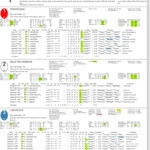
Pick Pony Track Condition Report — Ellis Park, July 24, 2026
Track Surface & Bias
Ellis Park's dirt (D) track in midsummer typically plays fair to mildly speed-favoring, with front-runners and pace-pressers holding a slight edge, especially in sprints where early position is critical. Inside-to-middle posts are generally preferred, offering efficient trips without creating an extreme “golden rail,” while wide draws are workable but usually demand extra early use or strong tactical speed. In two-turn dirt routes, stalkers just off the pace tend to perform best, as the relatively long stretch rewards sustained bids while still favoring horses with tactical speed over true deep closers.
The turf (T) course historically tilts toward stalkers and mid-pack runners on firm-to-good ground, with horses sitting within a few lengths of the lead into the far turn enjoying the most consistent success. Inside and middle posts are typically advantageous in turf routes to secure position into the first turn, while wider draws require more tactical versatility and clean trips. Closers can be effective when pace is genuinely strong, but deep late runners are more vulnerable on days with moderate fractions or slightly drying, loose ground that tends to favor horses closer to the pace.
Handicapper’s Edge
Given these typical Ellis Park profiles, emphasize tactical speed on both dirt and turf, with a preference for horses drawn in inside-to-middle gates that can secure position without being hard-used early. On turf, prioritize runners that consistently track within striking range and finish reliably over pure deep closers, who generally need both fast early splits and ideal trip dynamics to deliver their best under these conditions.