Pick Pony Track Condition Report — Saratoga Race Course, June 6, 2026
Weather Forecast
[Weather forecast section intentionally omitted.]
Track Surface & Bias
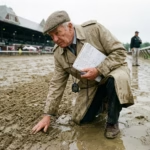
On the dirt (D) at Saratoga, historical patterns—especially at classic-route distances like today's Belmont Stakes configuration—indicate a consistent lean toward forwardly placed runners rather than deep closers. Stalkers sitting 1–4 lengths off the lead have been the most productive profile at 1¼ miles, winning nearly half of the races at that trip since 2000, with on‑or‑near‑the‑lead speed also performing strongly. Inside draws are a notable plus for speed types: posts 1–3 have accounted for a majority of dirt winners at this distance, making rail and inside speed particularly dangerous when they secure clean trips into the first turn.
On the turf (T) at Saratoga, the prevailing pattern in fair conditions is usually a mild preference for tactical speed and inside‑to‑mid posts, with extreme deep closers needing both pace and racing luck to be effective. Historically, saving ground on the inner and being able to quicken from a stalking or mid‑pack position has been an advantage, while wide, sustained moves are more trip‑dependent and less reliable over a full card.
Handicapper’s Edge
Given these tendencies, bettors should slightly upgrade tactical speed and stalking profiles on dirt, especially those breaking from inside or middle posts who project a clean, forward trip. On turf, lean toward horses with inside position and versatile, pace‑tracking styles, and be cautious about over‑committing to one‑run closers who require an ideal pace collapse to deliver their best run.