
Get more in-depth analysis, expert picks, handicapper reports, AI picks, handicapping tools, in-article data tooltips, NO ADVERTISEMENTS, and other membership perks with a Pick Pony subscription!
Don’t forget Pick Pony’s Expert Picks, AI Picks, and Past Performance Sheets/Racing Forms!
The Pick Pony Handicapper's Report is published daily and provides analysis of all races on the card. A Pick Pony analyst prepares the report, so selections may differ from the Pick Pony Expert Picks, which are based on the consensus of all Pick Pony analysts.
Friday, January 2, 2026 marks the second day of racing at Aqueduct's winter meet, with an eight-race card beginning at 12:40 PM EST. The meet opened January 1 and will continue through March 30, featuring competitive racing across claiming, maiden and allowance conditions. The featured race is the seventh, an $83,000 allowance for fillies and mares at 6.5 furlongs, anchoring a card that includes two New York-bred restricted events and a diverse mix of claiming and maiden contests.
The day follows strong momentum from the opening day of the meet, with trainers Linda Rice and Chad Brown establishing early position in the standings alongside jockeys Flavien Prat and Manuel Franco, who continue their dominance from the 2025 season.
Weather and Track Conditions
The forecast for January 2 calls for frigid conditions typical of winter racing in New York. Temperatures will struggle to reach freezing, with highs in the upper 20s to low 30s°F after a morning in the teens and 20s. A mix of sun and clouds is expected with west winds at 10-15 mph gusting to 25 mph, creating wind chills in the low 20s at best. Light snow showers are possible tonight but racing will proceed on a fast main dirt track.
These cold conditions favor hardy horses with proven form on the winter circuit. The main track at Aqueduct has been renovated and generally plays fairly under winter conditions, though handicappers should note that speed has shown slight advantages recently. The track handles winter weather reliably, producing a consistent racing surface despite challenging temperatures.
Cold weather impacts horse performance through muscle stiffness and reduced flexibility, which can affect speed and stamina. Horses with recent racing form who are acclimated to winter conditions hold advantages over those returning from layoffs or shipping from warmer climates. Jockeys and trainers with extensive winter racing experience at Aqueduct possess tactical edges in managing horses through these conditions.
Track Bias and Post Position Analysis
Historical data reveals important post position patterns that should inform handicapping throughout the card. In dirt sprints, posts 4 through 6 have produced 53% of winners, with post 4 showing a particularly strong 16% win rate. Inside posts 1 through 3 demonstrate reduced impact values around 0.85, making them statistically disadvantaged positions, with post 2 especially weak at just 4% wins in recent dirt sprint samples.
Winter conditions at Aqueduct can exacerbate the anti-inside bias in sprints, as the inner path becomes more churned and demanding. Horses breaking from posts 7 and outward in sprints can use the wider draw to their advantage, avoiding kickback while finding better footing. These statistical patterns should inform both win betting and exotic construction throughout the card.
Routes show less pronounced bias overall, with post 4 producing marginally better results at 19.4% of winners. The one-mile distance and longer allow pace to develop more naturally, diminishing the impact of post position compared to sprints.
The main track has been playing relatively fairly since renovation, with no extreme speed or closing bias dominating. However, recent observations suggest speed has performed well, rewarding horses with tactical early positioning. The track consistently handles the winter weather demands of the meet, providing reliable footing despite temperature extremes.
Race 1: Maiden Claiming Fillies & Mares – 6.5 Furlongs
Post Time
12:40 PM EST
This race for older maiden fillies and mares at the $20,000 claiming level ($25,000 for New York-breds) represents the opening event of the card. The six-horse field features predominantly Linda Rice trainees, with the Hall of Fame conditioner sending out three runners including the morning line favorite.
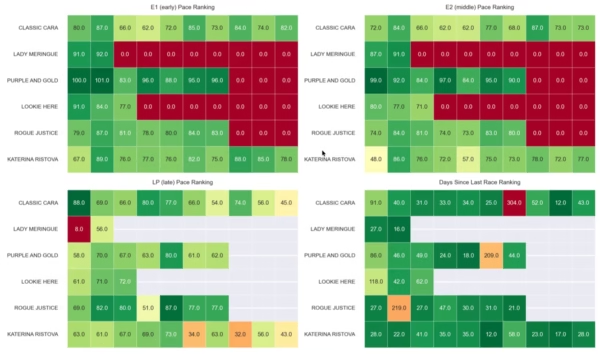
Pace Analysis
The pace scenario projects as contested but manageable, with multiple fillies possessing early speed tendencies. Purple and Gold figures to contest the early lead from her inside post 3 draw, while Rogue Justice from post 5 should also show speed. Classic Cara adds tactical pace from post 1. The 6.5-furlong distance allows for pace development without becoming overly taxing, and the field size limits the potential for destructive early fractions. Handicappers should expect honest early splits that set up both pace pressers and late-running types, though the slight speed bias on the track favors those positioned forwardly.
Key Contenders
Purple and Gold emerges as the standout selection despite the morning line favoritism. Trained by Linda Rice and ridden by Jose Lezcano, this four-year-old filly draws the advantageous post 3 position, which falls within the statistically favorable 4-6 range but still provides a reasonable inside trip. Rice finished the 2025 season with a record-setting 172 wins across the NYRA circuit, including 51 victories at the Aqueduct winter meet, demonstrating her exceptional ability to place horses successfully. Her 22% win rate and 56% in-the-money percentage at the fall meet underscores consistent competitiveness.
Lezcano brings a 15.8% win rate at the current meet with 21 victories from 133 starts. His career earnings exceeding $113 million reflect sustained excellence, and he won the 2019 Belmont riding title. The jockey-trainer combination offers proven synergy, a critical advantage in maiden company where connections matter significantly.
Rogue Justice deserves respect as the secondary choice from post 5. Trained by John Alexander Ortiz and partnered with Christopher Elliott, this four-year-old filly possesses tactical speed that could prove valuable in the pace scenario. Elliott has accumulated 13 wins from 129 starts at the current meet with a 10.1% strike rate. The post 5 draw provides flexibility to either contest the pace or sit just off it, depending on how the race unfolds.
Secondary Choices
Classic Cara represents Mitchell Friedman with Jorge Vargas Jr. in the saddle from post 1. The five-year-old mare's inside draw creates challenges in a field where inside posts have underperformed, but her experience and tactical speed allow positioning options. The Friedman barn brings solid competence, though without the elite statistics of Rice.
Lady Meringue gives Rice a second entry from post 2 with Eric Cancel riding. Cancel has posted just a 6% win rate at the current meet with three victories from 50 starts, making him a significant negative compared to Lezcano on the stablemate. The post 2 position ranks as statistically the weakest in dirt sprints at Aqueduct, compounding the challenge.
Selections
Win: Purple And Gold (3)
Place: Rogue Justice (5)
Show: Classic Cara (1)
Race 2: Maiden Optional Claiming – 1 Mile
Post Time
1:09 PM EST
This maiden special weight/optional claiming race for three-year-olds features elite trainer representation with Todd Pletcher and Brad Cox each sending multiple runners. The $70,000 purse attracts horses that sold for $60,000 or less in their most recent sale, or those entered for the $75,000 claiming price.
Pace Analysis
The one-mile distance allows pace to develop gradually, with the first turn coming relatively early in the race. Swiss Army Knife trained by Pletcher figures to show early speed and could seek to establish position approaching the first turn. Tiger Rocket for Cox also possesses tactical pace and may join the early battle. The field size of six horses limits the potential for suicidal fractions, suggesting an honest pace that rewards horses positioned within striking range. Closers will need clean trips and strong rally ability to overcome forwardly placed runners, particularly given the slight speed bias favoring the track.
Key Contenders
Swiss Army Knife commands attention as the Pletcher trainee making his third career start. By Practical Joke out of a Tapit mare, this three-year-old colt carries a superior pedigree suggesting distance aptitude. Pletcher finished 2025 with 78 NYRA wins and maintains a 22% win rate with NYRA-based runners. His mastery with developing maidens is legendary, having trained multiple champions and amassed over $516 million in career earnings.
Kendrick Carmouche takes the mount, bringing a 16.9% win rate at the current meet with 25 victories from 148 starts. Carmouche's $2.0 million in earnings at the meet demonstrates he's riding quality stock and maintaining strong connections. The jockey finished 2025 as the third-leading rider in the NYRA standings with 178 wins, confirmation of his elite status.
Swiss Army Knife raced previously at Belmont and Saratoga, showing improvement in his last start at Belmont. The move to optional claiming company could represent class relief depending on the composition of that maiden special weight, though the presence of Cox trainees maintains competitive integrity. Post 3 falls outside the most advantageous sprint positions but provides sufficient flexibility for the one-mile distance.
Southeastern represents Cox with Flavien Prat riding, a formidable combination. Cox dominated 2025 with a 35% win rate and 72% in-the-money percentage at NYRA tracks. Prat leads the current meet with 46 wins from 136 starts, a remarkable 33.8% strike rate, and over $3.2 million in earnings. The 2024 Eclipse Award winner for Outstanding Jockey set records for most stakes wins in a year and brings elite tactical skills.
This three-year-old gelding has raced twice previously, showing promise with a third-place finish in his most recent start. The second start improvement suggests continued upward trajectory, and the Cox-Prat partnership represents the strongest trainer-jockey combination in the race. Post 2 creates minor concerns given the inside post bias, but Prat's skill mitigates this disadvantage.
Tiger Rocket gives Cox a second live entry with Christopher Elliott aboard from post 4. This three-year-old colt has started twice without winning but displayed the fastest stalking style in the field based on running patterns. The post 4 draw ranks as statistically the strongest position in sprint races at Aqueduct, providing a significant advantage. Elliott's 10.1% win rate pales compared to Prat, creating a clear pecking order within the Cox barn entries.
Secondary Choices
State of Attack debuts for Brittany Russell with Manuel Franco riding. Franco captured the 2025 NYRA riding title with 206 wins across the circuit, his fourth year-end championship. The 17.5% win rate at the current meet with 33 victories represents solid but not exceptional performance compared to Prat. Russell has demonstrated competence with a 41% win rate at the meet, though from a small sample size. First-time starters face challenges overcoming experienced rivals, particularly in competitive maiden company.
Grumblyrumhogan trained by Edward Barker has raced three times with two show finishes, demonstrating some ability. Sahin Civaci rides from post 5, bringing a 9.7% win rate at the meet. The horse represents value if the favorites falter, but faces class and connection disadvantages.
Selections
Win: Swiss Army Knife (3)
Place: Southeastern (2)
Show: Tiger Rocket (4)
Race 3: Claiming – 1 1/8 Miles
Post Time
1:38 PM EST
This $10,000 claiming race for older horses stretching to 1 1/8 miles on the main track represents a competitive sprint-to-route distance where pace dynamics and trip management become crucial. The eight-horse field includes several experienced campaigners with mixed recent form.
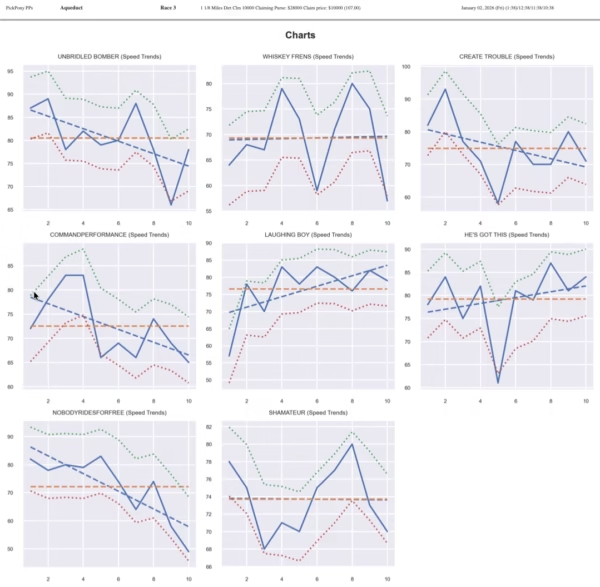
Pace Analysis
The route distance fundamentally alters pace dynamics compared to sprints. Shamateur emerges as the likely pacesetter based on his fast leader designation and recent running style. He's Got This possesses fast stalking ability and should track close to the early pace. The honest tempo should favor horses positioned within three lengths of the lead through the first six furlongs, as closers face significant challenges making up ground over the final quarter-mile. The distance rewards horses with stamina and tactical positioning rather than pure speed, though the track's current speed-favoring tendency suggests pressing tactics may prove optimal.
Key Contenders
He's Got This trained by Devon Gittens and ridden by Christopher Elliott draws considerable handicapper support. This seven-year-old gelding by Tapiture carries 121 pounds with the weight allowance for non-winners since July 1, 2025. From 41 career starts, he has compiled six wins and 20 in-the-money finishes, demonstrating consistency at the claiming level. His fast stalking running style positions him ideally in the expected pace scenario, allowing him to track the leader while conserving energy for the stretch drive.
Elliott's partnership with Gittens provides tactical familiarity critical in route races. The post 6 draw eliminates traffic concerns while allowing the jockey to choose his trip approaching the first turn. The route distance plays to the horse's stamina profile, and his recent fifth-place finish at Aqueduct over 1 1/8 miles provides distance confirmation. Morning line odds of 5/2 suggest value if the crowd overplays perceived favorites.
Laughing Boy for trainer Michael Miceli with Jose Lezcano riding presents the primary competition. This eight-year-old horse brings fast stalking ability similar to He's Got This, potentially creating a tracking duel behind the pacesetter. His 29-65-95 winning profile indicates strong place and show percentages, though win capability remains question. From 34 career starts, he has won just once but finished in the money 21 times, demonstrating consistency without brilliance.
Lezcano's 15.8% win rate and $1.2 million in earnings at the meet provide elite piloting. The post 5 draw offers clean racing room while maintaining inside position around the turns. The combination of Lezcano's tactical skill and the horse's stalking ability creates a legitimate threat, particularly in exotic wagers.
Create Trouble trained by Richard Dutrow Jr. with Luis Rivera Jr. riding represents a live longshot possibility. This six-year-old gelding has won four times from 18 starts with six additional in-the-money finishes. His fastest stalker designation suggests aggressive early positioning, which could prove advantageous if the pace becomes honest. Recent form shows mixed results, including an eighth-place finish in his last start at Aqueduct over one mile, though the class drop to $10,000 claiming provides relief.
Dutrow Jr. brings Hall of Fame credentials despite a spotty recent record, showing a 50% win rate at the current meet from a tiny two-horse sample. Rivera Jr. has struggled with just a 6.2% win rate from 81 starts, creating a significant jockey disadvantage. The post 3 draw provides inside position but limited room for maneuvering.
Secondary Choices
Shamateur for Devon Gittens with Jose Antonio Gomez riding figures prominently in the pace scenario. His fast leader designation makes him the likely pacesetter, and his recent form includes competitive efforts at Woodbine. Gomez's 3.6% win rate from 56 starts at the meet represents a major negative. The post 8 outside draw complicates efforts to secure the lead without expending extra energy.
Unbridled Bomber carries 121 pounds from post 1 for Oscar Barrera III with Omar Hernandez Moreno riding. Despite 24 career starts with four wins, recent form has been disappointing with a seventh-place finish last time at Aqueduct. The inside post creates challenges in route races where positioning flexibility proves crucial.
Selections
Win: He's Got This (6)
Place: Laughing Boy (5)
Show: Create Trouble (3)
Race 4: Maiden Special Weight – 6 Furlongs
Post Time
2:08 PM EST
This maiden special weight for older horses at six furlongs features $80,000 in purse money and showcases elite trainer representation from William Mott, Chad Brown, and Todd Pletcher. The six-horse field creates manageable pace dynamics while maintaining competitive quality.
Pace Analysis
The six-furlong sprint distance demands early positioning and tactical speed. Copious trained by Mott should show early pace, while Roger Roger from the Green barn may also demonstrate forward tendencies. Shadow Banking for Brown possesses stalking ability that allows flexibility. The limited field size prevents chaotic early fractions, suggesting an honest pace that rewards horses breaking alertly and securing favorable position. Given the track's current slight speed bias, horses positioned within two lengths of the lead through the opening half-mile hold significant advantages.
Key Contenders
Copious represents William Mott with Sahin Civaci riding from post 1. Mott finished 2025 with 105 wins from 660 starts nationwide, earning over $17 million and maintaining a 16% win rate. His Hall of Fame credentials and patient development of horses create confidence with maiden runners. The four-year-old colt by Quality Road makes his debut in maiden special weight company, suggesting the connections believe he's ready to fire.
Civaci has struggled at the current meet with a 9.7% win rate from 72 starts, representing the primary concern. The post 1 inside draw creates challenges given the statistical disadvantages of inside posts in sprints at Aqueduct, particularly posts 1-3. However, Mott's patience with this older maiden suggests substance behind the debut, and the Quality Road pedigree implies class and ability.
Shadow Banking for Chad Brown with Flavien Prat aboard commands significant respect. Brown compiled 127 wins across NYRA tracks in 2025, finishing second to Linda Rice in the trainer standings. His expertise with maiden runners is well-documented, and the decision to start this four-year-old gelding at Aqueduct rather than Gulfstream or other winter venues suggests readiness.
Prat's dominance at the current meet with 46 wins and a 33.8% strike rate makes him the most dangerous jockey in the race. The 2024 Eclipse Award winner brings tactical brilliance and exceptional timing. Post 5 provides excellent position in the middle of the field, allowing Prat to choose his trip while avoiding the inside post bias. The morning line odds of 3/1 suggest value given the elite connections.
Roger Roger trained by Amelia Green with Manuel Franco riding represents Todd Pletcher's former assistant who has established her own successful stable. Franco's 17.5% win rate at the meet and year-end NYRA championship demonstrate elite ability. This four-year-old colt makes his debut with bullet workouts suggesting readiness. The post 6 outside draw provides clean racing room, though it requires extra ground to cover.
Secondary Choices
Alias trained by Linda Rice with Jose Lezcano riding has been scratched according to also-eligible status, removing a potential contender.
My Military Hero debuts for Miguel Penaloza with Melvis Gonzalez riding from post 2. The connections lack the elite credentials of Mott, Brown, and Pletcher, creating a significant class disadvantage. Gonzalez does not appear in the leading jockey statistics at the meet, suggesting limited opportunities.
Implacable for Chad Summers with Rivera Jr. aboard faces similar connection challenges from post 3. Rivera's 6.2% win rate ranks among the lowest of regular riders at the meet.
Selections
Win: Shadow Banking (5)
Place: Copious (1)
Show: Roger Roger (6)
Race 5: Maiden Claiming NY-Breds – 6 Furlongs
Post Time
2:38 PM EST
This maiden claiming race restricted to three-year-old New York-breds at the $40,000 level showcases the depth of the state breeding program. The eight-horse field includes several horses with multiple starts and experience.
Pace Analysis
Multiple horses possess early speed, creating potential for contested fractions. My Munny Talks for Brad Cox figures prominently in the pace scenario, while Tampa Storm trained by Chris Englehart should also show speed. The six-furlong sprint distance amplifies the importance of early positioning, and the potential for pressured fractions could set up late-running types. However, the track's speed bias suggests those positioned forwardly maintain advantages despite tactical pressure.
Key Contenders
My Munny Talks trained by Brad Cox with Manuel Franco riding represents the most accomplished connections. Cox's 35% win rate and 72% in-the-money percentage at NYRA tracks confirms his elite status. Franco captured the 2025 NYRA riding championship with 206 wins, his fourth title. This New York-bred son of the successful sire is making his sixth career start and showed promise with a second-place finish at 3-1 in a previous maiden special weight.
The horse was noted as moving from turf to dirt in a previous race, suggesting versatility. Cox's decision to run this New York-bred in claiming company rather than maiden special weight indicates confidence in securing the win at this level. Post 4 provides the statistically strongest position in Aqueduct sprints, a significant advantage. Morning line odds of 5/2 reflect the market respect for the connections and post position.
Mach Schnell for John Terranova II with Christopher Elliott riding draws attention despite being listed as main-track-only, suggesting potential weather concerns. The three-year-old gelding has started previously with mixed results but brings the experience advantage over first-time starters. Elliott's 10.1% win rate at the meet provides competent piloting. The post 6 draw eliminates traffic concerns while requiring extra ground to navigate.
Major Bourbon trained by Mark Hennig with Reylu Gutierrez aboard represents another experienced entry. Hennig maintains solid competence with New York-breds, and the horse's previous racing experience provides tactical familiarity. Gutierrez has struggled at the current meet with just 1 win from 32 starts, a 3.1% strike rate that ranks near the bottom of regular riders. The post 8 outside draw compounds the challenge of securing favorable position.
Secondary Choices
Tampa Storm trained by Chris Englehart with Jose Lezcano riding commands respect. Englehart leads all New York trainers in total wins with 867 from 3,628 starts, a 24% win rate with New York-breds specifically. Lezcano's 15.8% win rate at the meet and $1.2 million in earnings demonstrate consistent performance. The three-year-old colt has raced twice previously, including a fourth-place finish in his debut and a fifth-place effort most recently. The post 2 draw creates challenges given the statistical disadvantages of inside posts, particularly post 2 in sprints.
The Toy Cannon debuts for Chad Summers with Luis Rivera Jr. riding from post 1. The combination of inside post, first-time starter, and Rivera's 6.2% win rate creates multiple obstacles. First-time starters face challenges overcoming experienced rivals in competitive maiden company.
Solomini's World for James Bentley Begg with Jaime Rodriguez riding has some experience but faces connection disadvantages. Rodriguez has posted a 13.5% win rate at the meet with 20 victories from 148 starts, respectable but not elite.
Longshots
Vinnie Bankerino trained by David Donk with Jose Antonio Gomez riding has started previously without success. Gomez's 3.6% win rate from 56 starts represents a significant negative. The post 3 inside draw limits tactical options.
The Last Delivery for Ralph D'Alessandro with Oscar Gomez aboard faces similar challenges from post 5. Neither connections nor post position provide advantages in this competitive field.
Selections
Win: My Munny Talks (4)
Place: Tampa Storm (2)
Show: Mach Schnell (6)
Race 6: Claiming – 6 Furlongs
Post Time
3:08 PM EST
This $20,000 claiming sprint ($25,000 for New York-breds) for older horses non-winners since July 1, 2025 features an eight-horse field with competitive depth.
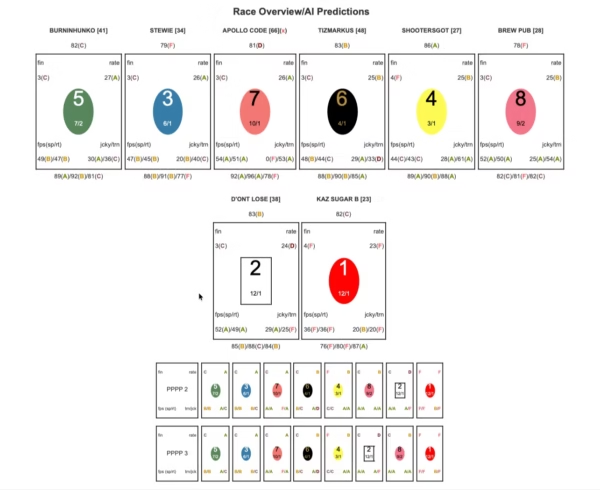
Pace Analysis
The six-furlong sprint distance demands early speed and tactical positioning. Burninhunkoflove possesses pace ability and should factor early, while Shootersgottashoot with Flavien Prat aboard brings tactical speed. The field size creates competitive early fractions without becoming suicidal. Speed horses that break cleanly and secure favorable position within striking range hold advantages, particularly given the track's current tendencies.
Key Contenders
Shootersgottashoot trained by Panagiotis Synnefias with Flavien Prat riding represents the standout selection. Prat's dominance at the current meet with 46 wins from 136 starts and a 33.8% strike rate makes him the most dangerous jockey on the grounds. His partnership with Synnefias creates tactical familiarity, and the trainer's understanding of claiming horse condition provides confidence.
This four-year-old gelding carries 123 pounds from post 4, the statistically strongest position in Aqueduct sprints. Morning line odds suggest he may offer value if the crowd underestimates the post position advantage and Prat's current dominance. The claiming level indicates appropriate class placement, and the sprint distance suits his running style.
Tizmarkus trained by Orlando Noda with Christopher Elliott riding deserves respect as the secondary choice. Noda's barn has shown competence with claimed horses, and Elliott's 10.1% win rate at the meet provides solid piloting. This five-year-old gelding carries 123 pounds from post 6, eliminating traffic concerns while requiring extra ground to cover. Recent racing form and class level suggest competitiveness at this claiming price.
Brew Pub for Edward Barker with Manuel Franco aboard brings the year-end NYRA champion jockey into the mix. Franco's 206 total NYRA wins in 2025 confirm elite ability despite a 17.5% win rate at the current meet that trails Prat's. The eight-year-old gelding possesses experience and tactical ability from post 8. Morning line odds of 9/2 suggest value consideration.
Secondary Choices
Burninhunkoflove trained by Horacio De Paz with Jaime Rodriguez riding figures prominently in the pace scenario. Rodriguez has posted 20 wins from 148 starts at the current meet with a 13.5% strike rate. The seven-year-old gelding carries 123 pounds from post 5, providing middle-of-field position. His tactical speed creates early positioning advantages, though sustainability over six furlongs requires confirmation.
Apollo Code for Paul Barrow with Kendrick Carmouche riding represents value potential. Carmouche's 16.9% win rate at the meet with 25 victories demonstrates consistency. The five-year-old gelding carries the weight allowance at 121 pounds from post 7. The outside draw requires tactical skill to overcome, but Carmouche possesses the ability.
Stewie and D'ont Lose Cruz round out the field with less accomplished connections and challenging post positions that limit their appeal.
Selections
Win: Shootersgottashoot (4)
Place: Tizmarkus (6)
Show: Brew Pub (8)
Race 7: Allowance Fillies & Mares – 6.5 Furlongs (Featured Race)
Post Time
3:38 PM EST
The featured race showcases fillies and mares four years old and upward in an $83,000 allowance at 6.5 furlongs. This competitive affair for horses that have never won $20,000 other than maiden, claiming, starter or state-bred allowance, or never won two races, highlights the depth of the division.
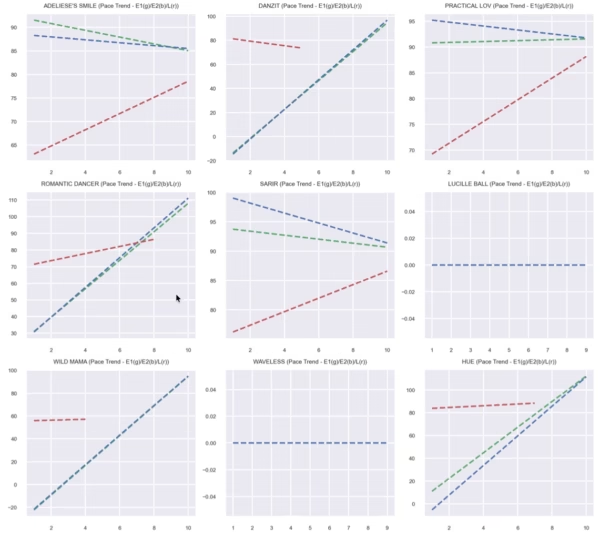
Pace Analysis
The nine-horse field creates competitive early fractions over the 6.5-furlong distance. Romantic Dancer possesses early speed and should contest the pace, while Lucille Ball brings tactical speed from the outside post. The distance allows for pace development without becoming overly taxing, and the field size suggests honest fractions that reward horses positioned within striking range. Given the slight speed bias on the track, forwardly placed runners hold advantages, though quality late-runners with clean trips remain dangerous.
Key Contenders
Romantic Dancer trained by Richard Dutrow Jr. with Flavien Prat riding commands attention as the morning line favorite. Dutrow's Hall of Fame credentials combine with Prat's current dominance at the meet to create a formidable partnership. This five-year-old filly has demonstrated competitive ability in similar company, and her tactical speed positions her favorably in the expected pace scenario.
Prat's 46 wins from 136 starts at the current meet, a 33.8% strike rate generating over $3.2 million in earnings, confirms his status as the most dangerous rider in New York. His decision to ride this filly over other options suggests confidence from connections. Post 4 provides the statistically strongest position in sprints at Aqueduct, a significant advantage. The filly carries 123 pounds, level with most rivals, eliminating weight concerns.
Waveless for Todd Pletcher with Kendrick Carmouche riding represents elite trainer credentials. Pletcher's 78 NYRA wins in 2025 and career earnings exceeding $516 million demonstrate sustained excellence. His patience developing horses creates confidence with allowance-level runners. This four-year-old filly by Gun Runner earned impressive speed figures in her debut, suggesting considerable upside.
Carmouche brings 25 wins from 148 starts at the current meet, a 16.9% strike rate with $2.0 million in earnings. His tactical skill and experience navigating traffic provide advantages in competitive fields. Post 8 creates challenges requiring extra ground to cover, but the outside draw eliminates early traffic concerns. Morning line odds of 7/2 suggest value given the connections.
Danzit represents Pletcher's second entry with Eric Cancel riding. This five-year-old filly by Tapit out of a Dunkirk mare carries a superior pedigree. She won a maiden special weight at Saratoga previously, confirming ability. Cancel has struggled at the current meet with just 3 wins from 50 starts, a 6% strike rate, creating jockey concerns. Post 2 compounds challenges given the statistical disadvantages of inside posts in sprints.
Secondary Choices
Lucille Ball trained by Chris Englehart with Manuel Franco riding brings the NYRA champion jockey into the race. Franco's 206 NYRA wins in 2025 confirm elite ability. Englehart maintains strong statistics with New York-breds and allowance horses. This four-year-old filly carries 121 pounds with a weight allowance from post 6, providing middle-of-field position. Her tactical speed creates early positioning advantages, and the Franco partnership provides confidence.
Practical Lov for William Mott with Sahin Civaci aboard represents Hall of Fame trainer credentials. Mott's patient development of fillies creates confidence, though Civaci's 9.7% win rate at the meet represents a jockey disadvantage. Post 3 limits tactical options in the nine-horse field.
Sarir trained by Linda Rice with Jose Lezcano riding carries 121 pounds with the weight allowance. Rice's record-setting 172 NYRA wins in 2025 and 22% win rate at the fall meet demonstrate consistent success. Lezcano's 15.8% win rate provides competent piloting. Post 5 offers reasonable position, though the filly faces quality competition.
Longshots
Wild Mama for Mark Hennig with Reylu Gutierrez riding faces connection disadvantages. Gutierrez's 3.1% win rate at the meet ranks near the bottom of regular riders. Post 7 compounds challenges.
Adeliese's Smile and Hue round out the field with less accomplished recent form that limits their appeal in this competitive allowance.
Selections
Win: Romantic Dancer (4)
Place: Waveless (8)
Show: Lucille Ball (6)
Race 8: Claiming Fillies & Mares – 6.5 Furlongs
Post Time
4:08 PM EST
The closing race features fillies and mares four years old and upward in a $30,000 claiming sprint for horses that have never won two races. The nine-horse field creates competitive dynamics to close the card.
Pace Analysis
Multiple fillies possess early speed, creating potential for contested fractions. Chocolatechocolate figures prominently in the early pace scenario, while Elegant brings tactical ability. The 6.5-furlong distance amplifies the importance of early positioning, and the potential for pressured fractions could set up late-runners. However, given the track's current speed bias, horses positioned forwardly maintain advantages despite tactical pressure.
Key Contenders
Chocolatechocolate trained by Linda Rice with Manuel Franco riding represents the standout selection combining the 2025 NYRA champion jockey with the record-setting trainer. Franco's 206 NYRA wins confirm elite ability, while Rice's 172 victories and 21% win rate demonstrate consistent success. This five-year-old filly has competed at this claiming level previously with mixed results but brings the connections advantage.
Franco's 17.5% win rate at the current meet with 33 wins from 189 starts provides confidence. Rice's exceptional understanding of claiming horse condition and tactical placement creates optimal opportunities. Post 9 outside draw requires extra ground to cover but eliminates early traffic concerns. Morning line odds suggest value if the crowd underestimates the connections advantage.
Elegant trained by Linda Rice with Flavien Prat riding gives Rice a formidable entry combining her barn's competence with the meet's leading jockey. Prat's 46 wins from 136 starts and 33.8% strike rate makes him the most dangerous rider on the grounds. This five-year-old filly by Lord Nelson carries 123 pounds from post 7, providing reasonable position.
The Rice-Prat combination creates a powerful one-two punch in the barn's entries. Prat's decision to ride Elegant over Chocolatechocolate suggests connections favor this entry, creating a clear hierarchy within the stable. The tactical advantage of having the leading jockey cannot be overstated in competitive claiming company.
Scarlet's Dream for Keri Brion with Christopher Elliott riding brings experience and tactical ability. Elliott's 10.1% win rate at the meet provides competent piloting. This five-year-old filly carries 123 pounds from post 4, the statistically strongest position in Aqueduct sprints. Morning line odds of 5/1 suggest value potential.
Secondary Choices
Twirling Lulu trained by Bruce Levine with Kendrick Carmouche riding carries 123 pounds from post 5. Carmouche's 16.9% win rate at the meet with 25 victories demonstrates consistency. The filly faces quality competition but brings tactical speed advantages.
Maidstone for Brittany Russell with Jaime Rodriguez aboard has shown ability in previous starts. Rodriguez's 13.5% win rate provides competent piloting. Post 2 creates challenges given the statistical disadvantages of inside posts in sprints.
Cara's Dreamweaver, Blame the Banker, Calisa, and Jay's Love round out the field with less accomplished connections or challenging post positions that limit their appeal.
Selections
Win: Elegant (7)
Place: Chocolatechocolate (9)
Show: Scarlet's Dream (4)
Jockey Notes and Insights
The jockey colony at the current Aqueduct winter meet showcases exceptional talent led by Flavien Prat's dominant performance. Prat has established a commanding position with 46 wins from 136 starts, translating to a remarkable 33.8% strike rate and over $3.2 million in earnings. The 2024 Eclipse Award winner for Outstanding Jockey set records for most stakes wins and graded stakes wins in a year, demonstrating sustained excellence at the highest levels. His tactical brilliance, exceptional timing, and ability to conserve horse energy while maintaining optimal position make him the most dangerous rider in any race.
Prat's success continues his dominance from capturing his first New York riding title at the Belmont at the Big A spring meet with 43 wins, followed by the Aqueduct fall meet championship. His partnership with elite trainers like Chad Brown, Todd Pletcher, and Brad Cox creates synergy that amplifies his effectiveness. Handicappers should note Prat's mounts warrant serious consideration regardless of morning line odds, particularly from favorable post positions.
Manuel Franco secured his fourth year-end NYRA championship in 2025 with 206 wins across the circuit's six race meets. His titles at the Aqueduct winter meet with 64 victories and Belmont at the Big A fall meet with 40 wins demonstrate sustained excellence throughout the year. At the current meet, Franco has accumulated 33 wins from 189 starts, an 17.5% strike rate generating $2.5 million in earnings.
Franco's success stems from strong partnerships with leading trainers, particularly Linda Rice, with whom he combined for multiple victories throughout 2025. His tactical skill allows him to adapt riding style to race conditions and pace scenarios, extracting maximum performance from his mounts. The 31-year-old jockey's consistency and work ethic, combined with agent John Panagot's book-building expertise, maintain his position among New York's elite riders.
Kendrick Carmouche has established himself as a consistent force with 25 wins from 148 starts at the current meet, a 16.9% strike rate generating $2.0 million in earnings. His year-end total of 178 NYRA wins in 2025 secured second place in the standings. Carmouche's versatility allows him to excel on various running styles, from pace-pressing tactics to patient stalking trips. His experience navigating traffic and tactical awareness in competitive fields provide advantages, particularly in route races where positioning through the turns proves critical.
Jose Lezcano brings veteran savvy with 21 wins from 133 starts at the current meet, a 15.8% strike rate and $1.2 million in earnings. His career earnings exceeding $113 million and 2019 Belmont riding title confirm sustained excellence over 20+ years. Lezcano's tactical patience and ability to conserve horse energy prove particularly valuable in route races and competitive allowance company. His partnerships with trainers like Linda Rice and Chris Englehart create familiarity that enhances effectiveness.
Christopher Elliott has accumulated 13 wins from 129 starts at the current meet, a 10.1% strike rate with $1.1 million in earnings. While his win percentage trails the elite riders, Elliott maintains consistency and competence across various race conditions. His experience with claiming horses and ability to extract effort in the stretch prove valuable in competitive claiming company. Handicappers should note Elliott's mounts often represent value at generous odds given the public's tendency to focus on higher-profile jockeys.
Jaime Rodriguez has posted 20 wins from 148 starts at the current meet, a 13.5% strike rate with $1.3 million in earnings. His tactical versatility and experience with various running styles create adaptability across race conditions. Rodriguez's partnerships with multiple training barns provide consistent opportunities, and his understanding of Aqueduct's configuration enhances effectiveness.
Eric Cancel has struggled at the current meet with just 3 wins from 50 starts, a 6% strike rate. His limited success creates significant jockey disadvantages when opposing riders with superior statistics and proven form. Handicappers should exercise caution with Cancel mounts unless other factors strongly favor the selection.
Reylu Gutierrez has encountered similar challenges with just 1 win from 32 starts at the current meet, a 3.1% strike rate that ranks near the bottom of regular riders. His limited success creates substantial disadvantages in competitive fields. The statistics suggest avoiding Gutierrez mounts unless exceptional class or trainer advantages offset the jockey concern.
Luis Rivera Jr. has posted 5 wins from 81 starts, a 6.2% strike rate. His struggles mirror those of Cancel and Gutierrez, creating jockey disadvantages when matched against higher-performing riders. The apprentice advantage has expired, eliminating weight relief that previously provided competitive edges.
Trainer Notes and Insights
Linda Rice continues her historic dominance of New York racing after setting a single-season NYRA record with 172 training wins in 2025. Her three meet training titles at the Aqueduct winter meet with 51 wins, Aqueduct spring meet with 15 victories, and Aqueduct fall meet with 31 wins demonstrate sustained excellence throughout the year. Rice's 21% win rate and 53% in-the-money percentage confirm consistent competitiveness across race conditions and class levels.
Rice's success stems from exceptional horse placement, understanding each runner's optimal conditions and tactical preferences. Her ability to claim horses and improve their performance creates value throughout claiming ranks, with examples like Light the Way (claimed for $40,000 in February, won 5 of 11 starts afterward) and Acoustic Ave (claimed for $45,000 in March, posted a 9-3-4-1 record). This expertise allows her stable to compete effectively across claiming prices while maintaining competitiveness in allowance and stakes company.
Rice's partnerships with jockeys Manuel Franco, Jose Lezcano, Kendrick Carmouche, and Flavien Prat create tactical synergy that amplifies effectiveness. Her willingness to employ elite riders for claiming horses demonstrates commitment to maximizing each runner's potential. Handicappers should note Rice trainees warrant serious consideration regardless of race conditions, particularly when paired with top-tier jockeys from favorable post positions.
Todd Pletcher maintains his Hall of Fame credentials with 78 NYRA wins in 2025, finishing third in the trainer standings. His career earnings exceeding $516 million and six Eclipse Awards as outstanding trainer confirm sustained excellence over two decades. Pletcher's expertise developing maiden runners and patient approach with young horses create confidence when his trainees debut or make early career starts.
Pletcher's success with classic distance runners and routing types proves particularly valuable in winter racing where stamina and tactical positioning outweigh pure speed. His partnerships with elite jockeys like Flavien Prat, John Velazquez, and Kendrick Carmouche ensure proper tactical execution. Handicappers should note Pletcher maidens often improve significantly from debut to second start as the trainer provides educational experiences before expecting winning performances.
Chad Brown compiled 127 NYRA wins in 2025, finishing second to Linda Rice in the trainer standings. His expertise with turf runners and maiden special weight horses creates particular advantages when transitioning horses to winter dirt racing. Brown's patient development approach and willingness to place horses appropriately for confidence-building starts demonstrate long-term thinking that enhances runner development.
Brown's partnerships with Flavien Prat and stable owners like Klaravich Stables provide access to well-bred horses with classic pedigrees. His success rate with maidens making second or third career starts suggests the first start provided necessary experience. Handicappers should note Brown trainees improving significantly from debut to subsequent starts, particularly when equipped with tactical adjustments or jockey changes.
Brad Cox has established himself as one of North America's elite trainers with a 35% win rate and 72% in-the-money percentage at NYRA tracks. His success with Kentucky-based runners shipping to New York demonstrates versatility across racing circuits. Cox's ability to place horses appropriately for winning opportunities while developing them toward larger goals creates consistent success across class levels.
Cox's partnerships with jockeys Flavien Prat and Manuel Franco ensure tactical execution in New York races. His expertise with New York-bred runners and understanding of state-bred conditions provide advantages in restricted company. Handicappers should note Cox trainees often represent value at generous odds given the public's tendency to focus on New York-based trainers, though his success rate suggests these horses warrant serious consideration.
Chris Englehart leads all New York trainers with 867 total wins from 3,628 starts with New York-breds specifically, a 24% win rate demonstrating sustained excellence with state-bred runners. His understanding of New York-bred condition and optimal placement creates consistent success in restricted races. Englehart's partnerships with Jose Lezcano and Manuel Franco provide quality tactical execution.
Richard Dutrow Jr. brings Hall of Fame credentials despite recent challenges. His expertise developing allowance and stakes runners creates value when his horses appear properly placed. The small sample size of two starters at the current meet with a 50% win rate suggests selective placement, though handicappers should exercise caution given the limited data.
William Mott maintains Hall of Fame standards with patient horse development and exceptional tactical placement. His 105 wins nationwide in 2025 generating over $17 million in earnings confirm sustained excellence. Mott's success with maiden runners and allowance horses creates confidence when his trainees appear in appropriate spots, particularly when paired with quality jockeys.
Best Wagering Strategies and Value Plays
The Aqueduct card on January 2 presents multiple opportunities for sophisticated handicapping and wagering strategies that leverage track biases, jockey performance, and trainer patterns. The combination of elite rider Flavien Prat's dominance, Linda Rice's record-setting training performance, and demonstrable post position biases creates exploitable edges for intelligent bettors.
The early Pick 4 spanning races 1-4 offers value construction using Linda Rice's strength in race 1 combined with elite trainer representation in races 2-4. A conservative ticket using Purple and Gold in race 1, Swiss Army Knife in race 2, Shadow Banking in race 4, with a spread through multiple horses in race 3 creates reasonable coverage while concentrating on quality. The total cost remains manageable while covering the most likely winners in three races and allowing for potential upset value in the claiming route race.
Race 2 presents exacta value opportunities given the quality of both Todd Pletcher and Brad Cox trainees. A Swiss Army Knife / Southeastern exacta box captures the two strongest combinations at reasonable odds, while adding Tiger Rocket underneath creates trifecta value if the third Cox entry runs to his post position advantage. The elite trainer representation suggests these three runners will dominate the finish, making exotic coverage cost-efficient.
The featured race 7 provides Daily Double opportunities connecting into race 8. Using Romantic Dancer and Waveless in race 7 with Elegant and Chocolatechocolate in race 8 creates a 2×2 Daily Double capturing Linda Rice's stable strength and Flavien Prat's riding dominance. The connections advantage in both races suggests value at reasonable cost.
The Late Pick 4 spanning races 5-8 offers significant value given the competitive nature of claiming and maiden company. Using My Munny Talks in race 5 leverages Brad Cox's dominance and Manuel Franco's championship riding. Spreading race 6 through Shootersgottashoot, Tizmarkus, and Brew Pub captures multiple live contenders while emphasizing Prat's advantage. Concentrating on Romantic Dancer and Waveless in race 7 reduces cost while focusing on quality. The final leg using Elegant and Chocolatechocolate captures Rice's stable advantage to close the sequence.
Single-race wagering should emphasize win bets on horses with exceptional jockey-trainer combinations from favorable post positions. Romantic Dancer in race 7 combines Flavien Prat's meet-leading performance, Richard Dutrow Jr.'s Hall of Fame credentials, and the statistically strongest post 4 position. Similarly, Shootersgottashoot in race 6 leverages Prat's dominance with the optimal post position at potentially generous odds.
Place and show betting offers value on quality horses from less advantageous post positions or with secondary jockey concerns. Shadow Banking in race 4 combines Chad Brown's elite training with Prat's riding but faces post position challenges that may inflate win odds while maintaining strong place/show probability. Waveless in race 7 represents similar value given Todd Pletcher's credentials and outside post draw.
Exacta and trifecta construction should emphasize post position advantages and jockey quality. In sprints, horses from posts 4-6 warrant emphasis in exotic wagers given their 53% collective win rate. Conversely, horses from posts 1-3 should be used underneath in exactas and trifectas unless exceptional class or connections offset the positional disadvantage.
The cold weather conditions favor horses with recent racing form who have acclimated to winter racing. Handicappers should exercise caution with horses returning from layoffs or shipping from warmer climates, as muscle stiffness and reduced flexibility impact performance in frigid temperatures. Horses with multiple winter starts at Aqueduct or other cold-weather tracks warrant preference over those lacking such experience.
Claiming races throughout the card offer value opportunities by identifying trainers with strong first-off-claim statistics. Linda Rice's success claiming and improving horses creates confidence when her trainees appear in subsequent starts after being claimed. Similarly, horses dropping significantly in claiming price warrant attention, particularly when paired with jockey upgrades or favorable post positions.
The New York-bred maiden claiming race 5 provides value through state-bred program dynamics. Trainers like Brad Cox and Chris Englehart who understand New York-bred conditions create advantages, while the restricted nature limits field quality compared to open maiden company. The $40,000 claiming price attracts competitive horses while maintaining reasonable class levels.
Superfecta wagering remains challenging given field sizes and competitive nature, though races 3, 7, and 8 with eight or nine runners create reasonable opportunities. Using key horses in fixed positions while spreading other slots captures potential value at generous payoffs. In race 7, keying Romantic Dancer on top while using Waveless, Lucille Ball, and Danzit in various combinations underneath creates reasonable coverage at manageable cost.
The track's current speed bias favoring horses with tactical early positioning creates wagering value on pace-pressing types in sprint races. Horses that can secure position within two lengths of the lead through opening fractions maintain advantages over late-runners requiring rally efforts. This pattern proves particularly pronounced in claiming company where horses may lack the class or stamina to sustain late runs on speed-favoring surfaces.
Rolling exotic wagers that carry forward from winning races create opportunities for substantial payoffs with reasonable investment. Starting with a modest Pick 3 in early races and rolling successful tickets into subsequent Pick 3 or Pick 4 wagers magnifies value while requiring discipline to avoid overcommitting. This approach leverages handicapping success while maintaining prudent bankroll management.
The card structure with mixed race types—maiden, claiming, and allowance—creates natural separation between quality levels that sophisticated handicappers can exploit. Races featuring elite trainer representation (2, 4, 7) warrant different wagering approaches than competitive claiming events (3, 6, 8) where identifying value at generous odds creates profitability. Adjusting wagering strategy based on race composition maximizes long-term success.
Understanding the dynamics of New York racing in winter creates edges unavailable to casual bettors. The dominance of particular trainer-jockey combinations, demonstrable post position biases, and track-specific tendencies all provide exploitable patterns for intelligent handicapping. The January 2 card showcases these dynamics throughout, offering multiple opportunities for sophisticated wagering strategies that leverage these advantages.
Mod1(W): 82 (1/8) Mod2(W): 75 (2/8) Mod3(W): 79 (3/8) Mod1-LS: 55 (6/8) Win Prob: 18.4% Value Score: 1.35 ★