Get more in-depth analysis for all races and enjoy many other membership perks with a Pick Pony subscription!
Don’t forget Pick Pony’s Expert Picks, AI Picks, and Past Performance Sheets/Racing Forms!
The Pick Pony Handicapper's Report is published daily and provides analysis of all races on the card. A Pick Pony analyst prepares the report, so selections may differ from the Pick Pony Expert Picks, which are based on the consensus of all Pick Pony analysts and are generally more accurate.
Mountaineer Park hosts an eight-race card on Sunday, November 16, 2025, featuring mainly claiming and allowance races on the main dirt track. First post is set for 7:00 PM EST, with races running until around 9:55 PM. The evening offers competitive claiming fields from bottom-level $4,000 claimers to starter optional claiming and allowance conditions, providing wagering opportunities across various class levels.
The scratch list shows major changes to the original entries, with several horses withdrawn from races throughout the card. Notable scratches include multiple horses from Race 1, such as Amalfi Lady and Catti La Belle, while Race 5 features several maidens scratched, including My Angel Does and Starship Legacy. These withdrawals will impact betting pools and race dynamics, especially in fields already reduced by veterinary and steward scratches.
Today's program features distances ranging from 4.5 furlongs to one mile, all run on the main dirt track. The range of race types, from bottom-level claimers to allowance conditions provides handicappers with diverse wagering opportunities and demands careful analysis of class and form for each race.
Weather and Track Conditions
Weather conditions for Sunday evening at Mountaineer Casino Racetrack show overcast skies with temperatures around 56-57 degrees Fahrenheit. Current forecasts indicate an 80 percent probability of precipitation during the early evening hours, which could impact track conditions throughout the racing program.
The main track condition is expected to be sealed for the evening card, which historically has proven advantageous for horses with early speed breaking from inside post positions. If precipitation materializes as forecasted, the sealed surface will provide consistent footing but may create additional kickback for horses racing from outside posts.
Wind conditions show westerly winds at approximately 20 mph, which may factor into pace scenarios and stretch performance, particularly in the sprint races where headwinds or tailwinds can significantly impact finishing times. Humidity levels remain moderate, and the sealed surface should maintain consistent traction despite potential moisture.
Track Bias and Post Position Analysis
Mountaineer Casino Racetrack demonstrates a pronounced inside speed bias that significantly impacts handicapping strategy. Historical data confirms that posts 1-6 provide substantial advantages, especially during sprint races on sealed or off track conditions. The track configuration amplifies this bias, creating what handicappers describe as an inside speed advantage where front-runners from favorable positions often wire fields while outside horses struggle to make up ground.
In sprint races at six furlongs or less, inside posts provide maximum advantage due to the one-turn configuration with minimal straightaway. Outside posts face nearly impossible tasks unless clear early speed allows horses to angle in quickly before the turn. This bias becomes even more pronounced when the track is sealed or sloppy, as the rail path offers the cleanest footing while outside horses encounter substantial kickback.
At the one-mile distance, horses must navigate two turns, somewhat diminishing the extreme rail bias seen in sprints. However, middle posts 4-7 still provide optimal positioning without forcing horses to navigate from the far outside. The clean path along the rail remains exceptionally valuable, and horses with tactical speed from favorable posts hold significant advantages over late-running types forced to overcome ground disadvantages.
Race 1: Claiming Fillies and Mares 1 Mile
Post Time
7:00 PM EST
Pace Analysis
The one-mile claiming race for fillies and mares presents a moderate pace scenario with nine original entries reduced by scratches. The two-turn configuration allows for more tactical development than sprint races, though early positioning remains crucial on Mountaineer's speed-favoring surface. With several horses showing front-running tendencies, the opening quarter should develop honestly without excessive pressure, setting up a genuine stretch drive.
Horses breaking from inside posts 1-4 gain distinct advantages navigating both turns while saving ground throughout. The sealed track surface maintains consistent footing, allowing speed horses to establish position without excessive energy expenditure. Late runners face challenges making up ground unless early fractions become overly contested, creating opportunities for closing kicks.
The $4,000 claiming level attracts horses with varied form patterns and class levels, making pace evaluation critical for identifying genuine contenders versus horses lacking competitive speed figures. Weight allowances for non-winners since October 16 create subtle class distinctions that may influence late-race competitiveness.
Key Contenders
Moro Maestro draws the rail for trainer Ralph Martinez with Alexander Bendezu riding, a four-year-old filly carrying 123 pounds. The inside post provides maximum ground-saving advantage at the mile distance, allowing Bendezu to secure favorable position through both turns. Martinez maintains consistent success with claiming-level fillies at Mountaineer, and the rail assignment offers tactical flexibility for various pace scenarios.
Tituba represents trainer Donald T. Blankenship with Bailey Weatherly handling the reins from post 2, a five-year-old mare at 123 pounds. Weatherly has demonstrated recent success at Mountaineer with multiple wins in claiming company, providing confidence in his tactical judgment. The inside post position allows Tituba to track early leaders while maintaining clean racing room through both turns.
Lady Aethelflaed ships in for trainer Eddie Clouston with Deshawn L. Parker riding from post 7, a four-year-old filly at 123 pounds. Parker ranks among Mountaineer's leading riders with strong statistical performance throughout the current meet. The outside post presents challenges at the mile distance, though Parker's ability to secure favorable position early could mitigate ground disadvantages.
Secondary Choices
Carlotuk represents the Ramgeet husband-wife training and riding combination from post 8, a five-year-old mare carrying 126 pounds. Andrew R. Ramgeet handles both training and riding duties for wife Tina Ramgeet's stable, creating familiarity with the horse's preferences and running style. The outside post assignment creates tactical obstacles at the mile distance, requiring prompt commitment to establish position.
Summersattheshore draws post 9 for trainer Juan C. Vazquez with Maikol Vilchez riding, a four-year-old filly at 118 pounds. The five-pound weight concession provides competitive advantage against rivals carrying full imposts, potentially offsetting some ground disadvantage from the extreme outside post. Vazquez maintains multiple entries throughout the card, suggesting confidence in stable form.
Betting Strategy and Wagering Angles
The scratch-depleted field creates value opportunities on horses drawing inside posts with tactical speed. Exacta and trifecta combinations should emphasize inside post positions 1-3 while including one or two outside horses as coverage against pace collapse scenarios. Daily double and pick-3 sequences beginning with this race should key strong inside speed while spreading to protect against potential upsets.
Claiming races at this level often produce competitive fields where small advantages in post position or weight concessions determine outcomes. Handicappers should evaluate recent form patterns and track-specific performance rather than relying solely on speed figures, as Mountaineer's unique characteristics favor certain running styles regardless of numerical ratings.
Selections
Win: Moro Maestro
Place: Tituba
Show: Lady Aethelflaed
Race 2: Claiming Fillies and Mares 4.5 Furlongs
Post Time
7:25 PM EST
Pace Analysis
The 4.5-furlong sprint presents an extremely speed-favoring scenario where early position becomes paramount. The abbreviated distance provides minimal time for horses to recover from troubled trips or overcome significant ground disadvantages. With nine fillies and mares entered, horses breaking alertly from inside posts gain overwhelming advantages securing position before any congestion develops.
The claiming condition restricts entries to horses winless in 2024-2025, creating a competitive field of limited performers where tactical advantages often determine outcomes more than inherent ability differences. Early speed from posts 1-4 should dominate, with the winner likely coming from horses establishing uncontested early leads.
Pace pressure may develop if multiple horses from favorable posts demonstrate early speed, creating potential for mid-pack runners to close into tiring leaders. However, the short distance limits closing opportunities, making front-running tactics significantly more effective than come-from-behind strategies.
Key Contenders
Secret Seduction enters for trainer Shane M. Spiess from the rail with Deshawn L. Parker riding, a six-year-old mare carrying 126 pounds. Parker's consistent success at Mountaineer combines with the optimal rail position for sprint races, providing maximum ground-saving advantage. Spiess has shown competence with claiming-level horses, and the inside post eliminates potential traffic issues.
Scaterra represents trainer Miguel Jiminez with Jorge A. Monserrate Jr. handling the reins from post 2, a seven-year-old mare at 126 pounds. The inside post placement offers favorable positioning to track early speed or contest the lead depending on pace development. Monserrate maintains regular riding assignments at Mountaineer, suggesting connections value his tactical abilities.
Lunar Prayer draws post 4 for trainer Geraldine Rodak with Kevin Gonzalez riding, an eight-year-old mare carrying 126 pounds. Gonzalez has demonstrated consistent competence throughout the Mountaineer meet, and the middle post provides adequate positioning without requiring excessive early commitment. The veteran mare's experience may prove valuable in navigating potential early congestion.
Secondary Choices
S S Flamingo ships in from post 5 for trainer Josh Bishop with Yuri Yaranga riding, a five-year-old mare at 126 pounds. The middle post assignment remains manageable for horses with tactical speed, though outside draws in short sprints create inherent disadvantages. Bishop's training methods and Yaranga's tactical judgment will determine whether S S Flamingo can overcome post position obstacles.
Light Hearted represents trainer Marco Ccamaque from post 7 with Bailey Weatherly aboard, a nine-year-old mare carrying 126 pounds. Weatherly's recent success at Mountaineer provides confidence, though the outside post in a short sprint presents nearly insurmountable obstacles unless clear early speed allows immediate repositioning. The veteran mare faces both post and age disadvantages against younger rivals.
Betting Strategy and Wagering Angles
Sprint races at 4.5 furlongs strongly favor inside speed, creating clear wagering strategy emphasizing posts 1-4 in exacta and trifecta combinations. Horses from outside posts require substantial odds to justify inclusion, as historical data shows extreme bias against outside runners at this distance. Pick-3 and pick-4 sequences should heavily weight inside post positions while maintaining minimal coverage on outside longshots.
The winless-in-2024-2025 condition creates a competitive field where form deficiencies apply equally, making post position and jockey competence the primary differentiating factors. Handicappers should prioritize recent racing activity and workout patterns over historical speed figures when evaluating these limited performers.
Selections
Win: Secret Seduction
Place: Scaterra
Show: Lunar Prayer
Race 3: Starter Optional Claiming 1 Mile
Post Time
7:50 PM EST
Pace Analysis
The starter optional claiming race at one mile attracts horses with varied claiming histories, creating competitive dynamics among eight entered runners. The two-turn configuration allows tactical development, though Mountaineer's speed bias continues favoring horses establishing early position from inside posts. Horses qualifying through previous starts at $8,000 or less face optional $12,500 claiming tags, creating class distinctions within the field.
Early pace should develop moderately as horses with different running styles navigate the first turn. Inside post positions 1-4 provide substantial advantages saving ground through both turns while avoiding kickback from the sealed surface. The allowance condition for non-winners at a mile or over since October 16 creates weight concessions that may influence late-race competitiveness.
The mile distance somewhat diminishes the extreme inside bias seen in sprints, allowing horses with strong late kicks legitimate closing opportunities if early fractions become contested. However, tactical speed from favorable posts remains advantageous compared to pure closing types forced to overcome ground disadvantages.
Key Contenders
Swiss Guard enters from post 3 for trainer J. Michael Baird with Deshawn L. Parker riding, a five-year-old gelding carrying 126 pounds. Parker's elite statistics at Mountaineer combine with an optimal inside post, providing tactical flexibility to track early leaders or establish position depending on pace development. Baird maintains consistent success at the track, and the full weight assignment suggests connections expect competitive performance.
Category Ten represents trainer Ralph Martinez from the rail with Alexander Bendezu aboard, a five-year-old gelding at 123 pounds. The rail post provides maximum ground-saving advantage at the mile distance, and the three-pound weight concession for non-recent winners enhances competitiveness against rivals carrying full imposts. Martinez has shown competence managing claiming-level horses throughout the meet.
Face Abarrio draws post 2 for trainer Moises Valdez with Ricardo Barrios riding, a five-year-old gelding at 123 pounds. The inside post placement allows Barrios to secure favorable position while maintaining clean racing room through both turns. Valdez enters multiple horses throughout the card, suggesting stable form warrants confidence across various race conditions.
Secondary Choices
Bartulia represents trainer Moises Valdez from post 4 with Alejandro Gomez handling the reins, a six-year-old gelding carrying 123 pounds. Gomez maintains regular riding assignments at Mountaineer, and the middle post provides adequate positioning without excessive early commitment. Valdez's dual entry suggests confidence in overall stable condition, though handicappers must evaluate which runner receives primary emphasis.
Zimba Warrior enters for trainer Juan Pablo Silva from post 6 with Luis Negron riding, an eight-year-old gelding at 123 pounds. Negron ranks among Mountaineer's leading riders with strong statistical performance, though the outside post creates tactical challenges at the mile distance. The veteran gelding's experience may prove valuable navigating potential traffic issues.
Betting Strategy and Wagering Angles
Starter optional claiming races create challenging handicapping scenarios where horses' previous claiming levels vary significantly, requiring careful class evaluation. Exacta and trifecta combinations should emphasize inside posts 1-4 while considering recent form patterns and jockey competence. Pick-3 and pick-4 sequences benefit from spreading among multiple contenders given the competitive nature of this condition.
The weight allowances for non-winners at a mile or over since October 16 create subtle advantages that may prove decisive in close finishes. Handicappers should evaluate horses' recent route performances rather than sprint speed figures when assessing genuine mile contenders. The optional claiming tag prevents horses from being claimed, potentially encouraging more aggressive riding tactics.
Selections
Win: Swiss Guard
Place: Category Ten
Show: Face Abarrio
Race 4: Claiming 1 Mile
Post Time
8:15 PM EST
Pace Analysis
The thirteen-horse claiming field at one mile presents complex pace dynamics with horses breaking from a wide starting gate configuration. The large field size amplifies post position advantages, as inside runners save significant ground through both turns while outside horses face substantial disadvantages covering extra distance. Early positioning becomes critical as horses jostle for favorable placement before the first turn.
The $4,000 claiming level for three-year-olds and upward which have never won three races creates a competitive field of limited performers. Weight concessions for non-winners at a mile or over since October 16 provide three-pound advantages that may prove significant in close finishes. The large field should produce honest pace pressure as multiple horses seek early position.
Horses from outside posts 10-13 face nearly insurmountable obstacles unless possessing exceptional early speed allowing immediate repositioning. The two-turn mile configuration provides some relief compared to one-turn sprints, though ground-saving advantages for inside runners remain substantial. Closers require pace meltdown scenarios to overcome inherent position disadvantages.
Key Contenders
Bernie Goes Boom represents trainer Juan C. Vazquez from post 3 with Michael Y. Pagan riding, a three-year-old colt at 114 pounds. The substantial weight concession for three-year-olds provides seven-pound advantages against older rivals carrying 121 pounds, creating meaningful class equalization. Pagan maintains consistent riding assignments suggesting connections value his tactical abilities, and the inside post eliminates traffic concerns.
Bob's Kid enters for trainer Alejandro Gomez from post 4 with Gomez handling both training and riding duties, a three-year-old gelding at 118 pounds. The trainer-rider combination creates familiarity with the horse's preferences and running style. The inside post provides favorable positioning, and the reduced weight for three-year-olds enhances competitiveness against older rivals.
Town Kisser draws post 7 for trainer Amy Albright with Ricardo Barrios riding, a four-year-old gelding carrying 123 pounds. Barrios has shown consistent competence throughout the meet, though the middle-outside post creates tactical challenges in a large field. The gelding requires prompt early commitment to secure favorable position before the first turn creates traffic congestion.
Secondary Choices
Lead Foot represents trainer Julie Stansbury from post 5 with Luis Negron aboard, a four-year-old gelding at 123 pounds. Negron's elite statistics provide confidence in tactical execution, and the middle post remains manageable in large fields with alert breaks. The gelding's recent form patterns and class level require evaluation against field rivals.
Langstaff Road enters for trainer Julie Mathes from post 11 with Deshawn L. Parker riding, a six-year-old gelding carrying 123 pounds. Parker's consistent success provides some confidence despite the extreme outside post assignment. The veteran gelding faces substantial ground disadvantages that require exceptional performance to overcome, making inclusion primarily as deep closing coverage.
Betting Strategy and Wagering Angles
Large fields create challenging handicapping scenarios where post position advantages become magnified. Exacta and trifecta combinations should heavily emphasize inside posts 1-6 while maintaining minimal coverage on outside runners with proven early speed. Pick-3 and pick-4 sequences benefit from keying strong inside contenders while spreading secondary positions to protect against unexpected outcomes.
The significant weight concessions for three-year-olds create value opportunities on younger horses competing against older rivals at this claiming level. Handicappers should calculate effective weight differentials when comparing horses of different ages, as seven-pound advantages often prove decisive in competitive fields. The large field size may create generous payoffs in exotic wagers despite heavy favorites.
Selections
Win: Bernie Goes Boom
Place: Bob's Kid
Show: Town Kisser
Race 5: Maiden Claiming Fillies and Mares 1 Mile
Post Time
8:40 PM EST
Pace Analysis
The maiden claiming race at one mile for fillies and mares presents competitive dynamics among nine entries at the $25,000 level. Maiden races create unpredictability as horses lack winning experience, making pace evaluation dependent on workout patterns and breeding rather than established race preferences. The two-turn mile configuration allows tactical development as trainers employ varied strategies with first-time winners.
Early pace should develop moderately as inexperienced horses navigate the starting gate break and first turn positioning. Inside posts 1-4 provide substantial advantages for maidens learning racing tactics, as ground-saving trips prove especially valuable for horses lacking competitive experience. The sealed surface maintains consistent footing, reducing potential complications from off-track conditions.
Maiden claiming races at Mountaineer often produce pace scenarios where one or two horses establish uncontested leads while rivals struggle with inexperience. The $25,000 claiming level attracts better-quality maidens than lower tags, though all entrants demonstrate previous inability to win creating competitive balance. Breeding and workout patterns provide primary handicapping indicators.
Key Contenders
Saras Shining Star enters from the rail for trainer Paul Melancon with Kevin Gonzalez riding, a three-year-old filly carrying 121 pounds. The rail post provides maximum advantage for maidens learning tactical racing, and Gonzalez has demonstrated consistent competence throughout the meet. Melancon's training methods with maiden fillies require evaluation, though the optimal post position offers clear tactical benefits.
Our American Girl represents trainer Inocencio Quezada from post 3 with Bailey Weatherly aboard, a four-year-old filly at 126 pounds. Weatherly's recent success at Mountaineer combines with an inside post providing favorable positioning. The four-year-old maiden carries full weight against younger three-year-old rivals receiving five-pound concessions, creating subtle class distinctions.
Tone of Silence draws post 6 for trainer Russell G. Childs with Deshawn L. Parker riding, a four-year-old filly carrying 126 pounds. Parker's elite statistics provide confidence in tactical execution despite the middle-outside post assignment. Childs maintains experience developing maiden fillies, and the gelding's breeding and workout patterns require evaluation for competitive readiness.
Secondary Choices
Starship Legacy enters from post 4 for trainer John Fennessy with Joe Stokes handling the reins, a five-year-old mare at 126 pounds. The veteran maiden has demonstrated inability to win through multiple attempts, suggesting inherent limitations despite reasonable post position. Fennessy's training methods and Stokes' tactical abilities provide some confidence, though age disadvantages create skepticism.
Dont Compress represents trainer Denis Cluley from post 8 with Ricardo Barrios riding, a three-year-old filly at 121 pounds. The outside post creates challenges in maiden races where inexperienced horses struggle with tactical positioning. The three-year-old weight concession provides advantages against older rivals, though post position disadvantages may prove overwhelming.
Betting Strategy and Wagering Angles
Maiden claiming races create unpredictable wagering scenarios where breeding, workouts, and connections provide primary handicapping indicators rather than established form lines. Exacta and trifecta combinations should include multiple horses given inherent uncertainty, with emphasis on inside posts and proven jockeys. Pick-3 and pick-4 sequences benefit from spreading across several contenders.
The $25,000 claiming level attracts better-quality maidens than bottom-level tags, suggesting some entrants possess legitimate ability despite previous defeats. Handicappers should evaluate reasons for previous losses, including troubled trips, inexperience, or legitimate competitive deficiencies. First-time Lasix users or equipment changes may signal improved performance potential.
Selections
Win: Saras Shining Star
Place: Our American Girl
Show: Tone of Silence
Race 6: Claiming 1 Mile
Post Time
9:05 PM EST
Pace Analysis
The claiming race at one mile for horses winless since November 16, 2024 creates a competitive field of chronic losers where subtle advantages determine outcomes. The $4,000 claiming level attracts limited performers, and the year-long winless condition ensures all entrants demonstrate significant form deficiencies. Early pace should develop honestly as horses seek early position through the first turn.
Ten horses entered create a full field where post position advantages become significant through both turns. Inside runners save ground while maintaining clean racing room, whereas outside horses face additional distance and potential traffic issues. The two-turn mile configuration provides some tactical flexibility compared to one-turn sprints, though ground-saving advantages remain substantial.
Horses winless for extended periods often demonstrate consistent form deficiencies that persist regardless of tactical advantages. Handicappers should evaluate recent racing activity and competitive levels rather than relying on distant historical performances. The claiming level suggests limited overall ability, making recent form patterns and jockey competence primary evaluation factors.
Key Contenders
R Cardinal Prince enters from post 2 for trainer Stephani Norris with Brandon Tapara riding, a five-year-old gelding carrying 126 pounds. The inside post provides favorable positioning through both turns, and Tapara maintains regular riding assignments at Mountaineer. The gelding's year-long winless streak suggests inherent limitations, though recent form patterns may indicate competitive readiness.
Innuendo represents trainer Lawrence Antus from post 3 with Charle Oliveros aboard, a six-year-old gelding at 126 pounds. The inside post eliminates traffic concerns, and Oliveros has demonstrated consistent competence throughout the meet. The veteran gelding's extended winless period creates skepticism, though claiming races at this level often produce unexpected winners.
Forever Lasting draws post 6 for trainer Shane M. Spiess with Kevin Gonzalez riding, a five-year-old gelding carrying 126 pounds. The middle post remains manageable for horses with tactical speed, and Gonzalez has shown strong performance statistics throughout the meet. Spiess maintains experience with claiming-level horses, though the gelding's form deficiencies require careful evaluation.
Secondary Choices
Soupersilverdollar enters from the rail for the Ramgeet training and riding combination, a five-year-old gelding at 126 pounds. Andrew R. Ramgeet's dual role creates familiarity with the horse's preferences, and the rail post provides maximum ground-saving advantage. The gelding's year-long winless streak suggests significant limitations that even optimal post position may not overcome.
Plain Or Peanut represents trainer Fernando Alonso from post 7 with Alexander Bendezu riding, a five-year-old gelding carrying 126 pounds. The outside post creates tactical challenges requiring prompt early commitment, and Bendezu must navigate potential traffic through the first turn. The gelding's form deficiencies make inclusion primarily as longshot coverage in exotic wagers.
Betting Strategy and Wagering Angles
Claiming races featuring year-long winless streaks create challenging handicapping scenarios where all entrants demonstrate significant form deficiencies. Exacta and trifecta combinations should emphasize recent racing activity and jockey competence over historical performances. Pick-3 and pick-4 sequences benefit from spreading across multiple contenders given competitive balance among limited performers.
The $4,000 claiming level represents bottom-tier competition where small advantages in post position, weight, or jockey ability often determine outcomes. Handicappers should identify horses showing recent improvement patterns or equipment changes suggesting enhanced performance potential. Generous odds on chronic losers may create value opportunities in exotic wagers despite inherent uncertainty.
Selections
Win: R Cardinal Prince
Place: Innuendo
Show: Forever Lasting
Race 7: Allowance 5.5 Furlongs
Post Time
9:30 PM EST
Pace Analysis
The allowance sprint at 5.5 furlongs attracts ten horses competing for an $18,000 purse under non-winners-of-two conditions. The one-turn configuration heavily favors early speed from inside posts, as horses must establish position quickly before entering the turn. The allowance condition represents a step up in class from claiming races, attracting horses demonstrating improved ability or previous allowance-level success.
Early pace should develop contentiously as multiple horses with tactical speed seek favorable position from a full starting gate. Inside posts 1-5 gain overwhelming advantages in sprint races, allowing jockeys to secure position without excessive early commitment. The sealed surface maintains consistent traction, though outside horses encounter kickback from front-runners on the rail path.
The weight allowances for non-winners since October 16 create three-pound concessions that may influence close finishes. Ten runners from a full gate create traffic concerns, making post position and early speed the primary handicapping factors. Closers require pace meltdown scenarios to overcome inherent disadvantages in short sprints.
Key Contenders
Royal Curlin enters from post 2 for trainer Juan Pablo Silva with Luis Negron riding, a four-year-old gelding at 123 pounds. Negron's elite statistics combine with an optimal inside post, providing maximum advantages in sprint races. Silva has demonstrated competence developing allowance-level horses, and the three-pound weight concession enhances competitiveness against rivals carrying full imposts.
Gift Exchange represents trainer John Fennessy from post 3 with Joe Stokes aboard, a four-year-old gelding carrying 123 pounds. The inside post provides favorable positioning, and Stokes maintains consistent riding assignments throughout the meet. Fennessy's multiple entries on the card suggest stable form warrants confidence, and the weight concession creates competitive advantages.
Sand Mountain draws post 5 for trainer Jada C. Schlenk with Deshawn L. Parker handling the reins, a seven-year-old gelding at 126 pounds. Parker's consistent success provides confidence despite the middle post assignment and full weight impost. The veteran gelding's experience may prove valuable navigating potential early congestion, though age and weight disadvantages create concerns.
Secondary Choices
Hey Cue enters from the rail for trainer Julie Mathes with Michael Y. Pagan riding, a five-year-old gelding at 116 pounds. The rail post provides maximum ground-saving advantage, and the ten-pound apprentice allowance creates significant weight advantages against rivals. The substantial concession may offset any ability deficiencies, making Hey Cue a dangerous longshot possibility.
S S Trackside Fun represents trainer Crystal Richison from post 7 with Ricardo Barrios aboard, a four-year-old gelding carrying 123 pounds. The outside post creates challenges in sprint races requiring immediate commitment to establish position. Barrios has demonstrated competence throughout the meet, though the post disadvantage makes inclusion primarily as exotic wager coverage.
Betting Strategy and Wagering Angles
Allowance sprints at 5.5 furlongs strongly favor inside speed, creating clear wagering emphasis on posts 1-4 in exacta and trifecta combinations. The apprentice-ridden Hey Cue from the rail offers potential value given substantial weight advantages, making inclusion in exotic wagers strategically sound. Pick-3 and pick-4 sequences should key strong inside contenders while maintaining coverage on weight-advantaged longshots.
The non-winners-of-two allowance condition creates competitive balance among horses demonstrating improved ability or consistent placings. Handicappers should evaluate recent form patterns and class progression rather than relying solely on historical speed figures. The $18,000 purse attracts quality entries suggesting genuine competitive ability among top contenders.
Selections
Win: Royal Curlin
Place: Gift Exchange
Show: Sand Mountain
Race 8: Claiming Fillies and Mares 6 Furlongs
Post Time
9:55 PM EST
Pace Analysis
The evening's finale features twelve fillies and mares competing at six furlongs under $7,500 claiming conditions for non-winners of three. The large field creates contentious early pace as horses break from a full gate seeking favorable position before the turn. The one-turn sprint configuration heavily favors inside speed, making posts 1-6 significantly advantageous over outside assignments.
Early fractions should develop honestly as multiple horses with tactical speed commit to establishing position. The six-furlong distance provides limited time for closers to overcome position disadvantages, making early speed and favorable posts the primary winning requirements. Weight allowances for non-winners since October 16 provide three-pound concessions influencing competitive balance.
Twelve runners create traffic concerns where clean breaks and tactical positioning prove essential. Horses from outside posts 10-12 face substantial disadvantages unless possessing exceptional early speed allowing immediate repositioning. The sealed surface maintains consistent traction, though outside runners encounter significant kickback from the preferred rail path.
Key Contenders
Maci's World enters from the rail for trainer Josh Bishop with Yuri Yaranga riding, a four-year-old filly at 123 pounds. The rail post provides maximum advantage in sprint races, and Yaranga maintains regular assignments suggesting connections value his tactical abilities. Bishop has demonstrated competence with claiming-level fillies, and the optimal post eliminates traffic concerns.
Good to Be Truge represents trainer John Fennessy from post 2 with Joe Stokes aboard, a five-year-old mare carrying 123 pounds. The inside post combines with Stokes' consistent competence, providing favorable setup for sprint racing. Fennessy's multiple entries throughout the card suggest stable form warrants confidence, and the three-pound weight concession enhances competitiveness.
Sharp Attack draws post 4 for trainer Dino DiZeo with Deshawn L. Parker riding, a four-year-old filly at 123 pounds. Parker's elite statistics provide confidence in tactical execution, and the inside post offers favorable positioning without excessive early commitment required. DiZeo maintains experience with claiming-level fillies at Mountaineer.
Secondary Choices
Shes Hot to Trot enters from post 3 for trainer Julie Mathes with Maikol Vilchez handling the reins, a six-year-old mare at 118 pounds. The substantial weight concession provides advantages against rivals carrying full imposts, and the inside post eliminates position concerns. Mathes has shown competence managing claiming-level horses throughout the meet.
Cocktail Cutie represents trainer J. Michael Baird from post 5 with Angel I. Diaz riding, a four-year-old filly carrying 123 pounds. The middle post remains manageable for horses with tactical speed, and Diaz maintains consistent riding assignments. Baird's training methods with claiming fillies require evaluation, though the favorable post provides tactical flexibility.
Betting Strategy and Wagering Angles
Large sprint fields create challenging handicapping scenarios where post position advantages become magnified. Exacta and trifecta combinations should heavily emphasize inside posts 1-6 while maintaining minimal coverage on outside runners as longshot protection. Pick-3 and pick-4 sequences concluding with this race should key strong inside contenders while spreading to protect against unexpected outcomes.
The $7,500 claiming level for fillies and mares represents mid-tier competition where recent form patterns and jockey competence provide primary differentiation among similar ability levels. Handicappers should evaluate horses showing improvement patterns or favorable class movement rather than chronic underperformers. The large field may create generous payoffs in exotic wagers despite logical favorites.
Selections
Win: Maci's World
Place: Good to Be Truge
Show: Sharp Attack
Jockey Notes and Insights
Deshawn L. Parker leads the Mountaineer riding colony with exceptional statistics throughout the 2025 meet, demonstrating consistent success across all race conditions and class levels. His mounts in Races 1, 3, 5, 7, and 8 warrant serious consideration given his elite win percentage and tactical competence. Parker excels at securing favorable position from varied post assignments and demonstrates strong finishing ability in stretch drives.
Bailey Weatherly maintains regular success with multiple recent victories in claiming company, showing particular effectiveness with fillies and mares. His mounts in Races 1, 2, 5, and other races throughout the card benefit from his tactical judgment and improving confidence. Weatherly has demonstrated ability to rate horses effectively while positioning for late runs.
Luis Negron ranks among Mountaineer's dominant riders with elite statistics producing 19.35 percent win rate and 54.13 percent in-the-money percentage from 460 mounts. His assignments in Races 3, 6, and 7 create confidence given his partnership with quality trainers and ability to execute varied race strategies. Negron excels with both front-running types and closers, adapting tactics to race flow.
Kevin Gonzalez maintains consistent competence across all race conditions with regular assignments throughout the card. His tactical abilities suit Mountaineer's speed-favoring surface, and connections demonstrate confidence placing him on competitive mounts. Gonzalez shows particular effectiveness in maiden and claiming races where tactical positioning proves essential.
Alejandro Gomez serves dual roles as both trainer and jockey, creating unique familiarity with horses under his care. His mounts in Races 3 and 4 benefit from complete knowledge of preferences and running styles. The trainer-rider combination eliminates communication barriers and allows precise tactical execution.
Trainer Notes and Insights
Juan C. Vazquez maintains multiple entries throughout the card, suggesting overall stable form warrants confidence. His runners appear in Races 1, 4, and other conditions, with the volume of entries indicating healthy horses and competitive intent. Vazquez has demonstrated consistent competence with claiming-level horses at Mountaineer.
John Fennessy enters multiple horses across varied conditions including Races 5, 7, and 8, indicating stable depth and competitive form. His claiming and allowance runners demonstrate versatility across different class levels. Fennessy has shown particular success developing horses through progressive class movements.
Moises Valdez fields dual entries in Race 3, suggesting confidence in stable condition and race setup. His claiming-level runners demonstrate consistent competence, and the dual entry strategy allows coverage of multiple pace scenarios. Valdez maintains regular success at Mountaineer's claiming levels.
Ralph Martinez enters horses in Races 1 and 3, showing activity across different claiming conditions. His stable demonstrates consistency with lower-level claimers, and connections appear content operating within established class parameters. Martinez has shown competence managing horses at appropriate competitive levels.
Shane M. Spiess maintains entries in Races 2 and 6, demonstrating activity across sprint and route conditions. His claiming-level horses show varied ability levels, requiring individual evaluation rather than blanket stable confidence. Spiess has demonstrated competence developing horses within claiming ranks.
Best Wagering Strategies and Value Plays
The pronounced inside speed bias at Mountaineer creates clear wagering strategy emphasizing posts 1-6 across all race distances. Sprint races at 4.5 to 6 furlongs demonstrate extreme bias where outside posts face nearly insurmountable disadvantages. Route races at one mile show somewhat diminished bias but still favor inside runners saving ground through multiple turns.
Exacta and trifecta combinations should heavily weight inside post positions while maintaining minimal coverage on outside horses as longshot protection. The strategy proves particularly effective in sprint races where post position advantages become magnified. Route races allow slightly broader coverage given reduced bias impact over longer distances.
Pick-3 and pick-4 sequences benefit from keying strong inside contenders in sprint races while spreading in route races where tactical development allows more varied outcomes. The evening card structure with alternating sprints and routes requires adjusted strategy for each leg. Spreading in maiden and bottom-level claiming races protects against unpredictable outcomes.
Daily double and rolling exotic wagers should emphasize jockey competence and trainer form patterns. Parker, Negron, and Weatherly warrant confidence across multiple races given their elite statistics and tactical abilities. Trainers with multiple entries like Vazquez and Fennessy demonstrate stable form suggesting their runners merit serious consideration.
Value opportunities exist on horses receiving substantial weight concessions, particularly three-year-olds competing against older rivals and apprentice-ridden horses carrying reduced imposts. The effective weight differentials of 5-10 pounds often prove decisive in competitive claiming fields. Hey Cue in Race 7 with a 10-pound apprentice allowance from the rail represents clear value despite uncertain ability.
Claiming races featuring chronic losers create uncertainty where generous odds may justify exotic wager inclusion despite form deficiencies. Race 6 with year-long winless horses offers potential value in trifecta and superfecta combinations given competitive balance among limited performers. Large fields in Races 4 and 8 may produce substantial payoffs in vertical exotic wagers despite logical favorites.
Image Credits
Featured Image Credit
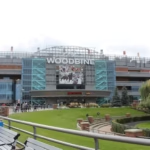
The clubhouse at the Mountaineer Park racetrack after an evening of racing via Wikimedia Commons by Calstanhope with usage type - Creative Commons License