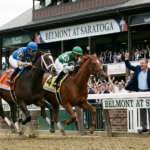
Original Sin's victory in the Grade 3 Blame Stakes on May 30 at Churchill Downs did more than add black type to his page; it quietly announced a new player in an older-horse division that is still looking for a clear leader as the summer stakes calendar unfolds.
The Blame, run at Churchill as a two-turn prep for bigger prizes like the Stephen Foster and ultimately the Breeders' Cup Classic trail, has become a proving ground for horses trying to make the jump from promising allowance or listed-company runners into the upper echelon of handicap horses. For Original Sin, getting the job done at this level on the main track at Churchill is the kind of breakthrough that can reframe a campaign, opening doors to richer Grade 2 and Grade 1 opportunities later in the year.
For trainer Brendan Walsh, the performance fits neatly into a pattern that racing fans have come to recognize. Walsh has made a career out of allowing talented but sometimes raw horses to develop at their own pace, then finding the right graded stakes spot when they are mentally and physically ready. His success with horses like Maxfield and other late-maturing routers underscored his reputation as a patient conditioner who can keep a horse happy over multiple seasons. A Blame win by Original Sin gives the barn another older runner to keep in the national conversation and reflects the confidence of a stable that is not afraid to campaign in deep spots once a horse earns that chance.
Tyler Gaffalione's fingerprints were all over the outcome as well. The multiple-time leading rider at Churchill Downs has built his brand on timing and poise in two-turn dirt races, especially on horses that need to settle early and finish late. A Blame Stakes score with Original Sin continues a successful partnership between rider and trainer that has clicked repeatedly in graded company. While the exact trip dynamics on May 30 will be dissected by figure-makers and replay watchers, the bottom line is that Gaffalione once again delivered in a situation where one mistimed move can mean the difference between a minor award and a signature victory.
What makes this particular win resonate is the way it positions Original Sin for what comes next. The Blame has often served as a launching pad to the Stephen Foster, and connections with a horse who just proved he can handle the Churchill surface and the two-turn distance are naturally going to look in that direction. Depending on how he comes out of the race and how deep the Foster field shapes up, the team around Original Sin now has the luxury of choosing between taking that immediate next step into a richer Grade 1-style test or picking off another intermediate target to build his résumé more gradually.
The win also adds another chapter to the ongoing story of how barns like Walsh's manage the modern older dirt horse. In an era when many top 3-year-olds retire early, races like the Blame gain importance as stages where late-bloomers and once-overlooked horses can rise into prominence at four and five. Original Sin's success suggests he has the constitution to stay in training and chase major prizes, something owners and fans alike appreciate in a division that can turn over quickly from year to year.
From a handicapping perspective, the takeaway is straightforward: any older-horse race at Churchill or beyond that includes Original Sin now demands a closer look at his name on the page. A horse who has shown he can handle graded-company pressure at a classic-type distance, for a barn that historically spots its runners realistically, will attract more support next time he appears in the entries. For Walsh and Gaffalione, the Blame win is both a reward for the work that led up to May 30 and an invitation to aim higher as the spotlight on the handicap division grows brighter through the summer and fall.