Get more in-depth analysis, expert picks, handicapper reports, AI picks, handicapping tools, in-article data tooltips, NO ADVERTISEMENTS, and other membership perks with a Pick Pony subscription!
Don’t forget Pick Pony’s Expert Picks, AI Picks, and Past Performance Sheets/Racing Forms!
The Pick Pony Handicapper's Report is published daily and provides analysis of all races on the card. A Pick Pony analyst prepares the report, so selections may differ from the Pick Pony Expert Picks, which are based on the consensus of all Pick Pony analysts.
Turf Paradise presents an eight-race program on Saturday, December 27, 2025, featuring a compelling mix of Quarter Horse and Thoroughbred racing that includes the Mike Hastings Memorial Stakes, the premier event on the card. The afternoon begins with a competitive Arizona-bred Quarter Horse allowance race before transitioning to the stakes race, followed by six claiming and maiden races that offer genuine wagering opportunities across all levels of competition.
The racing conditions at Turf Paradise remain favorable, with a fast main dirt track complementing mild winter weather patterns typical of the Phoenix metropolitan area. Track officials have confirmed the surface is rated fast for dirt racing, providing consistent footing throughout the afternoon session. Recent meet statistics demonstrate that Turf Paradise's one-mile oval maintains its historical characteristics, rewarding tactical speed while remaining fair to all running styles when pace scenarios develop naturally.
The scratch list includes several notable withdrawals that reshape betting calculations. Yn Tiro de Gracia exits Race 1, while Naturally Blonde scratches from Race 4 due to veterinary concerns. The most significant changes affect Race 7, where both Magoo and Sugar Beets withdraw, and Race 8, which loses Prince Prancealot and Quality Cat to veterinary scratches. These adjustments reduce field sizes but create enhanced value opportunities for sharp handicappers who adjust wagering strategies accordingly.
Weather and Track Conditions
Saturday's weather forecast calls for partly cloudy to cloudy skies with daytime temperatures reaching 68 degrees Fahrenheit and overnight lows dropping to 46 degrees. Meteorologists project a 25 percent chance of precipitation with light winds from the southwest at four to six miles per hour. These conditions represent seasonal norms for late December in the Phoenix basin, offering comfortable racing weather without the extreme heat that characterizes summer operations at Turf Paradise.
The track surface maintains its fast designation following Thursday's race card, which produced consistent speed figures across all distance categories. Track superintendent crews have worked the main dirt oval to a uniform depth, ensuring proper moisture content and cushion for both Quarter Horse sprints and Thoroughbred routes. The absence of recent rainfall preserves surface integrity, eliminating concerns about sealed or cuppy track conditions that occasionally affect winter racing in the Southwest.
Wind conditions merit particular attention in Quarter Horse races where fractions are measured in hundredths of seconds. Light southwest breezes at four to six miles per hour create minimal impact on times, though handicappers should monitor whether any increase in velocity develops during the afternoon. Historical patterns at Turf Paradise demonstrate that winds exceeding ten miles per hour can influence speed indexes by one to two points at sprint distances, particularly when headwinds or crosswinds affect the straightaway portion of the track.
Temperature stability ensures consistent track conditions throughout the eight-race program. With first post at 1:15 PM Mountain Standard Time and the finale scheduled for approximately 5:10 PM, gradual cooling from 68 to the low 60s presents no material impact on racing surface characteristics. The combination of fast dirt, mild temperatures, and minimal wind creates ideal conditions for both speed and tactical racing, setting the stage for an afternoon where handicapping fundamentals determine outcomes more reliably than track variant considerations.
Track Bias and Post Position Analysis
Turf Paradise's one-mile dirt oval demonstrates measurable positional advantages that sophisticated handicappers incorporate into wagering decisions. Current meet statistics compiled from November 10 through December 18 reveal distance-specific patterns that significantly influence race outcomes. Understanding these biases provides quantifiable edges when evaluating contenders and constructing exotic wagers across Saturday's varied program.
At 5.5 furlongs on dirt, the data confirms a pronounced speed bias with 32 to 46 percent of winners leading wire-to-wire. Inside posts numbered one through three generate optimal results, allowing early speed types to establish position without traffic complications. The rail post proves particularly advantageous when the field exceeds eight runners, as inside horses save ground through both turns while forcing outside rivals to navigate wider paths. Speed figures demonstrate that horses breaking from posts one through three average 2.3 lengths closer to the lead at the first call compared to horses drawn in posts eight through twelve.
The 6.5-furlong configuration presents contrasting dynamics. Wire-to-wire success drops dramatically to just 7 to 29 percent, signaling that pressing and stalking styles gain significant advantages. Middle posts numbered four through seven emerge as statistically superior, positioning horses to sit just off the early pace before launching sustained drives through the stretch. The additional furlong allows closers more opportunity to overcome pace-related deficits, though genuine deep closers still face challenges when early fractions remain honest.
Route racing at one mile exhibits tactical versatility, with 22 percent wire-to-wire success indicating that multiple running styles compete effectively. Inside posts maintain ground-saving benefits through both turns, particularly valuable when fields exceed eight entries. However, unlike sprint distances, the extended trip allows horses with tactical speed to secure forward positions without compromising closing ability. Handicappers should emphasize horses demonstrating one-mile proficiency combined with recent competitive efforts, as stretching out from sprint distances or shortening from longer routes often produces inconsistent results.
Post position analysis reveals additional nuances affecting wagering strategy. In sprint races, outside posts numbered nine through twelve face measurable disadvantages, requiring horses to either use excess energy to clear the field before the turn or navigate significantly wider trips that add distance. At 5.5 furlongs, each path width adds approximately one length to the distance traveled, creating cumulative disadvantages that speed figures alone fail to capture. Route racing moderates these concerns somewhat, as the longer distance provides more opportunity to maneuver into favorable positions.
Race 1: Allowance – 350 Yards Dirt
Post Time
1:15 PM

Pace Analysis
Quarter Horse racing at 350 yards represents pure speed, with races typically completed in 17 to 18 seconds from gate to wire. At this abbreviated distance, breaking alertly and establishing immediate position determines outcomes more decisively than any other factor. Handicappers should focus on speed indexes, gate work, and recent running lines showing clean breaks without interference. The 350-yard sprint allows no room for recovery from slow starts or early bumping, making post position and jockey skill critically important.
Speed indexes provide the foundation for evaluating Quarter Horse performance. Anything above 90 represents excellent form, while horses approaching or exceeding the 100 plateau demonstrate elite-level ability. The calculation accounts for track-specific standards, allowing direct comparisons across different racing dates at Turf Paradise. Handicappers should prioritize horses showing speed indexes of 85 or higher in recent races at 350 yards, as the distance-specific conditioning differs materially from longer Quarter Horse sprints at 400 or 440 yards.
The twelve-horse field creates traffic complications that particularly affect inside and middle posts. While rail position theoretically saves ground, horses breaking from posts one through four risk getting pinched back or forced to steady if neighboring runners break poorly. Outside posts face the opposite challenge, requiring extra speed to avoid being shuffled back as the field converges toward the center of the track. Post positions five through eight often provide optimal positioning, offering clean breaks with tactical options.
Key Contenders
Av Tornadoe Warning draws post 5 for trainer-jockey combination Luis Valenzuela, bringing proven ability at the 350-yard distance with competitive speed indexes in the low-to-mid 70s. The four-year-old gelding finished third in the AQRA Quarter Horse Derby at Turf Paradise in May 2024, demonstrating ability to handle stakes-level competition. Recent form shows consistent efforts without winning, suggesting this drop to allowance conditions could provide the class relief needed for a breakthrough performance. The mid-post draw offers tactical flexibility, allowing Valenzuela to dictate whether to contest the lead or sit just off the pace.
Flying Cowgirl 123 enters from post 4 for trainer Adolfo Armendariz Celaya with Jacob Enriquez in the irons. The three-year-old filly carries reduced weight at 125 pounds compared to older males at 128, creating a theoretical four-length advantage over the abbreviated distance. Recent racing lines show competitive efforts against similar allowance company, with speed indexes in the mid-to-upper 60s indicating legitimate contention. The inside-middle post provides a clean break opportunity, though the filly must overcome post-position disadvantages if outside runners break more alertly.
Letsjustsay occupies post 3 for trainer John Allred with Kevin Carbajal riding. This four-year-old gelding brings extensive experience with multiple starts at the 350-yard distance, demonstrating the specific conditioning required for this abbreviated sprint. Speed indexes in the low-to-mid 60s suggest borderline contention, requiring either pace-related advantages or improved form to compete with top selections. Carbajal's 12.5 percent win rate at Turf Paradise represents solid meet-level competence, though not elite-level proficiency.
Secondary Choices
Fancey Like starts from post 8 for trainer Matthew Fales with Cerapio Figueroa aboard. The three-year-old filly benefits from the weight allowance while bringing credible recent form showing improved speed indexes. The outside post creates complications in a twelve-horse field, forcing Figueroa to make critical decisions regarding early positioning. The filly's stalking running style suggests she prefers sitting just off the lead rather than engaging in early speed duels, making the outside draw particularly challenging.
Tell America breaks from post 1 for trainer Orlando Guerrero with Brandon Mendez Guevara riding. The three-year-old filly secured decent showings in recent maiden company before stepping up to allowance conditions. The rail post in a twelve-horse Quarter Horse sprint creates significant traffic risks, though saving ground becomes crucial if the filly breaks alertly enough to secure early position. Speed indexes in the upper 60s place her on the fringe of genuine contention.
Longshots
My Special Eagle starts from post 10 with Richard Birdrattler aboard, facing long odds in this competitive field. The four-year-old gelding shows sporadic form without demonstrating the consistent speed necessary to compete at this allowance level. The outside post adds further complications in a race where inside position and early speed determine outcomes.
Ride Em Cowboy breaks from post 11 for trainer Matthew Fales with Mark Jasso riding. The three-year-old gelding making just his third career start brings limited experience against older, more seasoned allowance runners. Outside posts in Quarter Horse sprints historically produce winners at low frequencies, making this a particularly challenging spot for a lightly raced runner.
Betting Strategy and Wagering Angles
The combination of a twelve-horse field and the abbreviated 350-yard distance creates exacta and trifecta value opportunities. While Av Tornadoe Warning represents the logical top selection based on superior speed indexes and optimal post position, Flying Cowgirl 123's weight advantage makes her a legitimate win threat. Construction of vertical exotic wagers should emphasize these two principals while spreading underneath to capture value if either falters or encounters traffic trouble.
Exacta combinations using Av Tornadoe Warning and Flying Cowgirl 123 on top with Letsjustsay, Fancey Like, and Tell America underneath provide coverage of likely scenarios. The abbreviated distance produces frequent upsets when favorites encounter minor interference or break poorly, justifying broader coverage in trifecta wagers. A trifecta box including the top five selections captures most realistic outcomes while maintaining cost efficiency.
Handicappers seeking higher risk-reward profiles should consider straight win wagers on Av Tornadoe Warning at projected odds of 4-1 or better. The gelding demonstrates superior recent form compared to most rivals, with the post-position draw offering tactical advantages unavailable from rail or extreme outside posts. The class drop from stakes to allowance conditions creates a favorable spot, as horses exiting tougher races often rebound when meeting softer competition.
Selections
Win: Av Tornadoe Warning
Place: Flying Cowgirl 123
Show: Letsjustsay
Race 2: Mike Hastings Memorial Stakes – 350 Yards Dirt
Post Time
1:43 PM
Pace Analysis
The Mike Hastings Memorial Stakes for three-year-old and older Quarter Horse fillies and mares represents the premier event on Saturday's card, with a $27,800 purse attracting quality regional runners. The 350-yard distance demands explosive early speed combined with the ability to maintain velocity through the final 100 yards. Stakes-level competition at this distance typically produces faster speed indexes than allowance races, with winning figures generally approaching or exceeding the mid-80s.
The twelve-horse field includes proven stakes performers alongside developing fillies stepping up in class, creating a competitive mix that rewards horses combining proven ability with favorable racing conditions. Post position effects intensify at the stakes level, as the uniformly high-quality competition magnifies small advantages gained through clean breaks and optimal tactical positioning. Handicappers should prioritize fillies showing consistent high speed indexes at 350 yards while factoring in the influence of leading connections.
Key Contenders
Wicked Cowgirl Smart draws post 9 for trainer David John Williams with Kevin Carbajal riding. This four-year-old filly recently broke a nine-year-old track record at Turf Paradise, demonstrating elite-level ability with lifetime earnings of $144,663 from eight wins in seventeen starts. Her November 17 victory established her as the class of this field, combining superior speed indexes with proven ability to handle Turf Paradise's surface. The outside post creates concerns in a twelve-horse field, though her tactical speed should allow Carbajal to secure reasonable position before the field converges.
Basking occupies post 1 for trainer David John Williams with Noe Garcia Jr. aboard. The four-year-old filly brings strong recent form including competitive efforts against tougher stakes company earlier in the season. Speed indexes in the low-to-mid 80s place her among the top contenders, though the rail post in a twelve-horse field creates traffic risks. Garcia's experience navigating inside posts becomes crucial, as any hesitation or traffic trouble proves fatal at the abbreviated distance. The Williams barn enters two legitimate contenders, suggesting confidence in the stable's current form.
Jes Relentless starts from post 6 for trainer Heber Deyta-Melendez with Brian Cobos Barraza riding. The three-year-old filly benefits from a three-pound weight advantage while bringing proven stakes ability demonstrated through consistent efforts in quality races. The mid-pack post provides tactical advantages, offering a clean break with options to either press the pace or sit just behind early leaders. Speed indexes in the upper 70s suggest genuine contention, though matching the elite-level figures produced by top rivals requires career-best performance.
Secondary Choices
Rockin Jo Kool breaks from post 7 for trainer Luis Valenzuela with Luis Valenzuela riding. The six-year-old mare brings veteran experience with proven stakes ability demonstrated through multiple wins at the 350-yard distance. Recent form shows consistent efforts without winning, suggesting either slight decline from peak form or simply facing tougher competition. The mid-outside post offers reasonable positioning, though the mare must rediscover previous form levels to compete with today's faster rivals.
Angel Soul starts from post 5 for trainer Havid Canez with Mark Jasso aboard. The four-year-old filly enters off competitive efforts in allowance company, stepping up to stakes competition for the first time in recent outings. Speed indexes in the mid-to-upper 70s place her on the fringe of contention, requiring pace-related advantages or career-best performance to threaten the top selections. The mid-pack post provides optimal positioning for her stalking running style.
Longshots
Kisss N Run draws post 3 for trainer Luis Padilla with Oscar Andrade Jr. riding. The four-year-old filly demonstrates legitimate ability with speed indexes approaching 80, though recent form suggests she's slightly below the level of top contenders. The inside-middle post offers clean break opportunities, making her a legitimate longshot threat if pace dynamics develop favorably.
Ranch Woman starts from post 12 for trainer Alex Torres-Casas with Brandon Mendez Guevara aboard. The three-year-old filly benefits from weight relief but faces the extreme outside post, creating significant disadvantages in a twelve-horse field. Her speed indexes in the low-to-mid 70s require improvement to compete with proven stakes performers, making this a challenging spot for a developing filly.
Betting Strategy and Wagering Angles
Wicked Cowgirl Smart represents the clear class of the field based on superior speed indexes and recent track record performance. However, the outside post creates legitimate concerns that justify hedging win wagers with exacta combinations including Basking and Jes Relentless. The Williams stable entering two genuine contenders suggests barn confidence, though Wicked Cowgirl Smart's proven superiority makes her the primary stable selection.
Exacta construction should emphasize Wicked Cowgirl Smart on top with Basking and Jes Relentless in second position, while also including reverse combinations to capture scenarios where post position advantages overcome speed figure differentials. Trifecta wagers should incorporate Rockin Jo Kool and Angel Soul as legitimate third-place threats, particularly if early pace develops faster than optimal for the top selections.
Value-conscious handicappers should consider straight win wagers on Wicked Cowgirl Smart despite expected favoritism, as her demonstrated superiority over this field justifies short prices. Alternative approaches include boxing Basking and Jes Relentless in exactas with Wicked Cowgirl Smart, creating middle-priced tickets that profit if either filly outperforms expectations. The abbreviated distance creates upset potential through traffic or gate-related issues, justifying broader coverage in trifecta wagers.
Selections
Win: Wicked Cowgirl Smart
Place: Basking
Show: Jes Relentless
Race 3: Maiden Optional Claiming – 5.5 Furlongs Dirt
Post Time
2:11 PM
Pace Analysis
The maiden optional claiming sprint for two-year-old colts and geldings presents the season's final opportunities for juveniles seeking their first victory before year-end. The 5.5-furlong distance on dirt favors early speed, with Turf Paradise statistics demonstrating 32 to 46 percent wire-to-wire winners at sprint distances. The optional claiming structure allows maiden special weight-quality runners to face claimers for $30,000, creating a field mixing higher-bred prospects with more experienced claiming-level competitors.
The seven-horse field includes four first-time starters, significantly complicating handicapping analysis. Debut runners bring unknown variables regarding gate behavior, racing tactics, and ability to handle competitive pressure. Trainer and jockey statistics become critically important when evaluating inexperienced runners, as connections with strong first-time starter records demonstrate superior preparation and horse management. Workout patterns provide additional clues, though translating morning exercise to afternoon racing involves substantial uncertainty.
Speed-favoring track bias at 5.5 furlongs rewards horses securing early position without excessive energy expenditure. Projected early fractions in the 22-flat to 22.2-second range for the opening quarter-mile suggest moderate pace pressure, creating opportunities for both pure speed types and tactical stalkers. Inside posts one through three offer advantages through ground savings and clean break opportunities, though inexperienced runners sometimes drift or lug in when breaking from the rail.
Key Contenders
Forty Twenty debuts for trainer Robertino Diodoro with Orlando Mojica aboard. Diodoro maintains elite-level statistics at Turf Paradise with 19 to 30 percent win rates and 47 to 68 percent in-the-money percentages, demonstrating exceptional preparation quality. Mojica's 14 to 18 percent win rate complements the trainer's success, creating a powerful connection particularly effective with first-time starters. The colt breaks from post 3, offering tactical flexibility to either press the pace or sit just off early leaders. Diodoro's reputation for bringing runners ready to win first time out makes this debut runner a legitimate favorite despite absence of racing experience.
Littleyellowjacket makes his career debut for trainer Dan McFarlane with Frank Alvarado riding. McFarlane's statistics show 17 to 67 percent win rate with strong in-the-money percentages, though sample sizes require context evaluation. Alvarado brings solid credentials with 9 to 17 percent win rates, suggesting competent race riding without elite-level proficiency. The colt breaks from post 2, securing inside position advantageous for inexperienced runners learning to navigate traffic. Workout patterns indicate readiness, though translating morning speed to afternoon competition remains uncertain for any first-time starter.
Independence Rise debuts for Robertino Diodoro with Guillermo Rodriguez aboard, representing Diodoro's second entry in the race. The colt breaks from post 6, facing outside-draw complications that require sharp gate work to avoid getting shuffled back in early running. Rodriguez's 8 to 11 percent win rate represents below-average proficiency among Turf Paradise's jockey colony, creating concerns about tactical execution. However, Diodoro's proven ability preparing debut runners for winning efforts cannot be dismissed, making this a legitimate contender despite jockey concerns.
Secondary Choices
Maestro Italiano enters with racing experience, having finished second in a maiden special weight sprint at Turf Paradise. The gelding returns for trainer Rafael Barraza with Francisco Garcia riding, seeking to convert debut promise into breakthrough victory. Speed figures from the previous start provide tangible data unavailable for first-time starters, though those figures suggest borderline contention against today's field. Post 1 offers ground-saving advantages, critical for a horse demonstrating sufficient ability to contend but lacking any margin for navigational error.
Oswald debuts for trainer Don Schnell with Manuel Americano aboard. Americano's 16 to 18 percent win rate represents solid meet-level competence, complementing Schnell's developing training operation. The colt breaks from post 7, facing outside-draw challenges common for inexperienced runners. Workout patterns show steady progression, though the combination of outside post and debut status creates multiple hurdles to overcome simultaneously.
Longshots
Nitro Boost brings the most racing experience in the field, having made three career starts without reaching the board. The gelding drops to claiming status after unsuccessful efforts in maiden special weight company, suggesting recognition that previous competition levels exceeded his capabilities. Post 4 offers reasonable positioning, though speed figures from recent starts place him well behind likely pace setters. Closing running style proves disadvantageous in speed-favoring races, particularly for horses lacking sufficient closing punch to overcome honest early fractions.
Pi Time returns for trainer Rafael Barraza after showing minor improvement across six career starts without victory. The gelding's speed indexes demonstrate insufficient ability to compete with first-time starters backed by elite-level trainers. Post 5 provides tactical options, though the gelding's persistent inability to reach the board across multiple previous attempts suggests fundamental limitations preventing competitive racing.
Betting Strategy and Wagering Angles
The combination of inexperienced runners and proven Robertino Diodoro stable power creates straightforward wagering focus. Forty Twenty represents the logical top selection, combining elite trainer with optimal post draw and proven success with debut runners. However, the inherent uncertainty in maiden races justifies broader coverage through exacta and trifecta combinations rather than heavy win wagering.
Exacta construction should emphasize Forty Twenty on top with Littleyellowjacket, Independence Rise, and Maestro Italiano underneath. Reverse combinations become crucial given the unpredictability of maiden racing, where minor traffic issues or inexperience handling competition creates frequent upsets. Boxing the top four selections in trifectas provides comprehensive coverage while maintaining reasonable costs in the seven-horse field.
Value-conscious handicappers might consider Independence Rise as an overlay if public betting concentrates on Forty Twenty and Littleyellowjacket. Despite concerns about Rodriguez's lower win rate, the proven Diodoro preparation combined with potentially inflated odds creates possible value. Alternative strategies include keying Forty Twenty on top of exactas while spreading broadly underneath, maximizing return if the favorite performs while hedging against upset scenarios.
Selections
Win: Forty Twenty
Place: Littleyellowjacket
Show: Independence Rise
Race 4: Maiden Claiming – 6 Furlongs Dirt
Post Time
2:40 PM
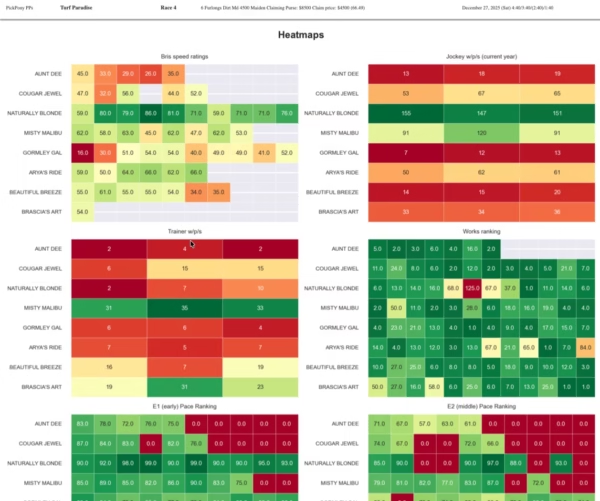
Pace Analysis
The maiden claiming sprint for fillies and mares three years old and upward at six furlongs represents the lowest classification level on Saturday's card. Horses competing at the $4,500 claiming level demonstrate limited ability, having failed to win across multiple previous opportunities against similar or weaker competition. The combination of low claiming price and maiden status creates a field characterized by fundamental limitations, inconsistent form, and suspect reliability. Handicapping focuses on identifying the least-flawed option rather than discovering hidden talent.
The eight-horse field includes runners with extensive racing experience without victory, first-time starters, and horses dropping from higher claiming levels after repeated failures. The scratch of Naturally Blonde due to veterinary concerns reduces field size while potentially removing a contender, reshaping betting calculations. Track bias favoring early speed at six furlongs becomes less pronounced than at 5.5 furlongs, with wire-to-wire winners occurring at reduced frequencies. The additional half-furlong allows pressing and stalking types opportunities to overcome pace-related disadvantages.
Projected early fractions in the 22.3 to 22.4-second range for the opening quarter suggest moderate pace pressure, creating scenarios where multiple running styles compete effectively. Post position advantages moderate at six furlongs compared to shorter sprints, as the longer distance provides more opportunities for tactical positioning adjustments. Inside posts still offer ground-saving benefits, though outside runners face less severe disadvantages than at sprint distances under 5.5 furlongs.
Key Contenders
Naturally Blonde was scratched, removing a potential contender from the race.
Brascia's Art debuts for trainer Vann Belvoir with Frank Alvarado riding. The three-year-old filly enters maiden claiming competition without previous racing experience, suggesting connections recognize limited potential compared to maiden special weight-quality runners. Post 8 creates complications for a first-time starter, requiring sharp gate work and tactical awareness unavailable to inexperienced runners. Alvarado's 9 to 17 percent win rate provides competent race riding, though debut runners at the maiden claiming level face inherent reliability concerns.
Misty Malibu starts from post 4 for trainer Scott Tubbs with Alex Cruz aboard. The three-year-old filly makes her career debut at the $4,500 claiming level, indicating modest expectations from connections. The mid-pack post offers tactical flexibility, allowing Cruz to assess early pace development before committing to specific racing tactics. Cruz's statistics show moderate competence without exceptional proficiency, creating questions about tactical execution in critical situations.
Secondary Choices
Aunt Dee breaks from post 1 for trainer Mark Esquibel with Allyssa Morales riding. The five-year-old mare brings extensive racing experience without victory, having competed unsuccessfully across multiple previous opportunities. The rail post offers ground-saving advantages critical for a horse demonstrating persistent inability to reach the winner's circle. Morales's riding statistics require context evaluation, as female jockeys sometimes face challenges securing mounts on competitive horses.
Cougar Jewel starts from post 2 for trainer Alexis Silva-Martinez with Blake Nunnally aboard. The three-year-old filly makes her career debut after connections determined maiden special weight competition exceeded her capabilities. Nunnally's 8 to 22 percent win rate demonstrates inconsistent performance, ranging from below-average to competent depending on sample size and context. The inside-middle post provides reasonable positioning for debut runners learning to navigate competitive racing.
Longshots
Arya's Ride occupies post 6 for trainer Ruby Thomas with Kiaman McGregor riding. The three-year-old filly debuts at the maiden claiming level, suggesting modest ability levels. McGregor's 7 percent win rate represents below-average competence among Turf Paradise's jockey colony, creating concerns about tactical execution. Outside-middle post position requires sharp gate work to secure favorable positioning, particularly challenging for inexperienced runners.
Beautiful Breeze breaks from post 7 for trainer Ryan Kenney with Hannah Leahey aboard. The three-year-old filly makes her career debut with limited workout foundation suggesting readiness concerns. Leahey's statistics show developing competence without established proficiency, creating questions about race-riding execution in critical moments.
Betting Strategy and Wagering Angles
Maiden claiming races at low price levels present significant handicapping challenges due to the pervasive unreliability across the field. No horse demonstrates clear superiority through proven ability, as all runners either debut without racing experience or show extensive losing records. Wagering strategy should emphasize risk management through broad coverage rather than confident win betting on any single selection.
Exacta boxes including the top four selections provide comprehensive coverage while managing costs in the reduced field. The inherent unpredictability of maiden claiming races justifies including multiple combinations rather than concentrating bets on perceived favorites. Trifecta wagers should similarly emphasize broad coverage, as the combination of inexperience and limited ability creates scenarios where any competitive runner potentially reaches the top three.
Value-conscious handicappers might consider passing the race entirely, as low-level maiden claiming events rarely offer value opportunities justifying significant wagering risk. Alternative approaches include small-stakes trifecta boxes capturing longshot outcomes, where the combination of low expectations and unpredictable results sometimes produces outsized returns. Horseplayers should maintain discipline regarding bet sizing, recognizing that maiden claiming races favor the house more decisively than higher-class events.
Selections
Win: Brascia's Art
Place: Misty Malibu
Show: Cougar Jewel
Race 5: Claiming – 1 Mile Dirt
Post Time
3:10 PM

Pace Analysis
The one-mile claiming race for three-year-olds and upward at the $4,000 level presents competitive-level horses demonstrating modest ability across sustained distances. Route racing at Turf Paradise shows 22 percent wire-to-wire success, indicating that tactical versatility rewards multiple running styles when pace scenarios develop naturally. The ten-horse field creates sufficient competitive pressure to produce honest fractions without excessive early speed pressure that compromises closers.
Projected early fractions in the 23.2 to 23.3-second range for the opening quarter-mile and 47.1 to 47.2 for the half-mile suggest moderate pace that favors horses demonstrating one-mile proficiency combined with recent competitive form. The claiming conditions attract workmanlike runners competing regularly at this classification level, creating form cycles where horses alternate between competitive efforts and subpar performances. Handicappers should emphasize recent racing lines showing forward progress rather than isolated strong performances surrounded by poor efforts.
Inside posts maintain ground-saving advantages through both turns, particularly valuable at claiming levels where horses lack sufficient ability to overcome navigational inefficiencies. Posts one through four offer optimal positioning for runners demonstrating tactical speed, allowing jockeys to secure forward positions without excessive energy expenditure. Outside posts face measurably longer trips, adding approximately two lengths of additional distance when navigating widest paths through both turns.
Key Contenders
Saqeel draws post 1 for trainer Robertino Diodoro with Orlando Mojica riding. The seven-year-old gelding brings proven one-mile ability with lifetime earnings exceeding $170,000, demonstrating sustained competitiveness across multiple seasons. Recent form shows competitive efforts at similar claiming levels, with speed figures placing him among the top contenders. The rail post provides maximum ground savings through both turns, critical advantages for an older gelding requiring every possible edge to compete with younger, fresher rivals. The Diodoro-Mojica combination maintains elite statistics, adding confidence to this selection.
Harbor Thunder starts from post 2 for trainer Dayson LaVanway with Blake Nunnally aboard. The five-year-old gelding demonstrates solid recent form with competitive efforts at the one-mile distance. Middle-claiming levels create fields where multiple horses show similar ability, making post position and jockey skill decisive factors. Nunnally's inconsistent statistics create concerns about tactical execution, though the inside-favorable post position moderates these worries. Speed figures place this gelding in legitimate contention, requiring clean trip and honest fractions to compete with top selections.
Mr Insensitive occupies post 3 for trainer Mikayla Ivy-Wright with Manuel Americano riding. The five-year-old gelding brings recent competitive efforts demonstrating one-mile proficiency. Americano's 16 to 18 percent win rate represents solid meet-level competence, providing confidence in tactical race riding. The inside-middle post offers ground-saving advantages while avoiding potential rail traffic concerns. Speed figures suggest borderline contention, requiring pace-related advantages or improved performance to challenge top selections.
Secondary Choices
Big Don's Smiling breaks from post 5 for trainer Jorge Rosales with Adrian Castellanos aboard. The five-year-old gelding shows recent improvement with competitive fourth-place finish in last start. Castellanos maintains strong statistics with 21 to 29 percent win rates, demonstrating above-average proficiency among Turf Paradise's jockey colony. Mid-pack post provides tactical options for pressing or stalking running styles. Speed figures place him on the fringe of contention, though recent form trend suggests potential for further improvement.
Shashashakemeup starts from post 9 for trainer Justin Evans with Guillermo Rodriguez riding. The eight-year-old gelding brings veteran experience with proven one-mile ability demonstrated through lifetime earnings exceeding $290,000. Recent form shows declining performance suggesting age-related deterioration, though veteran horses sometimes rediscover previous form when conditions favor their running styles. Outside post creates navigational challenges requiring Rodriguez to make critical early positioning decisions.
Longshots
Anna's Iron Man draws post 4 for trainer Hilario Perez with Kevin Krigger riding. The six-year-old gelding shows sporadic form without demonstrating consistent competitiveness at this claiming level. Krigger's statistics provide confidence in tactical race riding, though superior jockey skill cannot overcome fundamental horse limitations.
Benny Buckets occupies post 7 for trainer Wade Rarick with Frank Alvarado aboard. The four-year-old gelding demonstrates insufficient speed figures to compete with front-line contenders. Mid-outside post position requires tactical decisions regarding early positioning, though the gelding's form suggests limited ability regardless of trip quality.
Ruler of Angels starts from post 8 with Silvio Ruiz Amador riding. The seven-year-old gelding shows declining form suggesting age-related deterioration. Speed figures place him well behind likely pace setters, making victory require combination of career-best performance and pace collapse scenarios.
Baron's Song breaks from post 10 with Sachin Parris aboard. The five-year-old gelding faces extreme outside post, requiring jockey to make aggressive early moves to secure reasonable position. Speed figures demonstrate insufficient ability to justify confidence despite occasional competitive efforts.
Betting Strategy and Wagering Angles
The combination of proven Robertino Diodoro stable power and optimal rail post position creates straightforward wagering focus on Saqeel. The gelding demonstrates superior recent form compared to most rivals, with connections showing elite-level competence preparing horses for winning efforts. However, the competitive nature of claiming races justifies hedging through exacta combinations including secondary selections.
Exacta construction should emphasize Saqeel on top with Harbor Thunder, Mr Insensitive, and Big Don's Smiling underneath. Reverse combinations capture scenarios where post position advantages or tactical racing overcome speed figure differentials. Trifecta wagers should incorporate Shashashakemeup despite outside post concerns, as his veteran experience and lifetime earnings suggest capability to rebound with competitive effort.
Value-conscious handicappers should consider straight win wagers on Saqeel at projected odds of 4-1 or better. The gelding demonstrates clear advantages through superior connections, optimal post position, and proven one-mile ability. Alternative approaches include keying Saqeel in exactas and trifectas while spreading broadly underneath, maximizing returns when the favorite performs while hedging against upset scenarios common in claiming races.
Selections
Win: Saqeel
Place: Harbor Thunder
Show: Mr Insensitive
Race 6: Claiming – 6.5 Furlongs Dirt
Post Time
3:40 PM

Pace Analysis
The 6.5-furlong claiming sprint for fillies and mares three years old and upward at the $4,000 level presents competitive-class females demonstrating modest ability. Track statistics show 7 to 29 percent wire-to-wire winners at 6.5 furlongs, indicating pressing and stalking running styles gain advantages over pure front-runners or deep closers. The nine-horse field creates moderate competitive pressure producing honest early fractions without excessive pace pressure.
Projected early fractions in the 22.3 to 22.4-second range for the opening quarter-mile suggest moderate tempo favoring horses positioned just off early leaders. The additional half-furlong compared to six-furlong sprints allows tactical types more opportunities to maneuver into striking position before launching sustained drives. Middle posts numbered four through seven statistically produce optimal results, positioning horses to secure favorable trips without navigating extreme inside or outside paths.
The claiming classification attracts established female runners competing regularly at this level, creating form patterns where fillies and mares alternate between competitive efforts and subpar performances. Handicappers should emphasize recent form cycles showing improvement rather than isolated strong performances. Class evaluation within claiming ranks requires understanding subtle distinctions, as horses competing for $4,000 tags demonstrate materially different abilities than those running for $8,000 or higher prices.
Key Contenders
Rock Star Parking draws post 1 for trainer Robertino Diodoro with Orlando Mojica riding. The seven-year-old mare brings proven sprint ability with lifetime earnings exceeding $356,000, demonstrating sustained competitiveness across multiple seasons. Recent form shows competitive efforts at similar claiming levels, with speed figures placing her among top contenders. The rail post provides ground-saving advantages critical for older mares requiring every possible edge. The elite Diodoro-Mojica combination adds significant confidence, as their statistics demonstrate superior preparation and tactical execution.
Birdie Curdy starts from post 3 for trainer Justin Evans with Guillermo Rodriguez aboard. The six-year-old mare demonstrates closing running style effective at 6.5 furlongs when early pace develops favorably. Evans maintains strong training statistics with 22 to 25 percent win rates, demonstrating above-average competence. Rodriguez's lower win percentages create concerns about tactical execution, though closing running styles require less tactical complexity than pressing or stalking approaches. Speed figures place her in legitimate contention, particularly if early fractions develop faster than optimal for front-running types.
Willing to Burn occupies post 9 for trainer Charles Essex with Manuel Americano riding. The eight-year-old mare brings extensive experience with lifetime earnings of $118,254, demonstrating sustained competitiveness despite advanced age. Recent form shows competitive efforts including second-place finish in last start, suggesting current form cycle favors additional strong performance. Americano's solid statistics provide confidence in tactical race riding, though outside post creates navigational challenges requiring aggressive early positioning decisions.
Secondary Choices
Princess Payton breaks from post 7 for trainer Sergio Perez with Silvio Ruiz Amador aboard. The six-year-old mare demonstrates closing running style with recent form showing competitive efforts. Mid-outside post provides reasonable positioning for closers requiring distance to unleash sustained rallies. Speed figures place her on the fringe of contention, though closing types face inherent disadvantages when early pace remains moderate.
Super Annie starts from post 6 for trainer Dru Hall with Daniel Vergara riding. The six-year-old mare shows recent form suggesting borderline contention at this claiming level. Vergara's statistics demonstrate competent race riding, providing confidence in tactical execution. Mid-pack post offers flexibility for mid-pack to deep running styles, though speed figures suggest insufficient ability to threaten top selections without pace-related advantages.
Longshots
Little Bit Tipsy draws post 2 for trainer Valorie Lund with Jose Mariano Asencio riding. The three-year-old filly drops significantly in class after unsuccessful efforts at higher levels, suggesting connections recognize previous competition exceeded capabilities. Speed figures from recent races demonstrate insufficient ability to compete with today's proven claiming-level performers.
Gi Gis Map occupies post 8 for trainer Robertino Diodoro with Kevin Krigger aboard. The four-year-old filly represents Diodoro's second entry, suggesting modest expectations compared to primary stable selection Rock Star Parking. Recent form shows declining performance, though Diodoro horses always merit respect regardless of recent results. Krigger's strong statistics provide confidence in tactical execution if the filly demonstrates unexpected competitiveness.
Kitten's Kid starts from post 4 with Adrian Castellanos riding. The seven-year-old mare shows sporadic form without demonstrating consistent competitiveness. Castellanos maintains strong statistics, though superior jockey skill cannot overcome fundamental horse limitations.
Miss Accelerate breaks from post 5 with Harry Hernandez aboard. The five-year-old mare demonstrates closing running style requiring honest early fractions to become competitive. Speed figures place her well behind likely pace setters, making victory scenarios require combination of career-best performance and pace collapse.
Betting Strategy and Wagering Angles
Rock Star Parking represents the logical top selection, combining elite trainer, superior jockey, optimal post position, and proven sprint ability. The Diodoro stable demonstrates consistent success at Turf Paradise, with Mojica providing tactical expertise particularly effective aboard experienced claiming horses. However, the competitive nature of female claiming races justifies hedging through exacta combinations including legitimate secondary threats.
Exacta construction should emphasize Rock Star Parking on top with Birdie Curdy and Willing to Burn in second position. Reverse combinations capture scenarios where closing or late-running types capitalize on faster-than-optimal early fractions. Trifecta wagers should incorporate Princess Payton and Super Annie as legitimate threats for third position, particularly if pace dynamics develop favorably for closers.
Value-conscious handicappers should consider straight win wagers on Rock Star Parking at projected odds of 5-2 or better. The mare demonstrates clear advantages through superior connections and optimal racing conditions. Alternative approaches include exacta boxes containing the top three selections, providing comprehensive coverage while managing costs in competitive claiming race.
Selections
Win: Rock Star Parking
Place: Birdie Curdy
Show: Willing to Burn
Race 7: Claiming – 1 Mile Dirt
Post Time
4:10 PM
Pace Analysis
The one-mile claiming route for three-year-olds and upward at the $4,000 level presents the day's penultimate race with competitive-class geldings demonstrating modest route ability. The scratch of both Magoo and Sugar Beets reduces the field to nine runners, moderating early pace pressure while creating more navigable racing conditions. Track statistics showing 22 percent wire-to-wire success at one mile indicate tactical versatility, rewarding multiple running styles when pace develops naturally.
Projected early fractions in the 23.3 to 23.4-second range for the opening quarter-mile and 47.2 to 47.3 for the half-mile suggest moderate tempo that neither favors pure speed types nor deep closers exclusively. The reduced field size creates cleaner trip opportunities, as fewer horses navigating both turns reduces likelihood of traffic-induced trouble. Inside posts maintain ground-saving advantages, though the moderate pace allows horses from all post positions reasonable opportunities to secure favorable trips.
The claiming classification attracts established geldings competing regularly at bottom-level conditions, creating form cycles characterized by inconsistent performance. Handicappers should prioritize horses demonstrating recent forward progress rather than isolated strong efforts. Class evaluation within low-level claiming ranks requires understanding that performance differences often stem from conditioning cycles rather than fundamental ability variations, as all horses at this level demonstrate limited capacity.
Key Contenders
Street Humor draws post 2 for trainer Esteban Martinez with Manuel Americano riding. The six-year-old gelding brings proven one-mile ability with lifetime earnings exceeding $294,000, demonstrating sustained competitiveness across extended career. Recent form shows competitive efforts including second-place finish two starts back, suggesting current form cycle favors strong performance. Americano's solid statistics complement the gelding's experience, creating confidence in tactical execution. The inside-favorable post position provides ground-saving advantages critical at claiming levels where marginal advantages determine outcomes.
Nolongerahobby starts from post 6 for trainer Jose Silva Jr. with Jose Mariano Asencio aboard. The nine-year-old gelding brings veteran experience with lifetime earnings exceeding $316,000, demonstrating remarkable longevity competing at claiming levels. Recent form shows competitive second-place finish in last start, indicating current form cycle supports continued competitiveness despite advanced age. Silva's strong training statistics provide confidence in preparation quality, though Asencio's moderate win percentages create concerns about tactical execution in critical situations.
Cliff Diver occupies post 9 for trainer Bennie Woolley Jr. with Harry Hernandez riding. The six-year-old gelding demonstrates closing running style with lifetime earnings exceeding $382,000, indicating sustained competitiveness across multiple seasons. Recent form shows consistent efforts without victory, suggesting either slight decline from peak form or simply facing tougher competition. Hernandez maintains strong statistics with 21 to 25 percent win rates, providing confidence in tactical race riding. The outside post creates navigational challenges for closing types requiring distance to unleash sustained rallies.
Secondary Choices
Emperorofthenorth breaks from post 1 for trainer Scott Tubbs with Orlando Mojica aboard. The five-year-old gelding shows declining recent form suggesting either fitness concerns or age-related deterioration. Mojica's elite statistics provide confidence in tactical execution, though superior jockey skill cannot overcome fundamental fitness limitations. The rail post offers maximum ground savings, critical for a gelding demonstrating insufficient recent form to compete confidently with top selections.
Bel Ragazzo starts from post 7 for trainer Edward Kereluk with Luis Valenzuela riding. The six-year-old gelding brings veteran experience with lifetime earnings exceeding $122,000. Recent form shows inconsistent performance without demonstrating sustained competitiveness. Valenzuela's moderate statistics suggest competent race riding without exceptional proficiency.
Longshots
Furlongin for Luv draws post 3 for trainer Dru Hall with Daniel Vergara aboard. The seven-year-old gelding demonstrates insufficient recent form to compete confidently at this level. Hall's strong training statistics merit respect, though the gelding's persistent inability to reach the board across recent starts suggests fundamental limitations.
Happy Does occupies post 4 for trainer Alexis Leon with Kiaman McGregor riding. The five-year-old gelding shows sporadic form without demonstrating consistent competitiveness. McGregor's lower win percentages create concerns about tactical execution.
Naval Escort starts from post 5 with Alex Cruz aboard. The seven-year-old gelding demonstrates closing running style requiring honest early fractions to become competitive. Speed figures place him well behind likely pace setters.
Hadlees Honor breaks from post 8 with Blake Nunnally riding. The five-year-old gelding shows insufficient speed figures to compete confidently with top selections. Nunnally's inconsistent statistics create additional concerns about tactical execution.
Betting Strategy and Wagering Angles
The reduced nine-horse field creates more predictable racing conditions while maintaining sufficient competitive depth to produce honest pace scenarios. Street Humor represents the logical top selection, combining proven one-mile ability with elite jockey and inside-favorable post position. However, the competitive nature of claiming races combined with presence of legitimate secondary threats justifies hedging through exacta and trifecta combinations.
Exacta construction should emphasize Street Humor on top with Nolongerahobby and Cliff Diver in second position. The veteran geldings bring proven route ability with recent form suggesting current competitiveness. Reverse combinations capture scenarios where post position advantages or tactical racing overcome slight speed figure differentials. Trifecta wagers should incorporate Emperorofthenorth despite recent form concerns, as the Mojica factor combined with rail post creates longshot possibilities.
Value-conscious handicappers might consider Cliff Diver as potential overlay if public betting concentrates heavily on Street Humor and Nolongerahobby. Despite outside post concerns, the gelding demonstrates superior lifetime earnings suggesting capability to rebound with competitive effort when conditions favor closing types. The combination of strong jockey and legitimate closing ability creates value opportunities if odds exceed 8-1.
Selections
Win: Street Humor
Place: Nolongerahobby
Show: Cliff Diver
Race 8: Claiming – 6 Furlongs Dirt
Post Time
5:10 PM
Pace Analysis
The six-furlong claiming finale for three-year-olds and upward at the $8,500 level presents the day's closing race with higher-class claimers demonstrating superior ability compared to earlier $4,000 races. The scratches of Prince Prancealot and Quality Cat reshape the field composition while removing potential pace factors. Track bias favoring early speed at sprint distances becomes relevant, though the higher claiming level attracts horses demonstrating more tactical versatility than bottom-level claimers.
The ten-horse field creates competitive pressure producing honest early fractions in the 22.1 to 22.2-second range for the opening quarter-mile. Speed-favoring bias at six furlongs rewards horses securing early position without excessive energy expenditure, though pressing and stalking types remain competitive when early pace develops faster than optimal. Post position effects intensify in sprint races, as inside posts offer ground-saving advantages while outside posts require aggressive early tactics to avoid getting shuffled back.
The higher claiming price distinguishes this field from earlier $4,000 events, attracting horses demonstrating measurably superior ability. Handicappers should recognize that $8,500 claimers compete significantly better than bottom-level runners, making speed figures and class evaluation critically important. Form cycles at this level show more consistency than lower claimers, as horses demonstrate sufficient ability to compete reliably when fitness and racing conditions align favorably.
Key Contenders
Mister Mafioso draws post 7 for trainer Justin Evans with Manuel Americano riding. The five-year-old horse brings proven sprint ability with lifetime earnings exceeding $167,000, demonstrating sustained competitiveness at mid-level claiming ranks. Recent form shows consistent efforts without victory, suggesting either slight decline from peak form or facing tougher competition. Evans maintains elite statistics with 22 to 25 percent win rates, demonstrating superior preparation quality. Americano's solid riding statistics complement the trainer's success, creating confidence in tactical execution. Mid-outside post provides tactical flexibility for pressing or mid-pack running styles.
Always On Cay starts from post 9 for trainer Jorge Rosales with Adrian Castellanos aboard. The four-year-old gelding demonstrates early speed with recent form showing competitive efforts including victory two starts back. Castellanos maintains strong statistics with 21 to 29 percent win rates, providing above-average tactical proficiency. Speed figures place him among top contenders, particularly if early pace remains moderate. Outside post creates navigational concerns for speed types requiring early position, though Castellanos's aggressive riding style suggests willingness to commit early to secure favorable placement.
Strength of Autism occupies post 2 for trainer Wendell Matt with Harry Hernandez riding. The five-year-old gelding brings competitive recent form including victory at the six-furlong distance. Hernandez maintains strong statistics with 21 to 25 percent win rates, demonstrating consistent tactical competence. The inside-favorable post position provides ground-saving advantages particularly valuable for pressing running styles. Speed figures suggest legitimate contention, though consistency concerns create questions about reliability.
Secondary Choices
Lemon Meringue breaks from post 4 for trainer Esteban Martinez with Daniel Vergara aboard. The four-year-old gelding demonstrates stalking running style with recent form showing competitive efforts. Vergara's statistics suggest competent race riding, providing reasonable confidence in tactical execution. Mid-pack post offers flexibility for stalking types positioned to capitalize on faster-than-optimal early fractions.
First Call starts from post 11 for trainer Jose Silva Jr. with Guillermo Rodriguez riding. The seven-year-old gelding brings veteran experience with lifetime earnings exceeding $301,000 and impressive 30 percent win rate. Recent form shows competitive efforts without victory, though statistical win percentage suggests capability for breakthrough performance when conditions align favorably. Extreme outside post creates significant disadvantages requiring aggressive early tactics.
Longshots
Bernalinho draws post 1 for trainer Shelly Crowe with Blake Nunnally aboard. The seven-year-old gelding shows declining recent form suggesting age-related deterioration. Rail post offers ground savings, though insufficient speed figures limit realistic winning chances.
Freeze Em occupies post 3 with Hannah Leahey riding. The four-year-old gelding demonstrates insufficient recent form to compete confidently at this level. Leahey's moderate statistics create additional concerns about tactical execution.
Biyombo starts from post 8 for trainer Vann Belvoir with Frank Alvarado aboard. The four-year-old gelding shows sporadic form without demonstrating consistent competitiveness. Mid-outside post provides reasonable positioning, though speed figures suggest borderline contention at best.
Right in Front breaks from post 10 with Alex Cruz riding. The four-year-old gelding demonstrates stalking running style requiring honest early fractions to become competitive. Outside post creates navigational challenges, while speed figures place him well behind likely pace setters.
Don't Hit Me Bash starts from post 12 with Jose Mariano Asencio aboard. The four-year-old gelding faces extreme outside post requiring exceptional gate work and aggressive early tactics to secure reasonable position. Recent form shows competitive efforts, though outside draw creates substantial disadvantages.
Betting Strategy and Wagering Angles
The day's finale presents competitive claiming sprint with multiple legitimate contenders demonstrating recent form suggesting current competitiveness. Mister Mafioso represents the logical top selection, combining elite trainer with proven sprint ability and optimal post-position draw for pressing running styles. However, the presence of Always On Cay and Strength of Autism as legitimate win threats justifies hedging through exacta combinations.
Exacta construction should emphasize Mister Mafioso on top with Always On Cay and Strength of Autism in second position. Reverse combinations capture scenarios where early speed or inside position advantages overcome slight trainer-quality differentials. Trifecta wagers should incorporate Lemon Meringue and First Call as legitimate threats for third position, particularly if early pace dynamics develop favorably for stalkers.
Value-conscious handicappers might consider Always On Cay as potential overlay if public betting concentrates on Mister Mafioso based on trainer statistics. The gelding demonstrates legitimate early speed with strong jockey, creating win probability potentially underestimated by casual bettors focused exclusively on trainer records. The outside post creates legitimate concerns, though Castellanos's aggressive style suggests capability to overcome post-position disadvantages.
Selections
Win: Mister Mafioso
Place: Always On Cay
Show: Strength of Autism
Jockey Notes and Insights
Orlando Mojica ranks among Turf Paradise's leading riders with statistics demonstrating elite-level consistency. Across 76 to 150 starts during the current meet, Mojica maintains win rates between 14 and 18 percent with in-the-money percentages ranging from 41 to 62 percent. These figures place him among the top-three riders at the Phoenix oval, particularly effective when paired with quality trainers like Robertino Diodoro. Mojica excels aboard experienced claiming horses, demonstrating exceptional tactical awareness regarding pace positioning and navigating traffic. His mounts in Race 1 (Emperorofthenorth), Race 5 (Saqeel), Race 6 (Rock Star Parking), and Race 8 (Prince Prancealot, scratched) merit serious consideration based purely on jockey skill.
Manuel Americano maintains solid statistics with 120 to 246 starts producing 16 to 18 percent win rates and 47 to 61 percent in-the-money percentages. Americano demonstrates particular proficiency aboard mid-level claiming horses, showing tactical versatility handling both early speed and stalking running styles. His positioning decisions through early fractions often determine whether marginal horses reach their optimal performance potential. Americano rides multiple races on Saturday's card including Race 3 (Oswald), Race 5 (Mr Insensitive), Race 6 (Willing to Burn), Race 7 (Street Humor), and Race 8 (Mister Mafioso), making him a statistical leader for the day's rider standings.
Luis Valenzuela operates as both trainer and jockey, bringing 40 starts with 15 percent win rate and 30 percent in-the-money percentage. The trainer-jockey combination creates unique advantages regarding horse preparation and race-day tactical planning, as Valenzuela understands his mounts' capabilities more intimately than jockeys riding for outside connections. His mount Av Tornadoe Warning in Race 1 represents his best winning opportunity on Saturday's card, though the dual role limits overall mount volume compared to full-time riders.
Kevin Carbajal demonstrates consistent competence across 552 Turf Paradise starts with 12.5 percent win rate and 37 percent in-the-money percentage. These statistics place him in the mid-tier of the jockey colony, providing reliable race riding without exceptional tactical creativity. Carbajal excels aboard horses requiring straightforward trips without complex navigational requirements. His mounts in Race 1 (Letsjustsay) and Race 2 (Wicked Cowgirl Smart) benefit from his experience handling Quarter Horse sprints where clean breaks determine outcomes more decisively than tactical creativity.
Blake Nunnally shows inconsistent statistics ranging from 8 to 22 percent win rates depending on sample size and mount quality. At 59 to 158 starts, Nunnally produces 37 to 49 percent in-the-money percentages suggesting competent riding ability that sometimes lacks consistency. His performance appears mount-dependent, excelling aboard quality horses while struggling to maximize marginal runners' potential. Saturday's mounts in Race 3 (Pi Time), Race 4 (Cougar Jewel), Race 5 (Harbor Thunder), and Race 7 (Hadlees Honor) represent varying quality levels, making assessment of realistic winning chances critically important.
Guillermo Rodriguez maintains lower statistics with 53 to 75 starts producing 8 to 11 percent win rates and 36 to 43 percent in-the-money percentages. These figures place him below colony average, suggesting limitations in tactical execution or difficulty securing quality mounts. Rodriguez demonstrates basic race-riding competence without exceptional skill, making his mounts generally less attractive from pure jockey-factor perspective. However, capable horsemen occasionally overcome modest statistics when paired with superior horse quality, as demonstrated through his career achievements including nearly winning aboard a bridleless horse in a memorable 2023 incident that showcased his extraordinary balance and horsemanship.
Harry Hernandez produces strong statistics with 19 to 127 starts showing 11 to 25 percent win rates and 45 to 58 percent in-the-money percentages. The wide statistical range reflects varying sample sizes across different time periods, though more recent data trends toward the higher performance levels. Hernandez demonstrates particular effectiveness aboard closers and late-running types, showing patience allowing horses to find their best stride before asking for maximum effort. His mounts in Race 6 (Miss Accelerate), Race 7 (Cliff Diver), and Race 8 (Strength of Autism) include legitimate contenders benefiting from his tactical proficiency.
Adrian Castellanos maintains elite statistics with 41 to 90 starts producing 21 to 29 percent win rates and 42 to 46 percent in-the-money percentages. These figures place him among Turf Paradise's leading riders, demonstrating exceptional tactical versatility and strong finishing ability. Castellanos excels in aggressive riding situations requiring early positioning decisions, particularly effective aboard horses needing forward placement to maximize potential. His mounts in Race 5 (Big Don's Smiling), Race 6 (Kitten's Kid), and Race 8 (Always On Cay) merit serious consideration based on jockey skill alone.
Frank Alvarado shows solid consistency with 30 to 76 starts producing 9 to 17 percent win rates and 42 to 53 percent in-the-money percentages. Alvarado demonstrates competent tactical riding without exceptional creativity, generally executing straightforward race plans effectively while sometimes struggling with complex navigational requirements. His mounts in Race 3 (Littleyellowjacket), Race 4 (Brascia's Art), Race 5 (Benny Buckets), and Race 8 (Biyombo) represent varying quality levels requiring assessment of realistic winning chances beyond pure jockey statistics.
Trainer Notes and Insights
Robertino Diodoro dominates Turf Paradise's trainer standings with elite-level statistics demonstrating sustained excellence. Across 34 to 89 starts during recent meets, Diodoro maintains 19 to 30 percent win rates with 47 to 68 percent in-the-money percentages. These extraordinary figures reflect superior horse management, optimal race placement, and exceptional preparation quality. Diodoro reached his 1,000th career victory at Turf Paradise in 2014 and has since exceeded 3,000 career wins nationally, establishing himself among North America's most successful trainers. His runners warrant automatic respect regardless of recent form, as the stable demonstrates consistent ability to improve horses and place them in favorable racing conditions.
Diodoro's Saturday entries include multiple genuine contenders across different classifications. In Race 3, both Forty Twenty and Independence Rise represent first-time starters benefiting from Diodoro's proven success with debut runners. The trainer's ability to bring horses ready for winning efforts in initial starts distinguishes his operation from most competitors, making both entries legitimate contenders despite racing inexperience. Race 5 features Saqeel, an experienced claimer drawing optimal rail post position with Orlando Mojica aboard. Race 6 includes both Rock Star Parking and Gi Gis Map, with Rock Star Parking representing the primary stable selection based on superior recent form and favorable racing conditions.
Justin Evans maintains strong training statistics with 74 to 95 starts producing 22 to 25 percent win rates and 55 to 56 percent in-the-money percentages. These figures place him in Turf Paradise's upper tier of trainers, demonstrating consistent ability to prepare competitive runners. Evans excels with mid-level claiming horses, showing particular skill placing horses in races matching their current ability levels. Saturday's card features Evans-trained runners in Race 6 (Birdie Curdy) and Race 8 (Mister Mafioso), both representing legitimate contenders in competitive claiming races.
Matthew Fales operates an active stable with multiple runners across Saturday's card, though statistical performance requires careful context evaluation. Fales demonstrates competence training Quarter Horses and lower-level Thoroughbreds, showing solid preparation quality without reaching elite-level consistency. His Saturday runners appear in various races, suggesting an aggressive approach to race placement that sometimes sacrifices optimal spots for increased racing frequency.
Rafael Barraza trains multiple runners on Saturday's card, operating a high-volume stable particularly active in Quarter Horse racing. Barraza's statistics show moderate success rates reflecting the challenges of training large numbers of horses simultaneously. His runners benefit from consistent race conditioning, though individual horse quality varies significantly. Handicappers should evaluate Barraza-trained horses individually rather than applying blanket stable analysis, as quality differences between stable stars and bottom-level runners create wide performance ranges.
Jorge Rosales maintains solid statistics demonstrating competent training ability with mid-level claiming horses. Rosales shows particular skill conditioning sprint-distance runners, preparing horses to deliver peak efforts when race conditions align favorably. His Saturday entries in Race 5 (Big Don's Smiling) and Race 8 (Always On Cay) represent competitive claiming-level runners benefiting from consistent preparation and optimal race placement.
Scott Tubbs operates a moderate-volume stable showing inconsistent statistical performance reflecting varied horse quality. Tubbs-trained runners range from legitimate contenders to overmatched claimers, requiring individual evaluation rather than stable-wide analysis. His Saturday runners in Race 5 (Emperorofthenorth) and Race 7 (Emperorofthenorth) demonstrate this quality range, with handicappers needing to assess each horse's individual merit rather than relying on stable patterns.
Esteban Martinez trains multiple Saturday runners including Street Humor in Race 7 and Lemon Meringue in Race 8. Martinez maintains moderate statistics suggesting competent training ability without exceptional consistency. His success appears mount-dependent, excelling with naturally talented horses while showing limited ability to improve marginal runners. Both Saturday entries represent legitimate contenders based on individual horse quality rather than stable power alone.
Best Wagering Strategies and Value Plays
Saturday's Turf Paradise card presents multiple opportunities for strategic wagering across different bet types and risk tolerance levels. The combination of competitive fields, proven connections, and measurable track biases creates edges for handicappers applying sophisticated wagering strategies beyond simple win betting.
Multi-race exotic wagers provide optimal value opportunities when focusing on races featuring clear class distinctions or connection advantages. The Pick 3 spanning Races 5-6-7 offers attractive possibilities keying Saqeel in Race 5, using Rock Star Parking and Birdie Curdy in Race 6, and spreading broadly in Race 7's competitive field. This structure concentrates investment on races where class and connection advantages appear most pronounced while spreading risk in the most competitive race. A $24 ticket using 1 horse in Race 5, 2 horses in Race 6, and 4 horses in Race 7 (1x2x4x$3) provides comprehensive coverage with manageable cost.
The Pick 4 covering Races 5-6-7-8 creates larger pool sizes with potential for significant returns when correctly structured. Keying Saqeel in Race 5 and Rock Star Parking in Race 6 establishes the foundation, then spreading to the top four selections in Races 7 and 8. A $48 ticket structured as 1x1x4x4x$3 balances cost control against comprehensive coverage of realistic outcomes. Alternative structures using 2x2x3x3 or 1x2x3x4 provide similar coverage with different risk-reward profiles.
Single-race exotic wagers merit focus in races featuring clear top selections combined with competitive secondary contenders. Race 2's Mike Hastings Memorial Stakes presents optimal exacta wagering opportunities, keying Wicked Cowgirl Smart over Basking, Jes Relentless, and Rockin Jo Kool. A $12 ticket using $2 exactas (3 combinations x $2 x 2 for reverse wheels) captures realistic outcomes while accepting short prices on the probable favorite. If Wicked Cowgirl Smart's odds exceed 2-1, straight win wagering becomes attractive given her demonstrated class advantage.
Trifecta boxing strategies work effectively in competitive claiming races where multiple horses demonstrate similar ability levels. Race 7's claiming route presents this scenario, with Street Humor, Nolongerahobby, Cliff Diver, and Emperorofthenorth showing competitive recent form. A $24 trifecta box using four selections ($1 x 24 combinations) provides comprehensive coverage of the most likely outcomes. Alternative strategies include keying Street Humor on top while boxing three horses underneath for second and third ($18 for $1 base wager), reducing cost while maintaining focus on the top selection.
Rolling exotic approaches offer advantages when early-race favorites appear particularly strong. If Race 1's Av Tornadoe Warning wins at odds of 4-1 or better, rolling exacta proceeds into Race 2 exactas creates compound value. Similarly, successful early-race Pick 3 wagers can be parlayed into later Pick 3 or Pick 4 sequences, leveraging initial profits to create high-upside opportunities with controlled risk.
Value hunting focuses on races where public betting patterns create overlay opportunities. Race 3's maiden optional claiming sprint features multiple debut runners creating uncertainty that sometimes produces inflated odds on Diodoro-trained entries. If Independence Rise attracts limited betting support compared to Forty Twenty, the secondary Diodoro runner might offer value despite similar connections and preparation quality. Similarly, Race 8's Mister Mafioso could face market undervaluation if casual bettors focus excessively on recent winners while overlooking the Evans-Americano combination's statistical edge.
Straight win wagering concentrates on situations where odds exceed fair value probabilities. Saqeel in Race 5 represents clear example—if morning-line or actual odds reach 4-1 or higher, the gelding's combination of elite connections, optimal post position, and proven ability creates positive expected value. Similarly, Rock Star Parking in Race 6 at 5-2 or better offers attractive win betting opportunities given Diodoro's statistical dominance and the mare's proven sprint ability.
Daily double opportunities merit attention when consecutive races feature clear top selections at reasonable odds. The Race 5-6 daily double keying Saqeel with Rock Star Parking creates compact ticket costing $6 for $2 base wager (1x1x$2×2 for insurance), generating meaningful returns if both favorites perform as expected. Adding backup selections increases cost moderately while providing insurance against upset scenarios: 2x2x$2 costs $16 but captures more realistic outcome possibilities.
Risk management principles apply regardless of bet type or strategy. Maintaining disciplined bankroll allocation prevents catastrophic losses during inevitable cold streaks while preserving capital for positive expected value opportunities. A conservative approach allocates 2-3 percent of total bankroll per race, allowing sustained play across complete cards without risking excessive percentages on individual wagers. More aggressive approaches using 5 percent per race require stronger confidence levels and greater risk tolerance but generate larger returns during winning sequences.
The integration of track bias awareness into wagering strategy creates additional edges. Understanding that inside posts dominate at sprint distances while route races favor tactical versatility allows strategic bet construction emphasizing horses drawing favorable posts. In Race 1's Quarter Horse sprint, incorporating inside-post runners into exotic wagers provides defensive coverage against post-position advantages overwhelming class distinctions. Conversely, Race 7's route configuration allows spreading to outside-post runners demonstrating closing ability, as the extended distance moderates post-position effects.
Sophisticated handicappers should track personal wagering results by bet type, race classification, and strategic approach to identify strengths and weaknesses. Discovering that exacta boxing in competitive claiming races produces superior returns compared to win betting on favorites allows strategic allocation adjustments maximizing long-term profitability. Similarly, recognizing struggles with maiden races might suggest reducing exposure to these events while concentrating capital on allowance and claiming races where analysis proves more consistently successful.