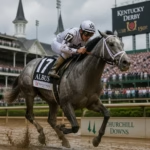
The Belmont Stakes might be famous as the final leg of the Triple Crown, but in 2026 it's also the centerpiece of a five-day racing festival and the swan song of a unique era. With the race once again shifting to historic Saratoga Race Course while Belmont Park is rebuilt, this year's edition offers casual fans and seasoned horseplayers a special twist on one of American racing's great traditions.
If you're new to the Belmont, or just haven't followed it closely, here's a straightforward guide to what it is, why 2026 is different, and how to enjoy the day like a pro.
What Is the Belmont Stakes?
The Belmont Stakes is one of the three races that make up the American Triple Crown, alongside the Kentucky Derby and the Preakness Stakes. First run in 1867, it's actually the oldest of the three and is widely known as the “Test of the Champion” because it usually demands a rare mix of speed, stamina, and toughness from 3-year-old thoroughbreds.
Most years, the Belmont is run at Belmont Park on Long Island at a demanding mile and a half. In 2026, though, the race will again be on the road.
Why the 2026 Belmont Stakes Is Different
The 2026 Belmont Stakes will be the 158th running of the race, and it's scheduled for Saturday, June 6, at Saratoga Race Course in Saratoga Springs, New York. This is the third straight year the Belmont has shifted north while Belmont Park undergoes a major rebuild, and it will be the last time the Triple Crown finale is held at Saratoga before the new Belmont Park reopens in the fall of 2026.
Because Saratoga's main track is smaller than Belmont Park's, the race will again be contested at 1¼ miles (10 furlongs) instead of the traditional 1½ miles. That brings the Belmont's distance in line with the Kentucky Derby and makes the race shape feel a bit more like a classic 10-furlong dirt showdown than the marathon grind we're used to seeing downstate.
What doesn't change is its significance: it remains the final leg of the Triple Crown, the race where a Derby and Preakness winner can try to etch their name into history by sweeping all three.
The Belmont Stakes Racing Festival: Five Days at Saratoga
The Belmont Stakes isn't just one race anymore—it's the anchor of a full racing festival. In 2026, the Belmont Stakes Racing Festival runs from June 3 through June 7 at Saratoga, loading each day with stakes races and special events.
Across the week, fans can expect:
- New York Showcase Day featuring six stakes for New York-breds and the Beverly R. Steinman (G1) steeplechase.
- A major turf and sprint card highlighted by the Belmont Gold Cup (G2), Intercontinental (G2), and Pennine Ridge (G3).
- A powerhouse filly and mare program with the New York (G1), DK Horse Acorn (G1), and Ogden Phipps (G1) presented by Ford.
- Belmont Stakes Saturday, headlined by the Belmont Stakes (G1) presented by NYRA Bets, plus top-tier events like the Hill 'N' Dale Metropolitan Handicap (G1) and the Resorts World Casino Manhattan (G1).
Beyond the racing, the festival has a full social calendar: a New York-bred showcase, a free “Belmont on Broadway” street concert downtown, the Belmont Bash honoring the connections of 2025 Belmont winner Sovereignty, the charitable Belmont Ball, and giveaways like commemorative pennants with paid admission (while supplies last).
Understanding the Triple Crown Picture
For beginners, it helps to see where the Belmont fits in the bigger story of the 3-year-old season:
- Kentucky Derby: First Saturday in May at Churchill Downs, 1¼ miles, usually a 20-horse stampede.
- Preakness Stakes: Two weeks later at Pimlico, 1 3/16 miles, typically a smaller, more tactical field.
- Belmont Stakes: Traditionally three weeks after the Preakness and the final exam. In 2026 at Saratoga, it stays the last leg but is run at 1¼ miles.
If one horse manages to win the Derby, the Preakness, and then takes down the Belmont, they complete the Triple Crown—a feat accomplished by legends like Secretariat, American Pharoah, and Justify. Even when there's no Triple Crown on the line, the Belmont often brings together the best of the division and late-developing colts that skipped earlier legs.
How the Belmont Stakes Is Run at Saratoga
At Saratoga, the Belmont will be run around two turns on the main dirt track at 1¼ miles. The field is limited to 3-year-olds, and you can expect roughly 10 to 14 runners, depending on how the spring shakes out.
The shorter distance changes the profile of a typical contender. Instead of needing deep, grinding stamina for a mile and a half, the Saratoga version rewards horses with:
- Tactical speed: The ability to get good position into the first turn.
- Finishing kick: Enough late punch to see out a fast-run 10 furlongs.
- Versatility: The ability to adapt to the famously tricky Saratoga surface and a big-race crowd.
From a pace standpoint, expect connections to be more aggressive than they might be at 12 furlongs. With less distance to make up ground, riders don't want to leave themselves too much to do turning for home.
Tickets, Entrances, and Logistics
All 2026 Belmont Stakes Racing Festival tickets are being sold specifically for the event—regular Saratoga season passes do not include admission for these days. There are multiple tiers, from general admission and picnic areas to reserved grandstand seats, clubhouse amenities, and premium hospitality packages with food and open bar.
Saratoga Race Course has three main entrances: Gates A and B off Union Avenue, and Gate C off Nelson Avenue. For Belmont week, there is no early-morning access to the grounds once gates are closed, and re-entry is not permitted after you've gone in for the day, so plan accordingly. As with any major racing day, it pays to buy tickets early and arrive with time to spare—parking and lines can get crowded fast.
What to Wear and Bring
Belmont week at Saratoga mixes upstate casual with big-race style. There isn't a single strict dress code across the entire track, but some general guidelines help:
- Grandstand / General Admission: Comfortable summer attire—polo shirts, sundresses, shorts, and sensible shoes you don't mind standing in.
- Clubhouse / Hospitality areas: Business casual to dressy; think collared shirts, dresses, and smart shoes. Some premium areas may discourage shorts or very casual clothing.
- Weather prep: Early June in Saratoga can be warm in the afternoon and cooler in the evening. Layers, sunscreen, hats, and a small poncho are all smart bets.
Check the latest guidelines before you go for rules on bag size, outside food and drink, and prohibited items so you don't get turned away at the gate.
How Belmont Stakes Betting Works
You don't need to be a seasoned handicapper to have fun betting the Belmont. All wagers in U.S. horse racing are pari-mutuel, which means you are betting into a pool with other players, and the odds and payouts are determined by how much money ends up on each outcome.
Here are the core bet types you'll see on Belmont Day:
- Win: Your horse must finish first.
- Place: Your horse must finish first or second.
- Show: Your horse must finish first, second, or third.
Those are the simplest bets, and they're a great way for new fans to get involved without overcomplicating things. Once you're comfortable, you can explore combination and exotic wagers:
- Exacta: Pick the first and second finishers in order.
- Trifecta: Pick the first, second, and third finishers in order.
- Superfecta: Pick the first four finishers in order (a tough but often high-paying play).
- Multi-race bets (like Daily Double, Pick 3, Pick 4, and beyond): Pick the winners of multiple consecutive races on the card.
You can place bets at self-service machines, at betting windows with tellers, or through online wagering platforms where available. For beginners, practice stating your bet clearly: track (if needed), race number, bet type, dollar amount, and horse number.
Basic Handicapping Tips for New Fans
If you're just starting to handicap Belmont day, focus on a few simple angles rather than trying to master every statistic at once:
- Recent form: Look at how the horse has finished in its last few races. Horses coming off strong efforts in graded stakes or solid prep races are most logical.
- Distance and surface: Favor horses that have already run well around two turns on dirt, and that don't appear stretched by 1¼ miles.
- Connections: Trainers and jockeys with strong Saratoga or Triple Crown records deserve extra respect. Certain barns routinely target big-day races and get horses to peak at the right time.
- Running style: On big days, horses with tactical speed—those who can sit just off the pace—often get the cleanest trips.
Above all, set a budget before you start betting and stick to it. Think of your wagers as part of the entertainment cost of a big sports day out.
How to Watch If You Can't Be There
Not everyone can make it to Saratoga, but the Belmont Stakes is widely available on national television and via legal streaming and wagering platforms. Many tracks and simulcast centers, including major venues like Churchill Downs, host “watch and wager” parties where fans can see the race on big screens and place bets as if they were on track.
Whether you're at Saratoga, at another track, or watching from home, the lead-up shows will cover storylines like potential Triple Crown bids, late-developing contenders, track conditions, and betting trends.
Fun Facts to Bring to the Party
- The Belmont Stakes dates back to 1867, making it older than the Kentucky Derby.
- It is traditionally known as the “Test of the Champion,” though in 2026 the distance mirrors the Derby at 1¼ miles because of the Saratoga layout.
- The 2026 running is the third and final Belmont to be held at Saratoga before the renovated Belmont Park reopens in September 2026.
- A full Belmont Festival card at Saratoga features multiple Grade 1 races, meaning you're seeing some of the highest class of thoroughbred racing anywhere in the world over those five days.
Enjoying Your First Belmont Stakes
For newcomers, the Belmont Stakes can feel like a lot all at once: packed grandstands, a wall of noise at the break, and more betting options than you're used to seeing. The key is to keep it simple. Pick a few races to focus on, try a couple of basic bets, and soak up the atmosphere.
Whether a Triple Crown is on the line or not, the 2026 Belmont Stakes at Saratoga is a rare chance to see a historic race in a different, equally storied setting. With a little preparation and this beginner's guide in your back pocket, you'll be ready to savor every stride.
Image Credits
Featured Image Credit
Belmont at the Big A race track via Open AI modified